Editorial | Decriminalise underage sex
Loading article...
-
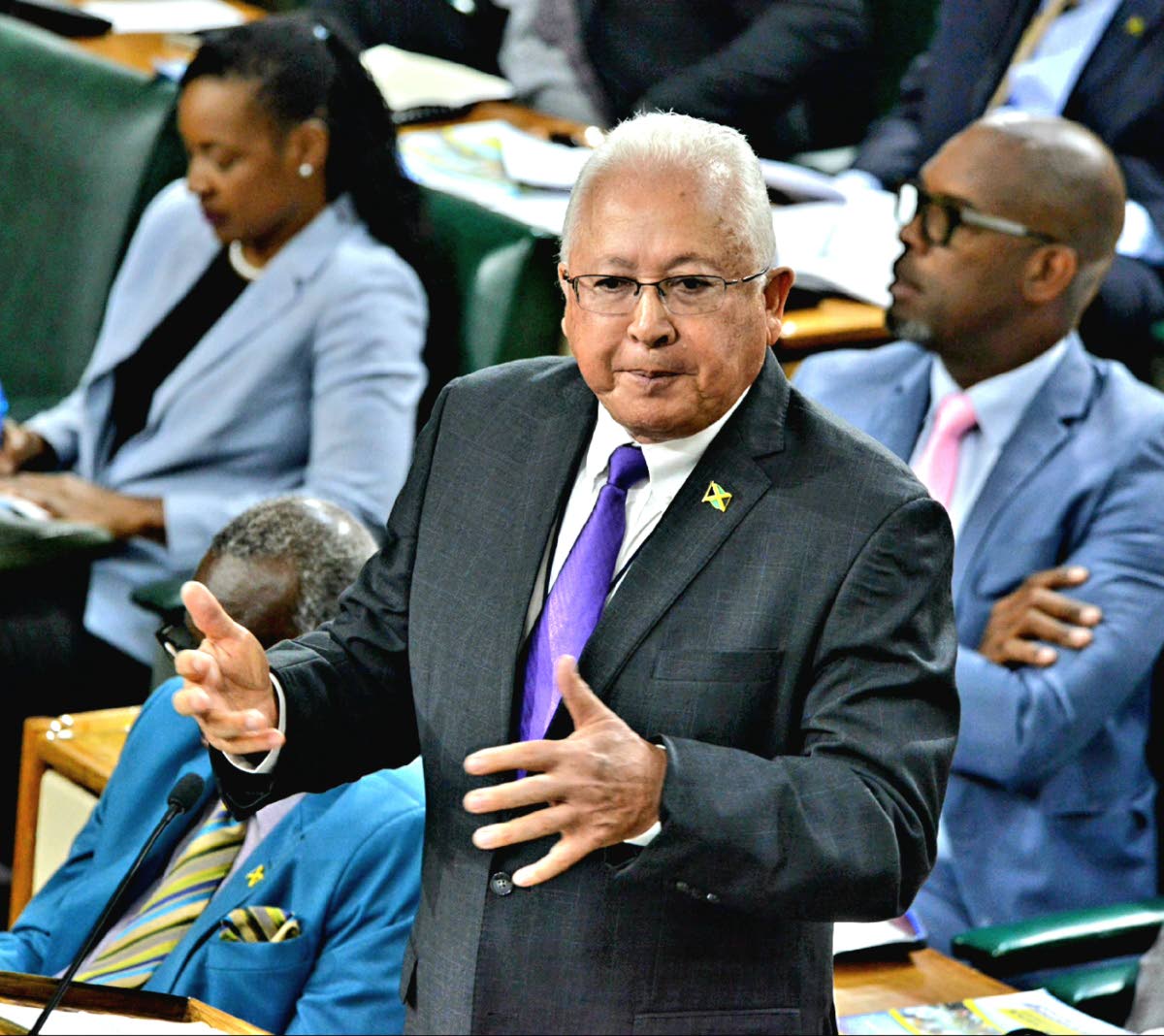 Justice Minister Delroy Chuck.
-
 Mickel Jackson
As he has promised, Delroy Chuck should act with urgency in having Parliament decide on decriminalising sex between minors who are close in age.
They should.
Minister Chuck’s promise of the parliamentary review, is by way of a joint select committee of the legislature – which will evaluate the performance of the Child Diversion Act over its five years of operation – in the face of a new round of discussion over how underage children who engage in consensual sex should be treated. The debate was triggered by a finding by the rights group Jamaicans for Justice (JFJ) that 62 per cent of the 1,517 cases referred to the Child Diversion Programme between March 2020 and June 2024 related to sexual encounters –many of them consensual relationships between teens, at least one of whom is below the age of consent.
Such sexual engagements are perforce criminal, sometimes involving at least one of the partners, usually the male, being arrested and charged for an offence and taken before the courts.
However, under the Child Diversion Programme which was launched in 2020, cases involving minors, including underage sex, may be diverted from the courts to rehabilitative interventions such as counselling, education and other support services. This is undoubtedly a good scheme, with the potential for placing thousands of children, who might otherwise be lost in an often corrosive criminal justice system, on a potentially life-saving, positive path.
REVIEW OF CHILD DIVERSION ACT
The Child Diversion Programme notwithstanding, this newspaper does not believe that consensual sex, or sexual engagement, between children below the age of consent, ought to be a criminal matter whose first point of resolution is law-enforcement agencies and the courts.
Indeed, whatever may be the age of consent, consensual sex between children below that age – where the age difference is within a narrow band and there are no adverse power dynamics – should be decriminalised and addressed through other social interventions. In other words, the police and the courts should not be statutory ports of calls.
Or, as Mickel Jackson, JFJ’s executive director, put it: “Two children having sex with each other is not a court matter.”
It is this question that Justice Minister Chuck intends to put before a joint select committee of Parliament.
“We are going … to look at the Child Diversion Act,” he told The Gleaner. “One of the things we will look at is that a lot of the cases in the Child Diversion Act are about consensual sex involving minors under 16.” They are being referred to this process by the courts.
According to Mr Chuck, in their review of the Child Diversion Act, the joint select committee will be asked to consider whether to fully decriminalise sex between minors.
“That is something we are likely to put to Parliament, for Parliament to approve or disapprove,” he said.
If the committee says yes and the Government decides to proceed with the matter, the changes would be made through amendments to the Sexual Offences Act.
This was last put before Parliament seven years ago when a joint select committee, chaired by Mr Chuck, that reviewed several laws, recommended an amendment to the Sexual Offences Act “ to include … a close in age provision from being criminalised in circumstances where they willingly engaged in sexual activity with each other”. The majority of the panel agreed that the range should be four years.
Where both parties were under 16, the committee recommended that they be referred to the child diversion process or similar programmes under the children’s care and protection laws.
BURDEN OF CRIMINALITY
While underage sex was listed in the Child Diversion Act among the ‘offences’ that could be sent for alternative resolution, sex with anyone under the age of 16 remained a criminal offence, even if it was consensual among children of the same, or similar, age.
This casts children as criminal offenders, even in the absence of exploitative behaviour. And while these may eventually be put in the Child Diversion Programme, the criminalisation of their behaviour can be traumatic and disruptive for themselves and their families. Often, it means being formally charged by the police and attending court, and being excluded from school for extended periods.
Decriminalising close-in-age sex between minors is not, as the opponents suggest, condoning underage sex. Rather, it is an appreciation of human foibles and that children, too, may err.
Put another way, it is not one or the other.
Decriminalising consensual underage sex does not mean abandonment of; moral values, guiding children towards abstinence, and teaching young people about responsible sex.
But, at the bottom line, there is no value in lumbering children with the burden of criminality for consensually engaging in sex under the age of 16. There are better ways to deal with the issue.