Nicola Satchell | Falling murders, rising responsibility
Loading article...
-
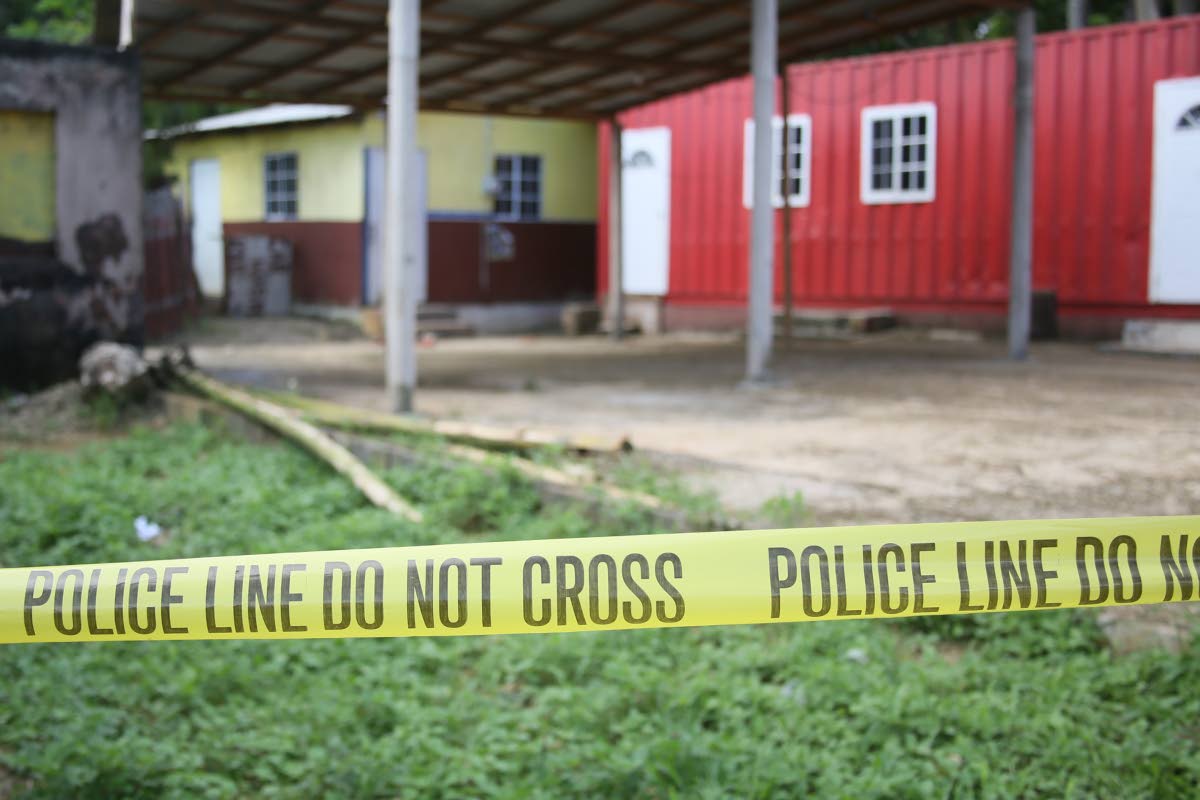 In this 2024 photo, police tape is seen at the scene of a shooting in Porus, Manchester.
-
 Nicola Satchell
Jamaica is experiencing a rare and welcome moment. Murders are falling significantly. Yet, alongside this achievement lies a troubling counter-trend. Fatal police shootings have increased sharply, demanding scrutiny if today’s progress is to remain democratic, legitimate, and sustainable.
The commissioner of police recently reported that murders declined by 41 per cent in 2025, with 673 homicides recorded as at December 31. This represents the lowest annual total in 31 years and the first time murders have fallen below 700 in more than three decades. The Jamaica Constabulary Force has also highlighted broader declines in violent crime, including a 13 per cent overall reduction in violent offences, a 32 per cent fall in shootings, and a 27 per cent decline in reported rapes.
In a society burdened by persistent violence, this is no small achievement. Every life spared matters, and every community that experiences even a temporary reprieve from fear and loss has reason to acknowledge this progress. The decline has also coincided with sustained public investment in the country’s security infrastructure and personnel, suggesting that long-standing investments may be beginning to yield results.
At the same time, progress brings responsibility. Recent increases in fatal police shootings raise difficult but necessary questions about how security is being achieved and what this means for democratic governance and public trust. This is not an argument against policing, nor a dismissal of the intense pressures faced by law enforcement officers.
Jamaica continues to grapple with entrenched criminal networks and persistently low conviction rates. These realities place enormous strain on the criminal justice system and fuel understandable public demands for decisive action, even as legislative reforms continue to expand the powers available to law enforcement.
When crime becomes extreme in scale and brutality, conventional policing tools can appear insufficient. Targeted interventions and proactive operations may seem not only justified, but necessary. Caution is required, however, in how such extraordinary measures are justified, normalised, and sustained over time.
IMPORTANT CONTEXT
Recent findings from the Independent Commission of Investigations (INDECOM) provide important context. In its October 2025 Special Investigative Report on Planned Police Operations, INDECOM documents a sustained rise in fatal police shootings, particularly during planned operations rather than spontaneous encounters. Between 2021 and 2024, the number of people shot and killed by the security forces increased from 127 to 189, a rise of nearly 50 per cent.
Subsequent reports indicate that 310 people were killed by the security forces in 2025, almost all by the police, representing a 64 per cent increase over the previous year. More striking is the changing character of these incidents. Whereas deaths arising from planned police operations accounted for just 12 per cent of fatal shootings in 2019, they now constitute a majority. As at July 31, 2025, more than half of all police-related fatalities occurred during planned operations.
INDECOM’s concern is not directed at the legitimacy of targeted policing itself, but at issues of proportionality, planning, and transparency. Of particular note is the finding that no body-worn cameras were activated in any fatal planned operation in 2024, despite the availability of such equipment and significant public investment in supporting infrastructure. In the absence of independent verification, investigators are often left with competing accounts, undermining public confidence and the protection of officers alike.
Jamaica has already been navigating this terrain through policies such as zones of special operations (ZOSOs), introduced as exceptional security measures in communities affected by chronic violence. Research suggests that while these interventions can produce short-term reductions in violence and increase state presence, they also expand police and military discretion and blur the line between emergency response and routine policing.
These tensions are issues that are discussed with university students who are trying to reconcile a desire for safety with concerns about fairness and accountability. The debate also unfolds within a wider regional and global context, where firm crime-control strategies are increasingly framed as indicators of stability and governance capacity.
DOES NOT RESOLVE
International endorsement, however, does not resolve the deeper democratic question of how power is exercised at home. For small democracies, the challenge is not whether firm action is taken, but whether security strategies can be pursued without weakening constitutional balance, judicial independence, and the distinction between enforcement and punishment.
Democratic societies are not defined solely by their ability to reduce crime. They are also judged by how power is restrained, scrutinised, and held accountable, especially in moments of success. When lethal force becomes more visible even as murder rates decline, it is necessary to ask whether the balance between security and rights is shifting too far or too quietly.
This calls not for the abandonment of firm policing, but for stronger institutional discipline. This includes sustained parliamentary and civilian oversight, transparent investigation of police killings, consistent use of accountability tools such as body-worn cameras, and regular public review of exceptional security measures. These are not obstacles to crime control but they are the conditions that make it legitimate and sustainable.
This moment also tests the vigilance of civil society. When violence declines, scrutiny can fade, allowing extraordinary practices to persist without public debate. In such moments, the work of faith-based organisations, human-rights advocates, community groups, professional associations, and academic institutions becomes indispensable. The aim is not to oppose policing, but to guard against the quiet erosion of democratic restraint.
We can commend progress without surrendering principle. And we can insist that the fight against crime never comes at the cost of the democratic restraint that gives security its legitimacy and power its limits.
Nicola D. Satchell, PhD is a lecturer in political sociology and criminal justice at The University of the West Indies, Mona. Send feedback to nicola.satchell@uwi.edu.