Curtis Ward | Words of war could be deadly in 2026
Loading article...
-
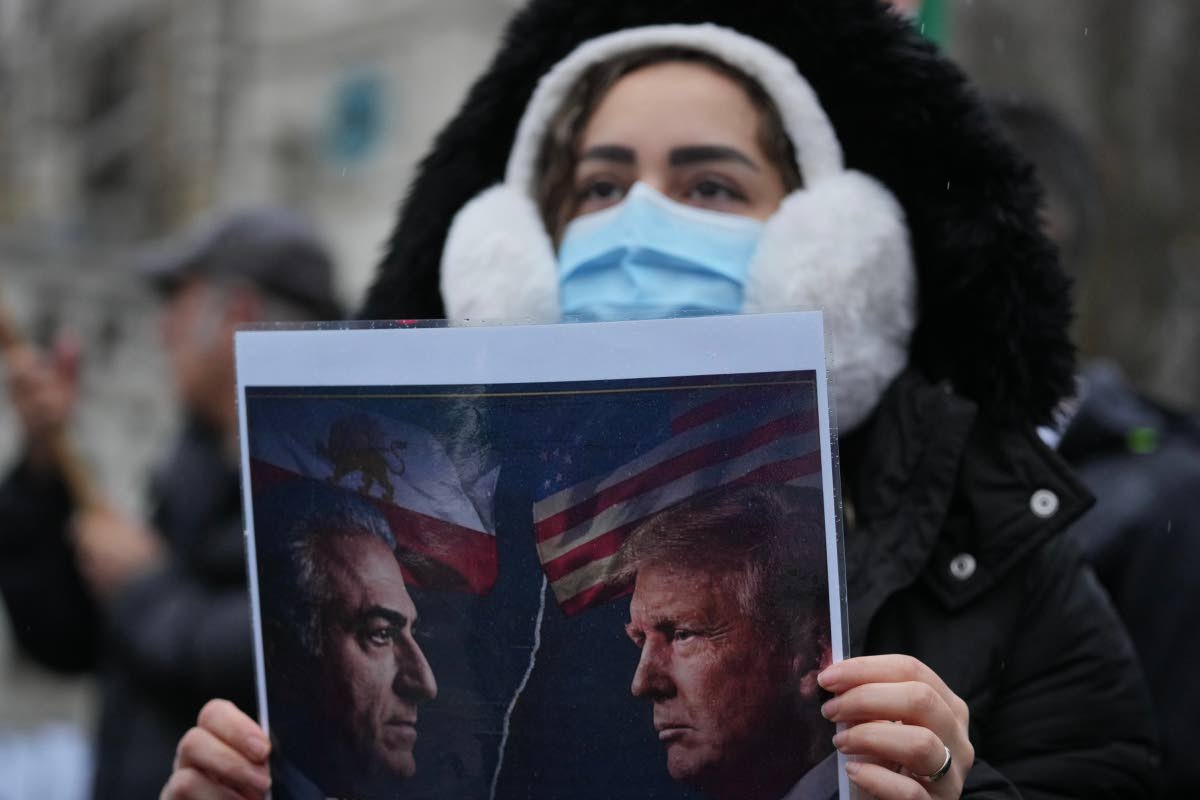 A protester holds up a poster showing Iran’s exiled crown prince Reza Pahlavi, (left) and US President Donald Trump, as she demonstrates outside the House of Parliament, in London.
-
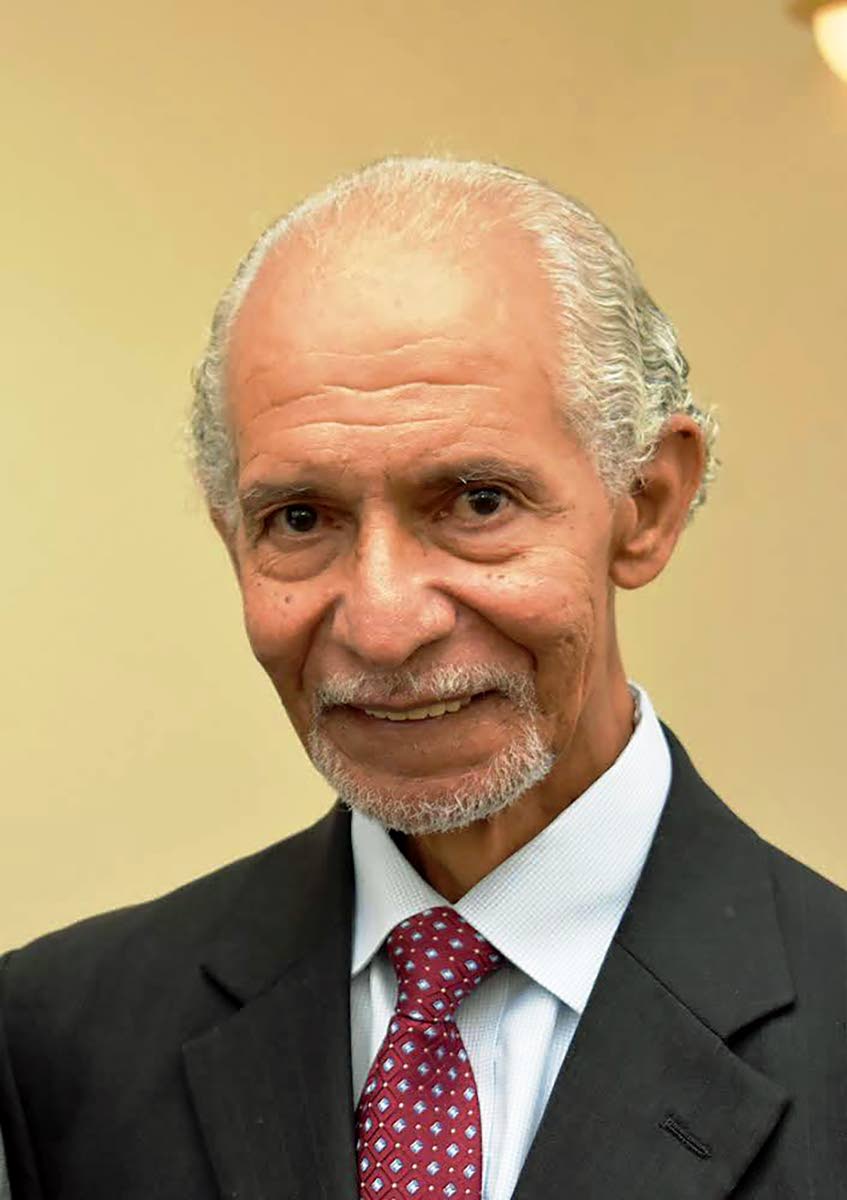 Ambassador Curtis Ward understood that Jamaica does not end at our shores; it lives wherever our people have made their homes.
The recent exchange of harsh words and threats of violence between President Donald Trump and Iran government officials represents a mere smidgen of the hate that exists between the Trump administration and the Iran government.
Netanyahu’s visit to Mar-a-Lago not only stoked the fire of war, but as intended, added fuel to an already cauldron of hatred and mistrust.
President Trump does not need much encouragement to unleash threats against Iran — it is what he does frequently. And if there was ever a president who wanted to detract more from domestic problems, Donald Trump tops the list.
DISDAIN FOR IRAN IS NOT NEW
Trump’s disdain for Iran during his second term is nothing new. US-Iran relations deteriorated rapidly following his withdrawal in 2017, during his first term as president of the US, from the Iran Nuclear Deal (JCPOA). US withdrawal, backed and instigated by Israeli prime minister Benjamin Netanyahu, effectively killed an arrangement negotiated by the Obama administration along with European allies and Russia to prevent Iran from developing nuclear weapons. Withdrawal of the agreement, which had been working as intended since 2015, began the rapid slide in US-Iran relations.
OMINOUS THREAT TO PEACE AND GLOBAL ORDER
There is an ominous threat to international peace, and the world creeps towards more wars in 2026 throughout the world. The number of inflamed situations are likely to climb as long as Trump is president and Marco Rubio is secretary of state and national security adviser. President Trump is determined to dismantle global order. He has put dozens of decades-old multinational institutions and organisations on the chopping block.
By ordering US withdrawal from membership of these international bodies, President Trump is denying US financial and other critical resources on which several of these bodies rely heavily for survival.
This action reverberates around the world and other countries, or groups of countries, such as the European Union, the African Union, and individual countries such as the UK, Australia, Canada, Japan, India, and Brazil will have to evaluate the value of these bodies in maintaining global order across a broad spectrum and determine how best to keep them operating.
Some of these international bodies that were established several decades ago — in a world quite different then than is the reality today — need reform. But reform must be debated and deliberated. There must be consensus between those who provide the bulk of resources and those who benefit the most. One common denominator is that global order is imperative for international peace and stability and security. All sides benefit. Reform cannot take place overnight with the stroke of a pen.
Trump basing his actions on US national security will not end his domestic problems, which roll like a freight train out of control.
In the meantime, the demands for release of the entire cache of Epstein files numbered to be in the millions will grow even among Republicans in the Congress. Trump cannot win this propaganda war. The opposition will get louder. In this election year, time is not on his side. So he is moving quickly and adding external issues to the conversation at a rapid pace. Not only as a distraction from domestic issues but he believes in the projection and use of American military power.
DO AS I SAY OR FACE RETRIBUTION
President Trump dictates to the world — do as I say or I will force you to. He sees US national security as a winning issue, especially in an election year. For him, external “victories” trump domestic issues. But he must be cautious of not sacrificing any American lives in his foreign wars. That could add even more to his domestic problems. It’s one thing to whip an enemy, but it is another to sacrifice American lives to do so. Especially when there was no threat to US national security in the first place to justify the use of military force. Iran warns of this possibility. They should be taken seriously.
President Trump’s invasion of Venezuela and capture of Nicolás Maduro has shaken the world. It demonstrates what most astute watchers of the Trump administration have feared for some time. Trump should be taken at his word — even if only on his threats to unleash American superior military forces wherever he desires. His National Security Strategy, which is global in context and intent, highlights the new Donroe Doctrine — the Trump Corollary’ to the Monroe Doctrine.
CRASHING THE HEMISPHERE
Though concentrated on domination and control of the western hemisphere — crashing the hemisphere and reforming it in his own image — it also sends a broader message. No country is beyond the reach of the United States under the Trump presidency. Countries the United States cannot use military force to control will be subjected to severe economic pressure. There will be hardening and enforcement of US sanctions to coerce the behaviour of governments whose countries rely heavily on comity with the United States.
President Trump has issued a strong warning to Hamas, and he has offered full support for an Israeli strike on Iran to stop Iran’s nuclear programme. He supports actions that will not merely destabilise the Middle East but will throw the entire region into turmoil. He wants regime change in Iran. This is the president who passionately pursues the Nobel Peace Prize; who believes violent conflict and military aggression is the path to peace — dialogue to achieve peace and that rejects violent conflict as a means to peace.
Why would Trump be rescuing Iranians from Iranians — Muslims from Muslims —while condemning protests in the US in support of Muslim women and children in Gaza? Arresting and deporting protesters who stand in solidarity with Muslims in Palestine. Why strike Islamic State in Nigeria to protect Christians while deporting thousands of Christians from the United States to countries ruled by undemocratic governments where they are subjected to grave personal danger and have no recourse to justice in societies where the rule of law is not respected or enforced. These are rhetorical questions — where no credible answers seem to exist.
During a visit to Accra, Ghana, in the early years of the 2000 decade, I visited Kwame Nkrumah’s monument. Despite its magnificence, the simple sign “Let Peace Prevail” left the greatest impression on me. Since WWII, the international community has struggled to contain regional and domestic conflicts from spreading beyond a few state borders to engulf the entire world. Occasionally, a leader from a powerful country emerges who speaks peace but acts war and aggression.
Russian aggression against Ukraine, Hamas versus Israel, Israel and the US against Iran, the US against Venezuela all threaten regional wars which could spread well beyond the regional borders. The collateral effects are felt globally in terms of the refugee crises they spawn and the global economic impact that are often inevitable. New alliances are inevitable.
The year 2026 should be a year of peace. Not a year of wars!
Editor’s note: This is Amb. Ward’s last article before his sudden passing. His voice, insight, and thoughtful public discourse, both on national and international issues enriched The Gleaner ’s opinion pages. He will be missed.
Curtis Ward was former ambassador of Jamaica to the United Nations, with special responsibility for Security Council affairs. Send feedback to columns@gleanerjm.com.