Lloyd Barnett | Performance criteria and accountability/responsibility of parliamentarians
Loading article...
-
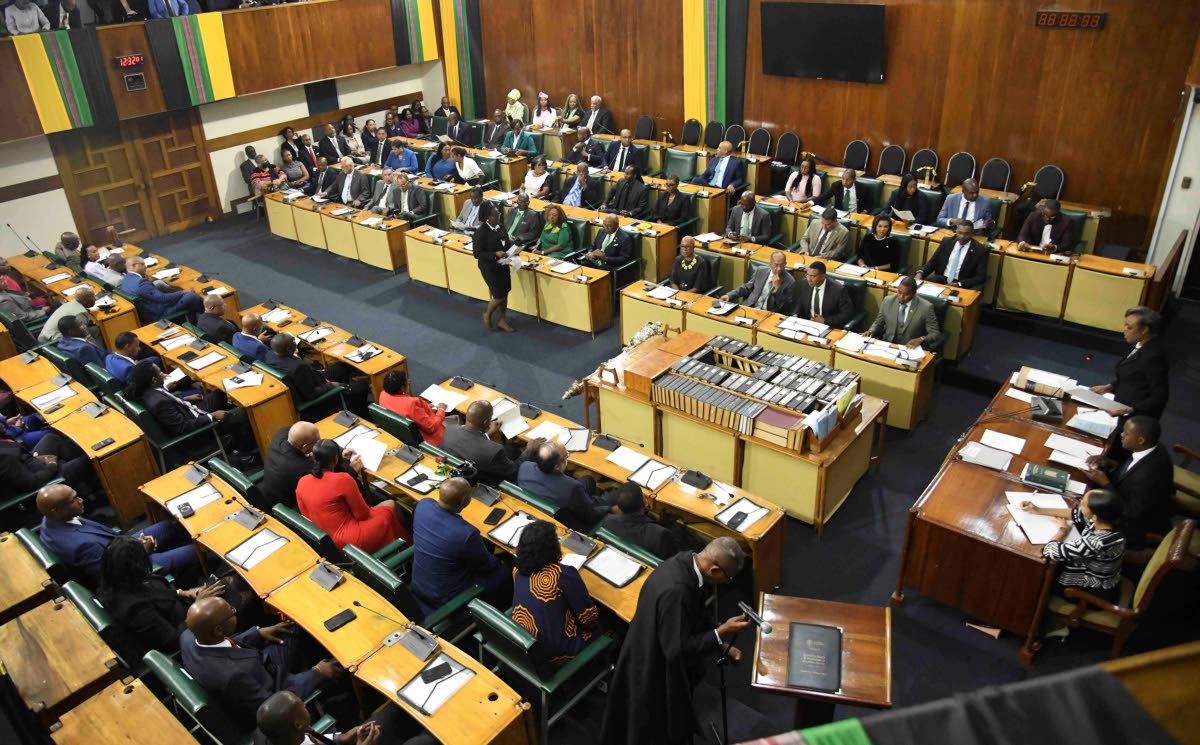 Members of Parliament before being swore at the swearing-in ceremony for members of the upper and lower houses of Parliament held on September 18, 2025 in Gordon House.
-
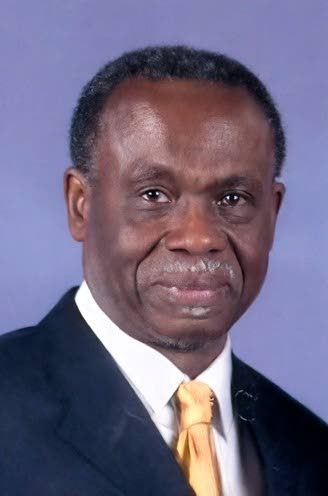 Lloyd Barnett
There is a clear need for the establishment of a clear definition of the duties of parliamentarians. We must go beyond generalities and platitudes such as exist in the Handbook for Parliamentarians of 2012 and the Green Paper of Job Description for Ministers and Parliamentarians of 2023.
The definition of these duties and responsibilities should be given legal status. This can easily be done by providing in the reformed Constitution for the making of the necessary regulations. While it is true that such provisions are not usually made in the Constitutions of other countries, there is no reason why Jamaica should not take the lead.
If the duties are defined, there should be consequences for failure to satisfy prescribed minimum standards. One suggestion has been for provision to be made for the recall of non-performing Parliamentarians. Professor Stone in his 1991 Report stated that: “The Public overwhelmingly supports the idea of voters having a right to recall MPs who in their judgement are not performing. Seventy-two per cent of the public supports this idea and it was proposed as a solution to the accountability problem by 19 of the 62 submissions to the Stone Committee.”
Professor Stone recommended that a Constituency Council with a wide membership should be established in each constituency. It would be made up of a wide selection of persons from all civic, community and citizens’ organisations in the constituency, with a maximum membership of 50 persons. A recall petition signed by 51 per cent of registered voters would be necessary to initiate this process. Their signatures could be verified by the returning officers for the constituency.
UNSEATING
The petition, if upheld by the Constituency Council, would then result in the unseating of the member. Several members of his committee believed that such a system would cause serious problems, as it would be used by party activists to harass their opponents. It would also require cumbersome and costly procedures to verify the authenticity of the signatures of the thousands who are represented as supporting the recall, as well as risking the exposure of their identities. Frequent recall petitions and possible by-elections could become the norm. The practical and fair implementation of the system recommended by Professor Stone is clearly very difficult, if not impossible. It is very difficult to devise an efficient and fair system of recall other than a by-election which can only legally take place if a member is removed from office.
The report of the Constitutional Reform Commission of Jamaica of 1993 stated that, after careful consideration to this question and lengthy discussions, the commission was of the view that there were the following dissuasive factors: the difficulties in devising an efficient and reliable system; the probability of abuse of the procedure; the resultant insecurity of tenure and the probability of numerous by-elections. Accordingly, the decision was against recommending the inclusion of a power to recall members of the House of Representatives on complaint by electors.
The Report of the Constitution Review Commission of Barbados of 1998 stated that “the majority of the Commission does not recommend legislating the right of recall. The potential for abuse and creation of instability in the political culture outweighs any perceived value that such a right may provide.” The Constitution Reform Commission of Barbados, in its 2024 report, repeated and reinforced this conclusion.
INTERESTING SCHEME
However, a member of the Barbados Commission, Wendell McCLean, offered an interesting scheme for recall which was designed to minimise its disadvantages. He recommended that the system should include the following features: the initiation of recall proceedings should not occur during the first or final year of the life of Parliament, or less than 15 months after a previous recall petition pertaining to a member; the grounds of the recall petition must be clearly specified and limited to questions of fact pertaining to the conduct or performance of the particular member of the House of Assembly, since the last election, or the last recall petition pertaining to the said member; any recall petition must be evaluated, as to its factual content, by a body established for this purpose. In the event that a petition is found to contain errors of fact, the initiative shall be voided.
The member concerned and the sponsors of the petition shall have the right to be heard in these proceedings; should the petition be found to be rooted in fact, the Electoral and Boundaries Commission must arrange a recall poll to take place within eight weeks of the ruling in favour of the recall petition; a recall petition should be initiated by at least 100 electors registered in the constituency represented by the particular member of the House of Assembly; a recall petition only succeeds if 55 per cent of those voting in the recall poll vote in favour of recall. However, it is difficult to see how this process would be completed in a prescribed and reasonable time and how the apprehended political instability could be avoided.
Jamaica’s recent CRC report did not make any recommendation on this issue.
However, I consider it possible to devise an alternative system which provides for some accountability. It would require the establishment of reasonable criteria, a system of recording each member’s performance, an assessment by an independent civil society committee, followed by a notification or warning to the member as soon as deficiencies in his or her performance are manifested. If there is no improvement, then a Notice of Default would be published throughout the constituency. This public denunciation has the potential to be very impactful, without being disruptive.
Dr Lloyd Barnett is an attorney-at-law and author. Send feedback to columns@gleanerjm.com