O.K. Melhado | Sir Gary and Sabina Park
Loading article...
-
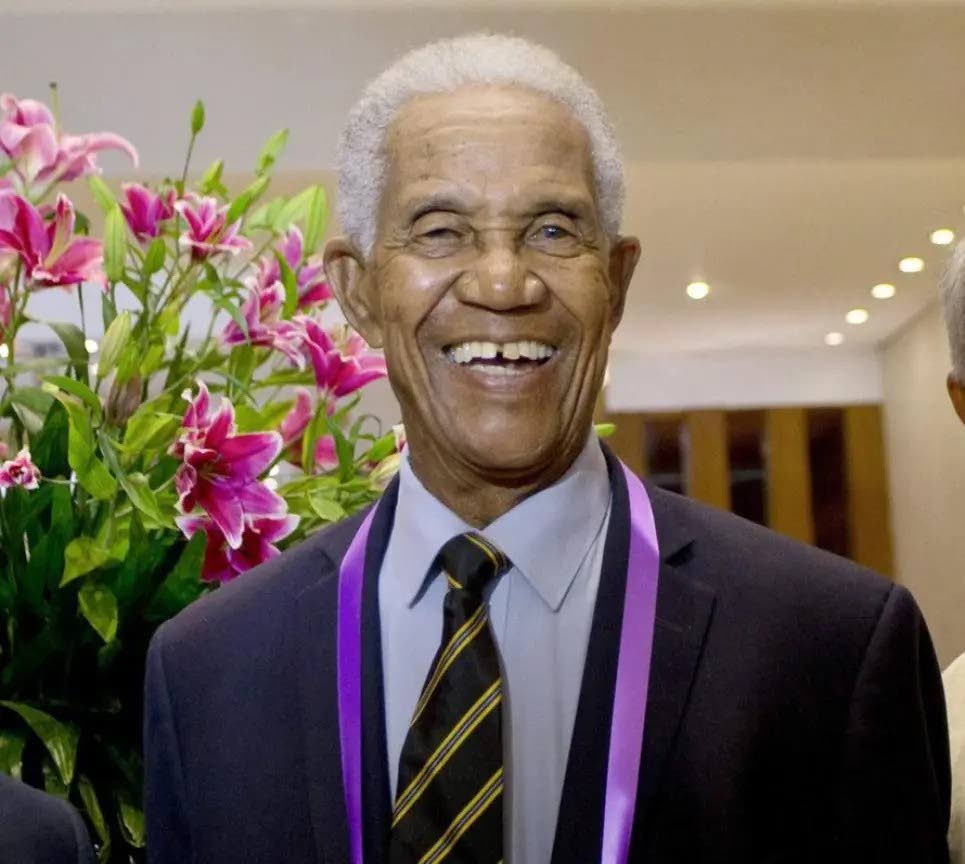 Sir Garfield Sobers
-
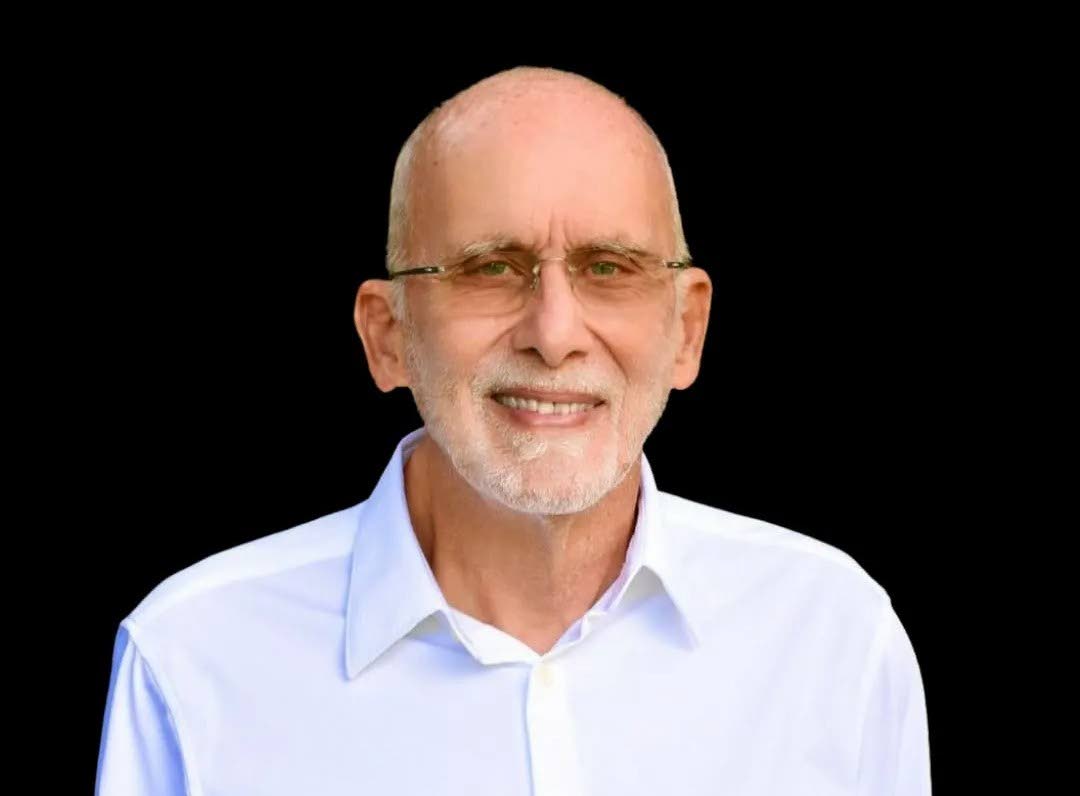 O.K. Melhado
Less than two weeks ago, on July 17, the cricketing world lost the man universally regarded as the greatest ever to play the game. Sir Garfield St Aubrun Sobers passed away peacefully at his home in St Michael, Barbados, at the age of 89 — a mere 11 days short of his 90th birthday. Barbados declared a national day of mourning and accorded him a state funeral, honours entirely fitting for a man who was made a National Hero of his country in 1998.
Over these few days, there have been countless testimonials to his greatness. Some have dwelt on his amazing record, others have embellished those statistics with their great admiration for the way he played and the enormous influence he so often had on the outcome of a game.
The record, it must be said, remains staggering nearly half a century after his retirement. In 93 Test matches for the West Indies between 1954 and 1974, he scored 8,032 runs at an average of 57.78, with 26 centuries, took 235 wickets at 34.03, and held 109 catches. He remains one of only a handful of players in the history of Test cricket to have scored more than 5,000 runs and taken more than 200 wickets. Sir Donald Bradman famously described him as a “five-in-one” cricketer: a batsman of genius, a fast-medium bowler with the new ball, an orthodox left-arm spinner, a wrist spinner, and a fielder of lightning reflexes anywhere on the ground. Little wonder that generations have searched in vain for “the next Sobers”.
But, if Sir Gary belonged to the cricketing world, Sabina Park belonged to him. He started his Test career at Sabina, and that was just the first of the important milestones he created there.
In March 1954, still some months short of his 18th birthday and with only two first-class matches behind him, he was drafted into the West Indies team for the final Test of the series against England at Sabina Park, as a left-arm spinner to replace the injured Alf Valentine. He made his first runs batting at number 8 – 14 not out – as the West Indies were skittled out on a damp pitch for a mere 139. England, in reply, made a slow but steady start, and the more experienced bowlers King, Gomez, Atkinson and Ramadhin were unable to break the opening partnership of Hutton and Bailey. Captain Stollmeyer then called on Sobers, who almost immediately had Bailey caught behind. He went on to take 4 for 76 and finish as the highest wicket-taker for the West Indies and, still batting at number eight, he scored 26 not out in the second innings. For those of us who watched the game, initially disappointed that our Jamaican icon Alf Valentine had been sidelined, it was clear there was something very special about this young man. He had, after all, made his first-class debut for Barbados at just 16, taking seven wickets against the touring Indians.
The following season, Australia visited the West Indies for a five-match series. He was omitted from the first Test, played at Sabina Park. Included for the second Test in Trinidad, he batted at number six and showed his early promise as a batsman, scoring 47. However, it was not until the fifth Test, played at Sabina Park, that he established another milestone, scoring his first Test half-century. Following an undefeated 35 in the first innings, batting at number five, he went on to make 64.
Unsurprisingly, his third major milestone came at Sabina Park in 1958, in the third Test against Pakistan when he not only scored his first Test century but went on to an undefeated 365, breaking the record for the highest individual Test score of 364, set by Len Hutton against Australia in 1938. He was just 21 years old, and it was, remarkably, his maiden Test hundred. That record stood for 36 years, until another great West Indian left-hander, Brian Lara, made 375 in Antigua in 1994 – with Sir Gary himself walking out to the middle to embrace him.
Sir Gary was appointed captain of the West Indies for the 1964–65 series against Australia. His first match as captain was at Sabina Park, which the West Indies won by 179 runs, on the way to a first series victory over Australia. He led the West Indies in 39 Tests over seven years, including the triumphant 1966 tour of England, where his own contribution – 722 runs and 20 wickets in the series – ranks among the greatest all-round performances ever produced by a captain.
Finally, in 1974, playing in his last Test series, it was at Sabina Park, in the second Test, that he scored 57 – his last half-century and his highest score of the series.
So Sabina was the venue for his first Test, his first half-century, his first century and record-breaking 365, his last half-century, and his first game and first win as captain. In all, he played 11 Test matches at Sabina Park, scored 1,354 runs at an average of 104.15, including 5 centuries, and took 27 wickets! These numbers, awesome as they are, tell only half the story. The other half is reserved for those of us lucky enough to have watched him play.
Of course, his genius was not confined to the Caribbean. He gave distinguished service to South Australia in the Sheffield Shield and to Nottinghamshire in the English county championship, and it was for Nottinghamshire, at Swansea on August 31, 1968, that he produced the feat with which the wider world will forever associate him: the first six sixes struck in a single over in first-class cricket, off the unfortunate Malcolm Nash of Glamorgan. Characteristically, he was not chasing a record — he wanted quick runs before a declaration. He later remarked, with typical modesty, that, wherever he went in the world, it was the six sixes everyone mentioned, as though the 8,000 Test runs were a footnote.
In 1972, the late Pat Rousseau approached me with the thought that Jamaica should host a benefit match at Sabina Park for Gary (he was not yet Sir Gary). I was more than excited by his proposal, and we convinced Red Stripe to sponsor a double-wicket tournament with the proceeds going to him. The names of the players who took part were a testimony to his stature among his peers. They journeyed from all the major cricketing nations: Ian Chappell and Doug Walters from Australia, Derek Underwood and Brian Close from England, Pakistan’s Zaheer Abbas and Mushtaq Mohammad, and others, all travelled to Jamaica to support and honour him. It was only fitting that the venue was Sabina Park.
The honours that followed his retirement told the world what we in the Caribbean already knew. He was knighted by Her Majesty Queen Elizabeth II in 1975, on Barbadian soil at the Garrison Savannah. He was named one of Wisden’s five Cricketers of the Century in 2000, inducted into the ICC Cricket Hall of Fame in 2009, and the trophy awarded annually to the world’s best cricketer bears his name. He was made a National Hero in his own country, Barbados, standing tallest among a pantheon of great cricketers to emerge from that small island. But, for the West Indies as a whole, he was our champion.
In Jamaica, he bestowed on us his finest gifts as a cricketer and as a sportsman. In a game where batsmen would stick around if they got a fine edge, hoping the umpire had missed it, he always walked before the umpire had time to give him out. I once asked him why not wait around and see if you got the benefit of the doubt. His reply was simply: “If I’m out, why would I?” Perhaps that sums up best how he played the game – and the man he was.
Owen Karl (O.K.) Melhado, is a businessman, sport lover, cricket aficionado; as a ‘curry goat’ cricketer, he played for D&G in the Business House League in 1971/72. Send feedback to columns@gleanerjm.com