Ronald Thwaites | To make things better
Loading article...
-
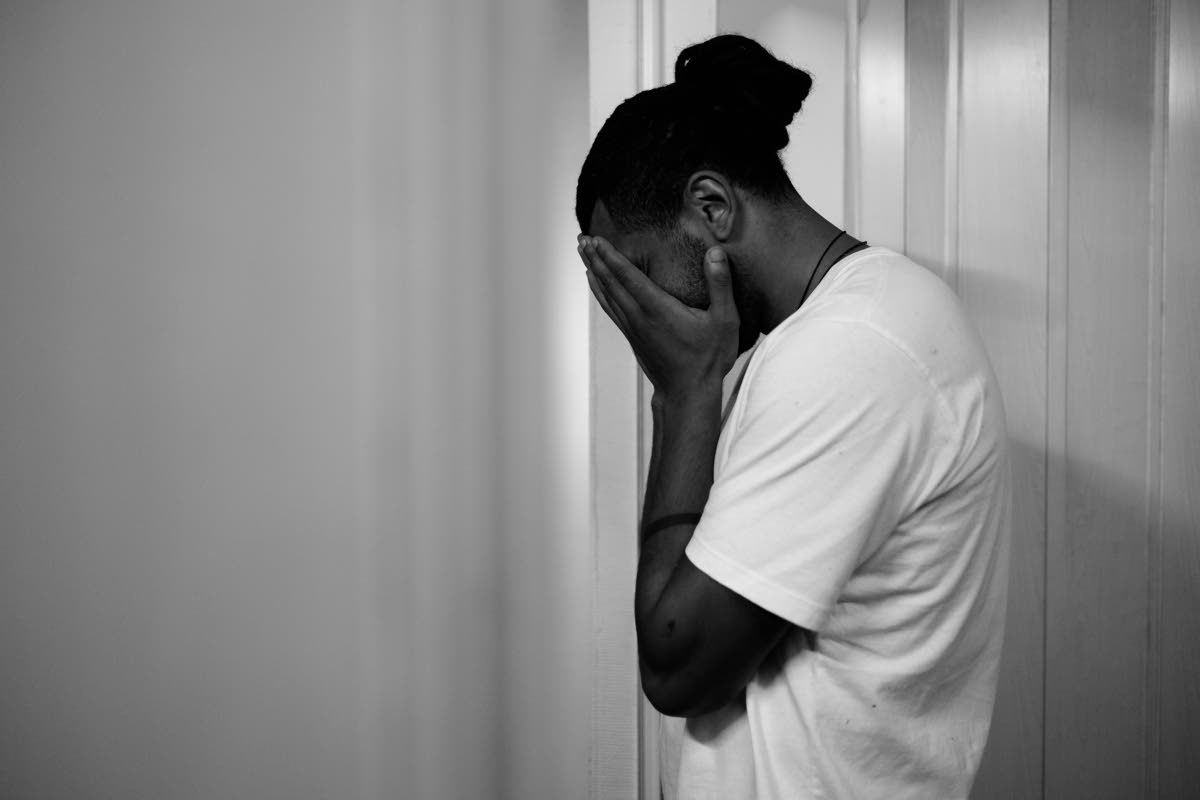 Representational image of a sad student.
-
 Ronald Thwaites
It was hard to watch a big youth cry in disappointment and shame last week at the start of the school year, especially in the presence of the parent who has invested so much of the little they had in the hope of a good school outcome.
This guy is over 15 now, repeated both grades 7 and 8, but cannot be promoted to a higher grade because he is still reading at Grade 3 level. The news of his incapacity and failure overwhelmed his usual teenage-boast exterior.
He fears the scorn of his contemporaries, the disdain of the girls he wants to check, and the careless designation of “dunce” thrown at him. Nothing else is wrong with him. His ambition is/was to be a soldier, in America.
Unchecked, the tears will soon dry up into angry, rebellious behaviour. He will stop coming to school, force himself on some equally under-achieving woman, spoil up her life and the life of the child they parent but whom he cannot care for; likely get a criminal record and probably get killed (murdered?) by cronies like himself or by the police.
I have seen hundreds like this guy in six decades of engagement in legal, educational, political and religious life.
His learning disability was perfectly evident and very likely treatable from basic school but not formally responded to until he was in Grade 5. An appointment at the only available learning diagnostic centre took nearly two years to arrange (longer now!) and, after his challenge was properly identified and therapy prescribed, neither parent, primary school nor high school had the facilities to treat him. He has been promoted to a higher grade every year, until now.
There are about 20 per cent of the students in his age group nationally who have similar needs for diagnosis and therapy. They cost billions to ignore.
Untreated, they are the next generation of under-producers and deviants. The society ignores them at its own certain peril and with a contempt for God’s creation. Leaving them as we do now is the equivalent of refusing to take precautions when Melissa was already blowing.
HOPE
A small centre for treating neurodivergent young people is now starting at his school. The Ministry of Education wants to be helpful but the rigidity of the teacher establishment and the allocation of resources are constraining.
Already culpably late, they are going to be preoccupied with infrastructure restoration, not teaching and learning deficits, for months if not years.
So alternative hope has to be crafted for my ‘big youth’ and his kind. He will now be a member of a special, much smaller class, part of the ninth grade, but offering a reduced academic and vocational curriculum that will restore possibility and some dignity to my guy and his distraught parent.
REVAMP TEACHER TRAINING
The number of wounded and differently enabled children requires a changed approach to teacher education and upskilling as well. All contact personnel need to be trained as assistant therapists, not to be confused with professionally certified ones, who can identify abnormalities and exceptionalities from early-childhood interactions and refer them for appropriate management.
I have suggested to the Jamaica Teaching Council that postgraduate professional development courses in these therapies should be a required feature for teacher certification.
This crisis is the foremost national security issue of our time. In our latest self-delusion, we avoid the problem and splurge on repression and counter-violence and declare ourselves on the path to victory and social peace. Sounds to me like Trump’s “victory” over Iran.
COMPETITIVENESS
Last week, the latest PISA world educational assessments were published. In an increasingly technological age in which, last week, there were nagging predictions that artificial intelligence could soon outpace human agency itself, the PISA study recorded declines in literacy and numeracy competence in many Western developed countries, as well as stagnant scores in developing countries, including Jamaica. This data should add urgency to the cause of local education reform. We have to do better than those who are already rich.
The far-reaching structural reforms prescribed by the Patterson report have stirred no national energy.
Interacting with a group of school leaders recently, I was shocked that several acknowledged that they had never read the report, while others are so complacent with the ennui of the present system that they saw no urgency for change. “All we need is more money” was their frightening assessment of a cure for underperformance.
SOME QUESTIONS
How does Jamaica propose to manage a US$2 billion annual fuel bill with an out-of-control trade deficit, reduced tax intake, depressed tourism and BPO revenue, drought, plus higher international and local borrowing costs?
A small box lunch now costs $800 in Central Kingston. $280 per day for PATH lunch leaves school canteens scuffling for a “mek-up”.
Can remittances be expected to fill the gap? When do we begin to have serious discussions around a united table about how we are going to pay our way?
WHAT IS REAL?
Looking at the always optimistic financial statements of many of our listed companies, it appears that much of their fantastic profits are premised not on increased outputs of goods and services but on the revaluation of real assets. Strip those notional (and questionable?) bloats out of their balance sheets and the picture for many entities becomes as frightening, and as much in need of reform, as the problems of our education system.
Add to that the darkness of unoccupied luxury apartments and offices around urban centres, the endless number of additional motor vehicles bought on credit, and ask yourself how aligned is the deployment of domestic capital, people’s savings, to broad and pressing national needs.
PRIDE AND THE FALL
Last week, the prime minister called the nation to “higher order thinking”. He is right. All the questions raised here, and many others, require hard, sacrificial, common-cause, united consideration and action.
Sadly for the whole of us, many of his supporters, and particularly the elected satraps and hangers-on who depend on the dominance of a political party, in this case his, for their status and big money, believe that they (he?) are the origin and the monopoly of the needed “higher order thinking” to “Make Jamaica Great Again”.
Their delusion is now slapping us in the face. It can be otherwise.
Rev Ronald G. Thwaites is an attorney-at-law. He is former member of parliament for Kingston Central and was the minister of education. He is retired principal of St Michael’s College at The UWI. Send feedback to columns@gleanerjm.com.