Ten Types Beauty Contest captivates Jamaica – Part 1
Loading article...
-
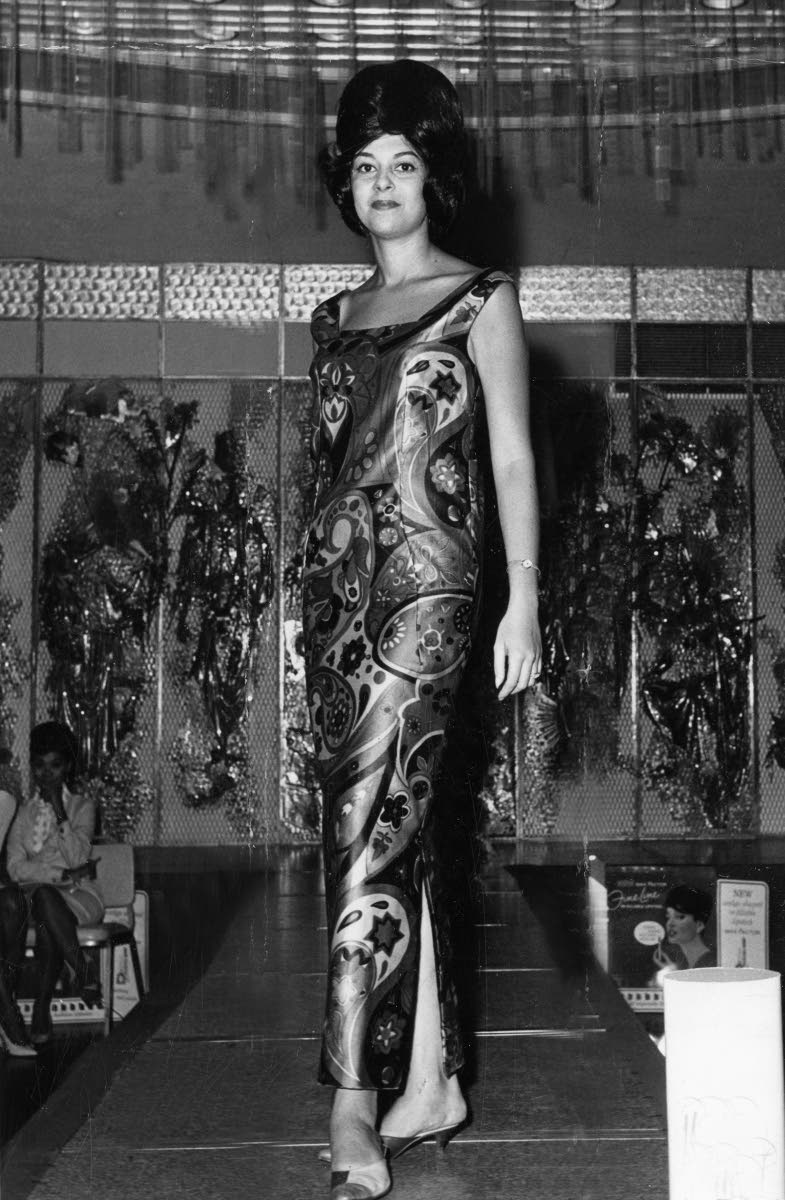 Ten Types Beauty contestant Margaret Sinclair. Photo - Gleaner Library
-
Ten Types Beauty contestant Margaret Sinclair. Photo - Gleaner Library
-
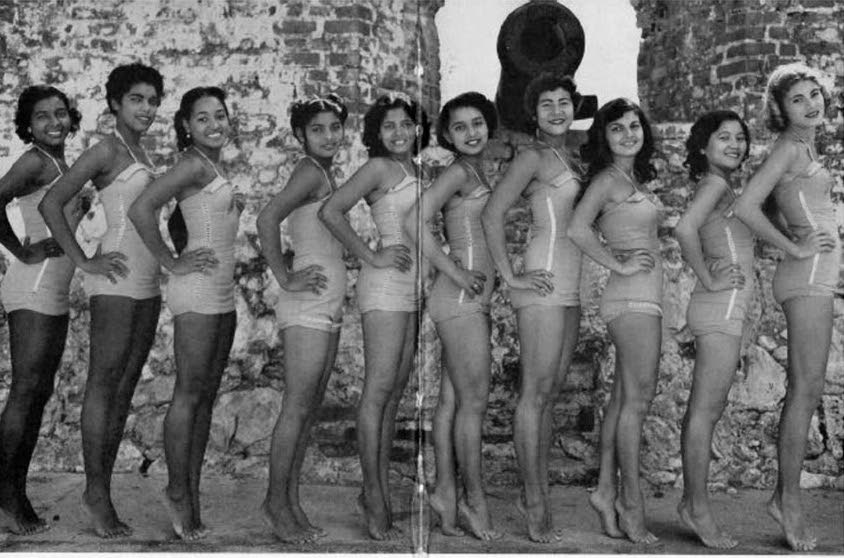 The first winners of the Ten Types Beauty competition in 1955. Photo - Gleaner Library
In 1955, Jamaica held the Ten Types Beauty Contest, where 10 separate beauty queens were selected based on their race and complexion. With immense positive feedback from local and international press, the pageant projected the idea of Jamaica as a racial paradise. With this branding of Jamaican society, the pageant became one of the major influences in shaping the nation’s new national motto: Out of Many, One People.
In the early 1950s, Jamaica’s minister of finance in the Jamaica Labour Party (JLP) government, Donald Sangster, was busy working on a celebration that he explained would commemorate “the 300th anniversary of British rule in Jamaica”. This celebratory idea came to Sangster after he visited New Zealand in 1950 and saw the country commemorating the centennial celebrations of the founding of the city of Christchurch. As Howard Johnson stated in his paper, ‘The ‘Jamaica 300’ Celebrations of 1955: Commemoration in a Colonial Polity’, Sangster’s main objectives were to “expand the industrial sector by attracting external investment capital and increase the island’s tourist trade”.
By mid-year, Sangster had a few ideas for this celebration. The most touted was inviting foreign dignitaries to visit Jamaica during the tercentenary year, where these visits would direct foreign attention to the island and promote its reputation overseas. Announced dignitaries included Princess Margaret of England and President Paul Eugène Magloire of Haiti. A Jamaica Historical Society, chaired by Sangster and dominated by British personnel, was then formed to serve as the celebration’s executive committee. Out of this committee came plans for a ceremony, held at Port Royal in May, to commemorate the British landing at Passage Fort.
However, not everybody was on board with these celebrations. For instance, the Kingston and St Andrew Corporation (KSAC), which at this time was dominated by the opposition, the People’s National Party (PNP), stated that they would prefer that “the celebrations be directed towards showing the emergence of Jamaica as a nation at the national level and on the municipal level, the establishment and growth of Kingston as the premier metropolis in the British Caribbean”. With this, they proposed the “enshrining of national heroes, e.g. Marcus Garvey, George William Gordon and JAG Smith”.
Still, despite the backlash, Donald Sangster went ahead with his plans. Thus, come January 1955, he announced that the “celebrations would mark 300 years of progress and development as a junior partner with Britain in her vast colonial enterprise”. However, 1955 was an election year, and at the end of the January 12 election, it was the PNP that prevailed, winning 18 of the 32 seats on offer. As such, the 300th celebration planning would then be overseen by the PNP. Instead of cancelling the celebration, the party rebranded it. In her paper, Glorifying the Jamaican Girl: The Ten Types – One People Beauty Contest, notable historian Dr Rochelle Rowe states:
“The PNP, which took office in January 1955, promptly revised the tenor of the celebratory plans, changing it from a commemoration of three hundred years of British rule to a celebration of Jamaica’s three hundred years as a national entity with a distinctive history, culture, and people.”
And with this rebrand, the highlight of the celebration to commemorate 300 years of national pride, according to the PNP, was a beauty pageant to be held in May; and this beauty pageant was designed to showcase the diversity of Jamaica’s populace.
History of beauty pageants in Jamaica
At this time in the 1950s, the main pageant on the island was the well-established Miss Jamaica beauty contest. Miss Jamaica began in 1929 and was sponsored by The Gleaner, where the event aided in the popularity of the newspaper. However, it only catered to families of the white elite of the island.
Then in 1947, Aimee Webster, a wealthy Jamaican, acquired Miss Jamaica and merged it into her new Miss British Caribbean contest, which was created to promote her newspaper, the Caribbean Post. With this, Webster sought to support the British West Indies Federation and champion respectable, “well-born” light middle-class young women as “a symbol of the modernity, sophistication, and optimism of the postwar West Indian territories”. As such, the winners of both Miss Jamaica and Miss British Caribbean tended to be light-skinned brown and black women.
However, sometime after Webster’s management of the Miss Jamaica contest, the pageant fell into abeyance and was later acquired by the Jamaica Bodybuilding Association in 1954, a private health establishment managed by Ken Rhino. The Jamaica Tourist Board (JTB) then partnered with the organisation to sponsor the pageant. Together, they branded the role of Miss Jamaica as both a national representative and a cultural ambassador. As such, contestants could now win luxury prizes and enter international pageants such as Miss World; but according to Dr Rowe:
“In this format the brown participants who had been singled out by Webster’s contest lost status, unable to compete with white Jamaicans and to rise above the occasional place in the final line-up. Black women, meanwhile, were absent from the contest.”
Nevertheless, in 1955, Theodore Sealy, the first black editor of The Gleaner, called out the Miss Jamaica organisers for appointing yet another white “queen” in Marlene Fenton.
With this advocacy in mind, Sealy was picked as the organiser of the 300th celebration’s beauty pageant. In this capacity, he wanted to represent the diversity of the island in, frankly, 10 different ways. Thus, the Ten Types Beauty Contest was born.
The Ten Types Beauty Contest
The Ten Types Beauty Contest was launched in May 1955 under the theme: ‘Every lassie has an equal chance’. Its main sponsorship came from the JTB, while both THE STAR and The Gleaner were in charge of promotion.
Thus, for seven months, the competition toured the island, “uncovering a wealth of feminine charm”. With THE STAR distributing posters and leaflets all over the island, the public was invited to vote for their favourites based on the published photographs of entrants; however, final judging took place in private. By December, the winners were announced, and these were the titles and descriptions placed on the 10 beauty queens:
• Miss Ebony – A Jamaican girl of black complexion.
• Miss Mahogany – A Jamaican girl of cocoa-brown complexion.
• Miss Satinwood – A Jamaican girl of coffee-and-milk complexion.
• Miss Golden Apple – A Jamaican girl of peaches-and-cream complexion.
• Miss Apple Blossom – A Jamaican girl of European parentage.
• Miss Pomegranate – A Jamaican girl of white-Mediterranean parentage.
• Miss Sandalwood – A Jamaican girl of pure Indian parentage.
• Miss Lotus – A Jamaican girl of pure Chinese parentage.
• Miss Jasmine – A Jamaican girl of part Chinese parentage.
• Miss Allspice – A Jamaican girl of part Indian parentage.
To note, although the objective of Ten Types was to move away from mainstream beauty ideals, the winning beauty queens were all slim and petite in frame. Then, only one darker-skinned woman was included in the list of 10 winners: Miss Ebony.
Local and international reception
In the wake of the Ten Types contest, local reception was positive. Soon after, the international community started to show interest. In a world of racial segregation, many saw the pageant as the answer to a post-racial world.
Edward Scott, an American journalist, described the pageant as a model of racial tolerance in an August 10, 1955, Gleaner article titled, ‘Beauty Contest of a Revolutionary Quality’. Specifically, he offered immense praise to Miss Ebony, stating:
“I do not know who made up that list of ten names, but it is a masterpiece of poetry, dignity and good taste. The various qualifications are beautifully prepared, and I find myself admiring particularly the little Jamaican girl who does not protest that it is undemocratic to have a class for ‘Miss Apple Blossom,’ but who readily admits that she is ‘a Jamaican girl of black complexion’ and proudly enters her name in the competition for ‘Miss Ebony.”
Both America-based publications, Life Magazine and Time Magazine, ran features about the pageant. However, the most notable coverage came from Ebony, the black American-targeted magazine, which sent both its chief photographer and its managing editor to Jamaica to cover the finals of the competition. With this, Marshall Wilson, the white photographer of Ebony, was quoted in THE STAR as saying that the Ten Types competition was one of racial harmony which could convert racists. As he said:
“Jamaica is making an invaluable contribution to the development of better race relations in the United States… Travellers coming to the island from the United States… are very much interested to find that discrimination does not exist in Jamaican hotels or nightclubs. Those Americans who believe in equality of races are able to point to the island as an example of how various peoples can live together in harmony. Those who are in favour of segregation are at first amazed — and often converted. By mixing on a social level with cultured coloured persons, even the most die-hard believer in segregation begins to have doubts about his conviction.”
Cultural impact
The Ten Types competition resumed in 1959 until its demise in 1963. The Gleaner reported that 6,000 women had their photographs taken for entry into the competition. Yet, the pageant’s legacy lies in how it eventually changed local pageantry on the island.
In 1960, the Jamaican branch of the United Negro Improvement Association (UNIA) proposed its own beauty competition. Then in 1962, the Gleaner sportswriter Alva Ramsay suggested, in a public letter, that in the year of Jamaican independence a darker-skinned black woman should be crowned Miss Jamaica. As he wrote:
“I suggest either we go into the hedges and byways and select a Negro girl as ‘Miss Jamaica’ for the independence year or we adopt a modified Ten Types pattern and have four queens – one a Negro girl, one a white girl, one a Chinese and one an Indian.”
Two years later, Ramsay and his organisation, the Council for Afro-Jamaican Affairs, began its own Miss Jamaica Nation contest with the aim of rivalling Miss Jamaica. The first winner, Yvonne Whyte, came from a middle-class professional background and was praised at her crowning by PNP Senator Kenneth McNeill as “the first real country girl to win a beauty contest”.
Yet the most glaring influence of the Ten Types Beauty Contest was the Miss Jamaica Beauty Contest, which began in 1963 as a part of the annual Jamaica Festival celebrations. In 1975, the pageant was rebranded, with the purpose of placing greater emphasis on the cultural awareness of beauty queens. It still continues to this day in the form of the Jamaica Festival Queen Competition.
This article is taken from the Lest We Forget podcast episode, ‘Jamaica’s Ten Types Beauty Contest’. JT Davy is a member of Tenement Yaad Media, where she writes and co-produces their popular historical podcast, Lest We Forget. Send feedback to jordpilot@hotmail.com and entertainment@gleanerjm.com.