Jamel Banton | After Melissa: What future do we choose for Black River?
Loading article...
-
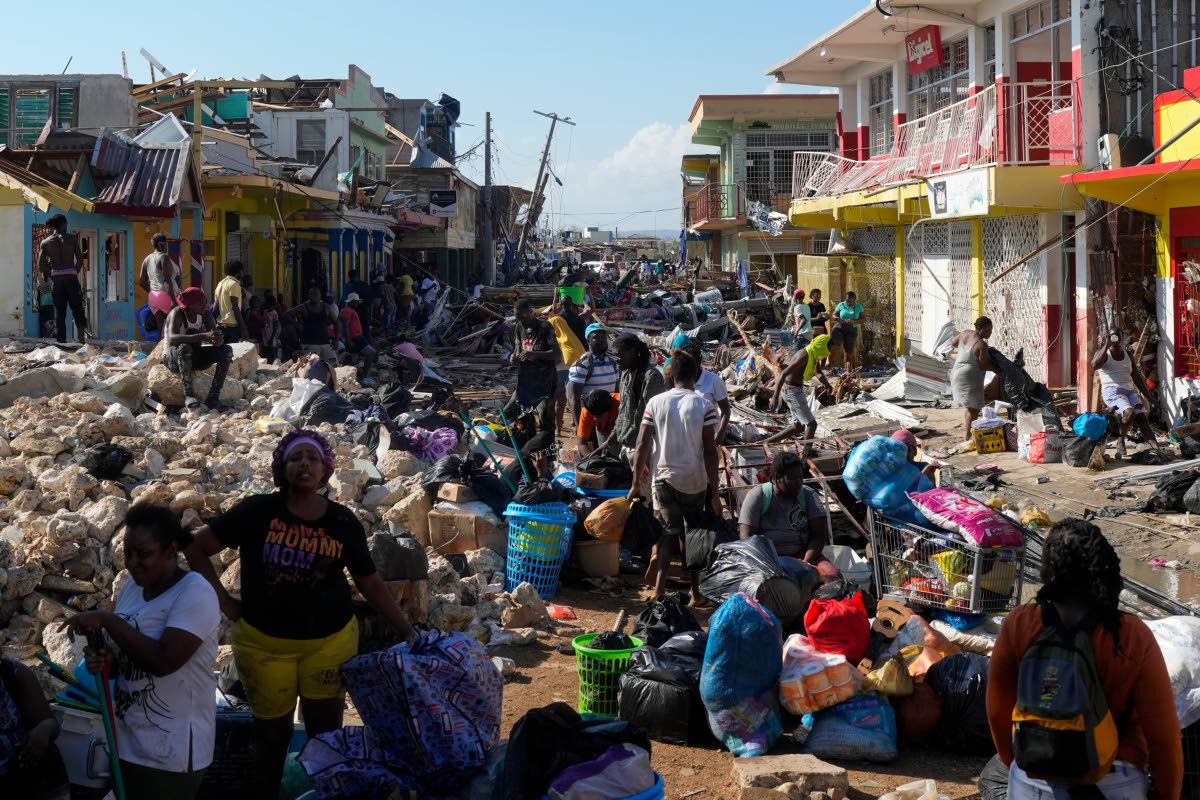 Residents gather amid debris in the aftermath of Hurricane Melissa on a street in Black River, Jamaica, on October 30.
-
 Jamel Banton
Hurricane Melissa ravaged the birthplace of so many of us, and, in the aftermath, a harder question has emerged: do we simply protect what remains of Black River, or commit to transforming it into something very different? It is not an easy choice, but one that demands a careful balance between practicality and emotion.
STEEPED IN HISTORY
Founded in the early 1700s, Black River was once among Jamaica’s most progressive towns. In 1893, it became the first place in Jamaica — and the entire Caribbean — to have electricity, thanks to the pioneering Waterloo Guest House. The St John’s Parish Church, destroyed by Melissa, was one of the town’s most recognisable landmarks. Built in 1845 from local limestone, it served generations through weddings, funerals, and other community ceremonies. Its loss removes one of Black River’s oldest and clearest links to its past.
But the town’s history runs deeper than architecture. A monument in Black River remembers the Zong massacre of 1781, when 133 enslaved Africans were deliberately thrown overboard on a voyage from West Africa that ended there. The ship’s owners tried to claim insurance for “lost property” and lost the landmark court case that helped ignite the abolition movement. Preserving Black River means preserving a piece of this painful but transformative chapter of our story.
UNIQUE WATERFRONT
Black River is the only town in Jamaica where a fully navigable river meets the coastline to form one concentrated hub of economic and cultural activity. The river mouth is deep enough for vessels far larger than the fishing boats common elsewhere, making it one of the few places on the island that can genuinely support deep-water fishing. The sheltered coastline offers real potential for waterfront development, while the river anchors one of Jamaica’s strongest eco-tourism experiences, connecting visitors to the Black River Morass, crocodile habitats, and one of the island’s largest wetland ecosystems. This convergence of harbour, river, fishing, eco-tourism, and heritage exists nowhere else in Jamaica, giving Black River a rare mix of livelihood, culture, and natural assets in a single place.
WHAT MELISSA REVEALED
People in Black River have long known the real danger comes from the sea, not the river. The 2011 ODPEM study I worked on confirmed this: The Great Morass absorbs most river overflow, while the coastline has always been the true point of risk. Residents still recall Hurricane Ivan in 2004 sending waves across High Street, and reports from 1933 describe the town as “almost deluged” by water from the sea. That study also warned that the ageing seawall left key buildings such as the church and the hospital far more vulnerable than many realised.
Melissa made this unmistakable. Hospital staff described water rushing into the ground floor of one building as they carried patients through the rising surge while part of the seawall collapsed. Based on the elevation, the surge was likely close to six metres above normal sea level — far beyond historical expectations. Melissa showed that the hazards we once planned for are now being overtaken by a changing climate, forcing us to rethink Black River’s relationship with the sea.
FADING ECONOMY
Black River’s economic role in St Elizabeth has also changed. For decades, many “sentimental” residents have described it as a ‘ghost town’ after dark, as commercial activity shifted to the rapidly growing centres of Santa Cruz and Junction. Aside from the hospital and the parish council offices, most major business in the parish now happens elsewhere. Once the parish capital in both name and spirit, Black River has steadily lost much of the economic weight it once carried. These realities must be considered alongside the town’s heritage, risks, and possibilities, as we think about its future.
REIMAGINING THE WATERFRONT
Black River now has a rare chance to redesign its shoreline with hazard awareness at the centre. Along High Street, the waterfront could become a civic space that protects the town while reconnecting people to the sea — a green buffer, park, and boardwalk. This will mean real setbacks, repurposing or relocating some buildings, and possibly limited reclamation. The goal is to reduce risk while finally using the waterfront in a meaningful way.
Revitalisation also depends on bringing people back into the town centre. Apartments, townhouses, and mixed-use buildings would provide the population needed to support shops, restaurants, and nightlife. Moving certain government offices off prime land would open space for housing, small businesses, and cultural activity. Heritage sites like the remains of St John’s Parish Church, the Waterloo Guest House, and the Zong monument can anchor a district that connects history with eco-tourism.
Upgrading the fish market and modernising the dock for deep-water fishing could help drive economic renewal, but none of this will work without major improvements to sewage and drainage.
The hospital also requires decisive action. Several buildings sit too close to the shore, and the facility is overdue for renewal. Repositioning parts of the complex, building a high-rise, or shifting sections inland are all options. Constructing a new hospital nearer to St Elizabeth’s main population centres must also be considered.
THE WAY FORWARD?
The conversation cannot end with rebuilding after Melissa; it must also ask what Black River should become. Should this historic town be reimagined as St Elizabeth’s smart city — a resilient coastal hub shaped by modern planning? Or should the parish develop a new centre elsewhere, while Black River gets protection and upgrades into something more aligned with its natural character and history? These are difficult choices, but necessary ones — and the decisions made now will shape the parish’s future and provide a blueprint for our other coastal towns.
Jamel D, Banton is a registered professional engineer, member of Jamaica Institution of Engineers, and managing director of Smith Warner International. Send feedback to columns@gleanerjm.com