Dennis A Minott | From the Rupununi chaparro to the reef
Loading article...
-
-
 Dennis Minott
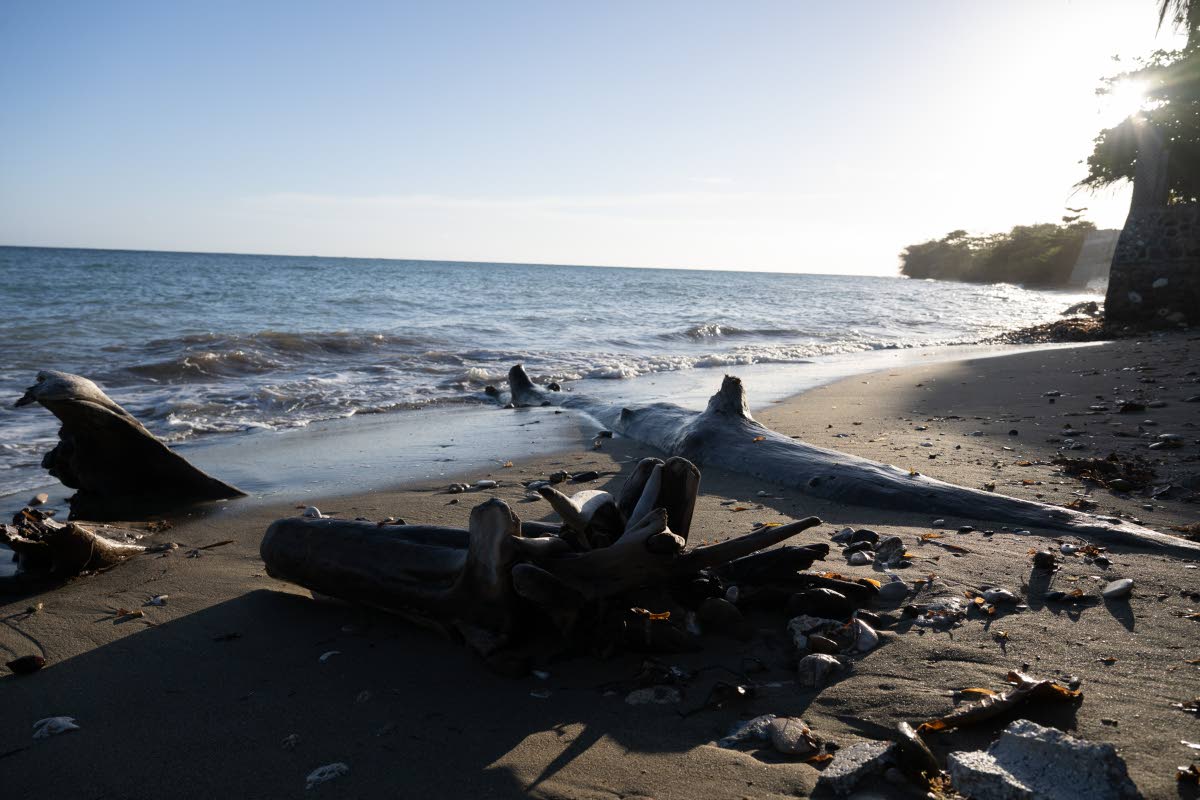
A beach can remain public on paper while becoming privately unavailable in practice. Put up a gate, station a guard along the approach road, leave access unmarked, or make the route so awkward that only the determined will attempt it, and Jamaicans are left with a right they cannot realistically exercise.
Jamaica’s beaches are natural capital: scarce assets whose beauty, location and cultural value generate returns through tourism, land values, recreation, employment and international prestige. Yet, when practical access is progressively restricted, the public does not merely lose a place to swim. It loses a share of the value produced by a national inheritance.
This is why the debate over beach access cannot be dismissed as a quarrel between hotel interests and weekend beachgoers. It is a question of economic justice, public rights and sovereignty. Who gets the value generated by Jamaica’s coastline? Who decides the terms on which that value is shared? And, what remains for Jamaicans when development turns a common asset into an exclusive experience?
I first came to understand that question in a different landscape. In Guyana’s interior, I encountered the residue of older extractive economies: prospectors searching for gold and diamonds; cross-border commerce that moved hard-won wealth beyond ‘mudland’ Guyana’s borders; and the physical remains of petroleum exploration in terrain where the wealth beneath the earth had long attracted outside interest. The setting was different but the governing question was familiar: a country may possess abundant natural resources while retaining only a disappointing share of the value they produce.
The pork-knocker of the Guyanese hinterland and the developer on a Jamaican shoreline are not identical figures. One may work informally at the edge of state authority; the other may operate through licences, planning permissions, lawyers and official approvals. Their methods, legal positions and economic scales differ profoundly. And their pork(s) and gourmet fare differ too.
But they raise the same political-economic question. When a scarce natural asset produces value, who captures the rent, and on what terms?
A pork-knocker finds gold in the ground, extracts it and turns it into portable wealth. A modern coastal developer need not remove a single grain of sand. The developer can leave the beach physically intact while appropriating the value created by its location, its sea view, its exclusivity, and its association with Jamaica itself. The commodity being extracted is access.
That is the genius of the beach-knocker. He does not need to own the sun in order to monetise the sunset. He does not need to possess the Caribbean Sea in order to sell its proximity. He does not even need formally to purchase a beach in order to make ordinary Jamaicans feel that they do not belong there.
A wall, gate, security checkpoint, restricted parking arrangement or unwelcoming approach can achieve much the same result. Public rights remain theoretical while practical enjoyment becomes private. The resource remains in place but the public’s effective share of its value disappears.
Jamaica needs investment. That point should not be controversial. Tourism capital can build rooms, roads and other infrastructure; create direct and indirect jobs; earn foreign exchange; expand markets for farmers, young entertainers and seasoned suppliers; and support communities that have too often been neglected by the State. There is no serious case for treating every hotel, villa or resort project as a national betrayal.
But neither is there a serious case for believing that all investment, simply because it is called development, serves the public interest.
Development is not automatically equitable. Foreign exchange is not the same as broad-based prosperity. A hotel-room count does not tell us whether local communities can still reach the beach, whether small vendors have been displaced, whether public access is safe and clearly marked, whether workers earn secure livelihoods, or whether a fair proportion of tourism wealth remains in Jamaica.
Nor does a glossy investment announcement answer the central question: What does the public receive in return for allowing private interests to profit from a scarce national asset?
That question should be embedded in every coastal approval, lease, concession and planning decision. It should be asked before a gate is erected, not after a community discovers that the beach it has used for generations is technically public but practically beyond reach.
Jamaica needs a stronger and more transparent public-access regime.
First, the State should maintain and publish an authoritative, regularly updated map of public beach-access points, identifying the routes, their legal status, the responsible agency, and a simple mechanism for reporting obstruction. A right that citizens cannot locate, verify or enforce is a right designed to disappear.
Second, every major coastal development approval should require safe, visible and genuinely usable public access. A narrow path hidden behind service buildings, a route that ends in an insecure parking arrangement, or access dependent on the goodwill of private security is not meaningful access. The test must be practical use, not legal fiction.
Third, beach licences, shoreline concessions, environmental approvals and public-access conditions should be available for public scrutiny. People ought to know what commitments have been made in their name, what developers are required to provide, and which agency is responsible for enforcing those obligations.
Fourth, public benefit must be measured more honestly. Government should report not only visitor arrivals, hotel rooms and foreign-exchange earnings, but also the preservation of public access, local procurement, community employment, environmental protection, and the retention of economic value.
These measures would make development more legitimate.
A country that protects public access is not hostile to investment; it is clear about the terms of investment. It recognises that the coastline is not merely scenery attached to a tourism product. It is part of the national estate, part of community life and part of the patrimony held in trust for citizens yet unborn.
Guyana’s experience offers a durable warning. Natural wealth can be enormous while the benefits flowing to ordinary people remain thin. Extraction can be lawful and still be unequal. Capital can be welcome and still require scrutiny. A nation can wake up surrounded by wealth and still ask: Where did it go?
Jamaica should not wait until public beaches exist only in legal documents, old photographs and family memory.
Our most valuable wealth lies in plain sight: along the shore, in the water, on the sand, and in the shared expectation that Jamaicans ought not to be strangers on their own coast.
The danger is not that beach-knockers will carry that wealth away in sacks. The danger is subtler. They will enclose it, one concession, one barrier and one “exclusive experience” at a time, until we discover that “our beach” was only a phrase we inherited, not a right we protected.
Dennis A Minott, PhD, is the CEO of A-QuEST-FAIR. Send feedback to: a_quest57@yahoo.com or columns@gleanerjm.com.