Imani Tafari-Ama | Reparations, sovereignty and the politics of justice
Loading article...
-
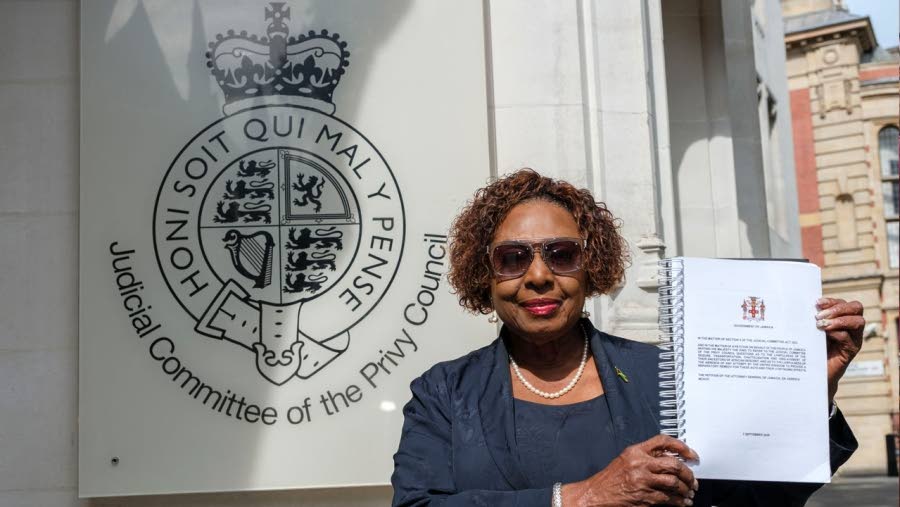 Culture Minister Olivia Grange stands in front of the Judicial Committee of the Privy Council building in London, England, holding the historic reparations petition document filed to King Charles III.
-
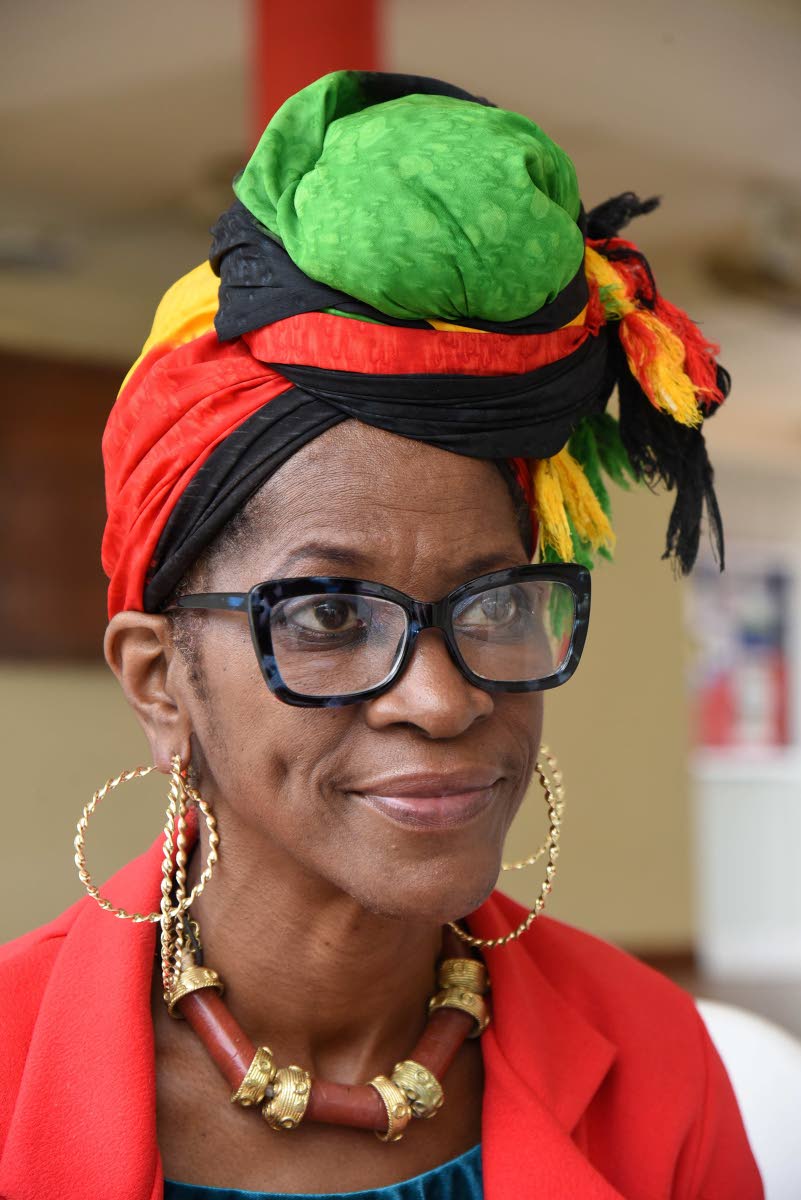 Imani Tafari-Ama
Aren’t you tired of dealing with successive government administrations that do not get it? Aren’t you fed up with the utter fraud of continuing to bow to the King of England as Jamaica’s head of state and judiciary? Aren’t you frustrated with always having to overstate the obvious about the need for a collective Caribbean approach to advocate for reparative justice?
For those who do not understand, let us break it down. Frederick Douglass is a good source for explaining this problem. He was born in enslavement and rose to become adviser to President Abraham Lincoln. His political savvy is a good source for explaining what emancipation and reparatory justice mean.
It was Douglass who suggested that black people should be included in the army and get equal pay to their white counterparts during the Civil War. He also influenced President Lincoln’s decision to allot four acres and a mule to all Africans after emancipation. This justice stance is what got President Lincoln assassinated.
Douglass can also help us to think with a little less exhaustion about Jamaica’s latest intervention in the reparations debate. “Power concedes nothing without a demand,” he famously declared in his 1857 West India Emancipation speech. In other words, reparations will not be achieved by timidity, embarrassment or polite appeals to the conscience of those who benefited from the colonial system. They require a clear demand, a coherent strategy and, above all, a people confident in the rightfulness of their claim.
Young people who are far removed from the trenches of this discussion may ask, “What does genuine emancipation and self-determination require?”
Once the question is framed that way, reparations become connected to sovereignty, development, education, culture, debt, health and the restructuring of inherited inequalities.
The delegation to Britain succeeded in doing something important: it revived reparations as a matter of public discussion. For too long, the reparations question has been treated either as a historic grievance best left in the past or as an abstract legal argument of little relevance to the lives of contemporary Caribbean people.
The initiative also prompts us to ask: was Jamaica sufficiently clear about the sovereignty issue before undertaking a legalistic appeal to the very constitutional authority whose historical relationship with Jamaica is itself part of the problem?
A country seeking to complete the unfinished business of decolonisation must surely ask whether it strengthens its claim for justice to approach the former imperial power through institutions and constitutional arrangements inherited from that same colonial relationship.
This is where Douglass becomes especially relevant. His philosophy of emancipation was never simply about removing one legal disability while leaving the structures of power intact. His understanding of freedom was inseparable from struggle, self-respect and the capacity of a people to determine its own condition. His celebrated warning that power does not concede without a demand was a reminder that freedom requires conscious liberation efforts by those experiencing oppression.
Recognition of the ways in which we are complicit with our own oppression is crucial to throwing off the yoke of racism and its apparatuses. Re-energising the reparations demands should therefore be understood not merely as a legal claim for compensation. They should be understood as an assertion of historical justice and contemporary agency.
That is precisely why the CARICOM Ten-Point Plan provides a stronger political and intellectual foundation than a pleading petition. The regional plan was never conceived simply as a demand for a cheque. It places reparatory justice within a comprehensive programme addressing apology, repatriation, indigenous rights, cultural rehabilitation, public health, education, debt, technological development and psychological rehabilitation.
A reparations campaign built around the Ten-Point Plan says to Europe and the wider international community: this is not charity we seek; it is justice. It also says that the Caribbean has a development agenda of its own.
That is a fundamentally different political posture from asking an inherited colonial institution to determine whether an obligation exists. The former is an assertion of agency. The latter risks appearing as a plea for validation. And this is where I believe Jamaica’s political leadership missed an opportunity.
Had the sovereignty question been placed squarely on the table before the British initiative, the reparations appeal could have been framed within a much larger national project: Jamaica is completing its constitutional decolonisation while simultaneously pursuing reparatory justice for the historical crimes that shaped the society we inherited.
That would have given the initiative a greater coherence.
Jamaica has already contemplated replacing the British monarch as head of state. Sovereignty is a demand that is intimately connected to the larger question of what political independence means.
This is shaky ground because becoming a republic does not, by itself, settle the reparations question. Nor does removing the King as head of state magically transform the economic and social structures created by colonialism. But this symbolism matters when the politics concerns the unfinished business of empire.
A Jamaica that says, in one breath, that it is seeking to complete its journey from colonialism and, in the next, approaches the King in his capacity as Jamaica’s head of state to seek a determination concerning the legal consequences of British slavery creates an avoidable contradiction.
The better strategy would have been to make sovereignty and reparations complementary demands. Jamaica, as a sovereign Caribbean nation seeking justice for the historical exploitation that helped create the modern international order, should pursue that justice through a regional programme developed collectively by CARICOM.
That is a position capable of mobilising the Caribbean.
Indeed, CARICOM has already done much of the intellectual work. The region’s Ten-Point Plan provides a common vocabulary and a common platform. In July, CARICOM heads of government approved a revised manifesto for reparatory justice. The community has also scheduled its Third Regional Conference on Reparations for September 17-19, 2026.
The timing could hardly be more appropriate.
The Caribbean should not allow reparations to become a series of national petitions competing for attention in London. We should be building a coordinated regional movement in which each government brings its own historical experience but speaks from a common framework.
As Douglass cautioned, power will not concede willingly. However, a people conscious of their history, confident in their sovereignty and united around a legitimate demand, need not wait for permission to pursue justice.
Imani Tafari-Ama, PhD, is a Pan-African advocate and gender and development specialist. Send feedback to i.tafariama@gmail.com and columns@gleanerjm.com.