Jamaica moves to strengthen health security following external evaluation
Loading article...
-
 Health and Wellness Minister Dr Christopher Tufton addresses the opening ceremony of the evaluation, highlighting the need to modernise Jamaica’s health system and strengthen preparedness for emerging health threats. Contributed
-
Health and Wellness Minister Dr Christopher Tufton addresses the opening ceremony of the evaluation, highlighting the need to modernise Jamaica’s health system and strengthen preparedness for emerging health threats. Contributed
-
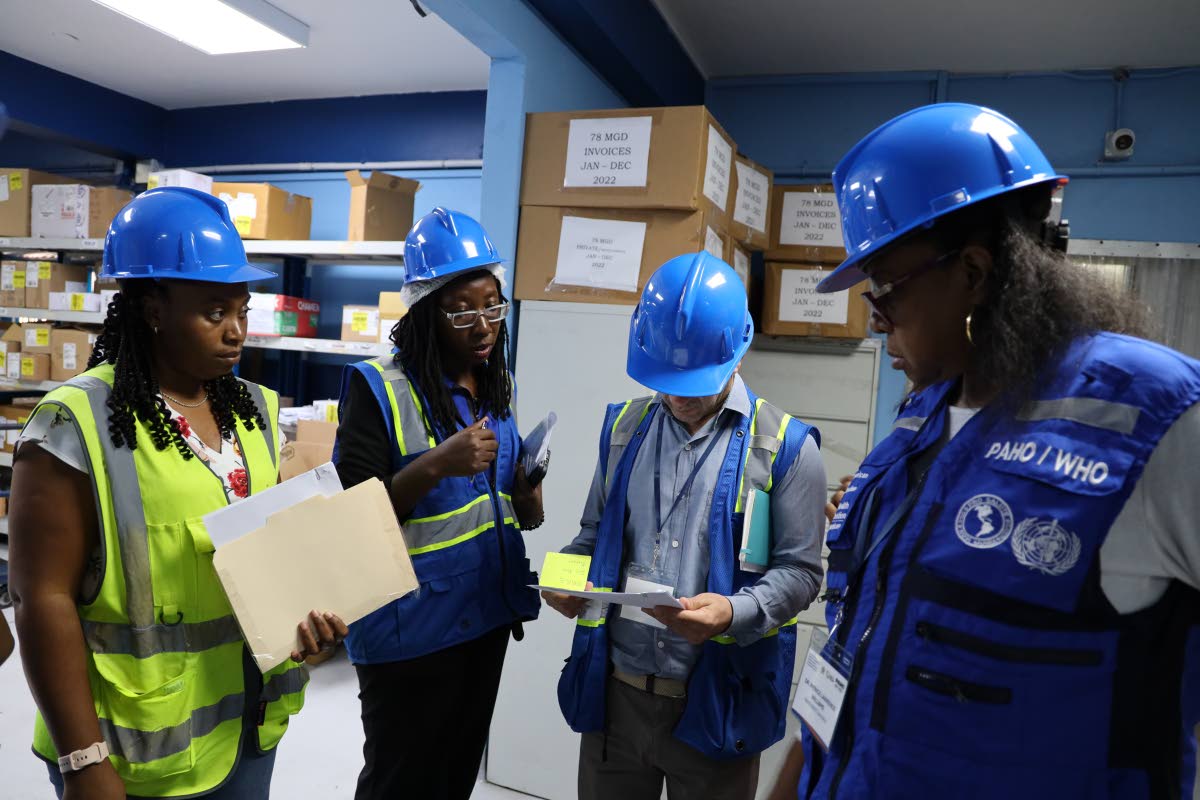 Melissa Watson, warehouse operations supervisor, National Health Fund Pharmaceutical Division; Dr. Julia Rowe-Porter, Acting Director, Family Health Unit, Health Services Planning & Integration Branch, Ministry of Health and Wellness; Dr. Sergio Loayza, immunisation expert, External Evaluation Mission; and Dr. Patrice Lawrence-Williams, non-communicable diseases and mental health advisor. AG Guest Guest
Jamaica is moving to further strengthen its capacity to prepare for and respond to public-health threats, following the completion of an international assessment designed to identify where the country’s health security systems can be reinforced.
The Voluntary External Evaluation (VEE), conducted under the International Health Regulations (IHR) from September 9 to 18, brought together international experts and Jamaican authorities for an independent review of the country’s capacity to prevent, detect, and respond to public- health threats. The mission also included a review of Jamaica’s National Expanded Programme on Immunisation (EPI).
The exercise comes as Jamaica continues to navigate a changing health- security environment, where threats can emerge locally or cross national borders. High levels of international travel add another layer of complexity, making the ability to detect and respond to health risks quickly an important part of protecting the population.
Health and Wellness Minister Dr Christopher Tufton said the evaluation comes at a time when Jamaica is seeking to modernize and strengthen its health system in response to changing population needs and emerging health threats.
Speaking at the opening ceremony on September 14, Dr Tufton stressed that health risks do not stop at national borders and said a global and ‘One Health’ approach is essential to protecting population health.
“The experience of the COVID-19 pandemic and Hurricane Melissa has further underscored the importance of that preparedness. Both events tested Jamaica’s health system, exposing strengths as well as vulnerabilities and demonstrating the need to maintain preparedness not only when an emergency occurs but also in the periods between emergencies,” Dr Tufton said.
The minister also pointed to technology as an opportunity to improve collaboration across borders and strengthen the delivery of healthcare.
Given that protecting public health extends well beyond the health sector, the assessment was deliberately designed as a multisectoral exercise. Jamaica’s implementation of the IHR involves ministries, departments, and agencies spanning agriculture, environment, transport, tourism, national security, foreign affairs, and science and technology.
The teams assessed 15 core areas, ranging from legislation, financing, and human resources to surveillance, laboratory systems, health emergency management, and health services. The evaluation also examined infection prevention and control, zoonotic diseases, food safety, chemical events, radiation emergencies, points of entry, and risk communication and community engagement.
To provide context for the assessment, experts undertook site visits across the island, including the National Health Fund Vaccine Storage Facility, primary healthcare facilities in Kingston, the Kingston Freeport Terminal Limited, and the Norman Manley International Airport, to observe national systems in action.
These visits allowed the immunization and points of entry teams to observe vaccine safeguarding and delivery as well as the systems in place to detect and manage public-health risks at ports of entry. Further visits to the National Public Health Laboratory, the Veterinary Services Division Diagnostic Laboratory, and the Bustamante Hospital for Children gave additional context into Jamaica’s capacity to detect priority health threats.
Together, the visits provided insight to complement Jamaica’s own assessment of its capacities and to ensure that recommendations arising from the evaluation are understood in the realities of implementation in Jamaica.
At the closing ceremony, Pan American Health Organization/World Health Organization (PAHO/WHO) Representative in Jamaica, Ian Stein, said the Organization’s support would continue beyond the completion of the mission.
“Our support does not end with this mission. We remain committed to working with national authorities, partners, and stakeholders to transform the findings and recommendations into prioritised, feasible, and sustainable actions that strengthen national capacities, reinforce health-system resilience, and advance national and regional health security,” Stein said.
Jamaica’s participation in the evaluation reflects a long-standing commitment to the IHR, having been a State Party since 2007 and having embedded IHR capacity-building into national health planning, including the Vision for Health 2030 Plan and the Primary Care Reform Plan 2021–2030. This work is supported by Jamaica’s IHR Stakeholders Advisory Group and National IHR Focal Point.
Cabinet approved Jamaica’s participation in the VEE in March 2025, with the evaluation set to inform an evidence-based action plan for health security. Originally scheduled for late 2025, the exercise was postponed following Hurricane Melissa before taking place from September 9 to 18 this year, a timing that lends renewed urgency to strengthening the country’s resilience and preparedness for future health emergencies.
The recommendations from the external evaluation and the immunisation review will now help identify priority areas for investment and improvement while supporting stronger coordination across government and Jamaica’s continued efforts to build a more resilient health system.
keisha.hill@gleanerjm.com