Where Bond began
Loading article...
-
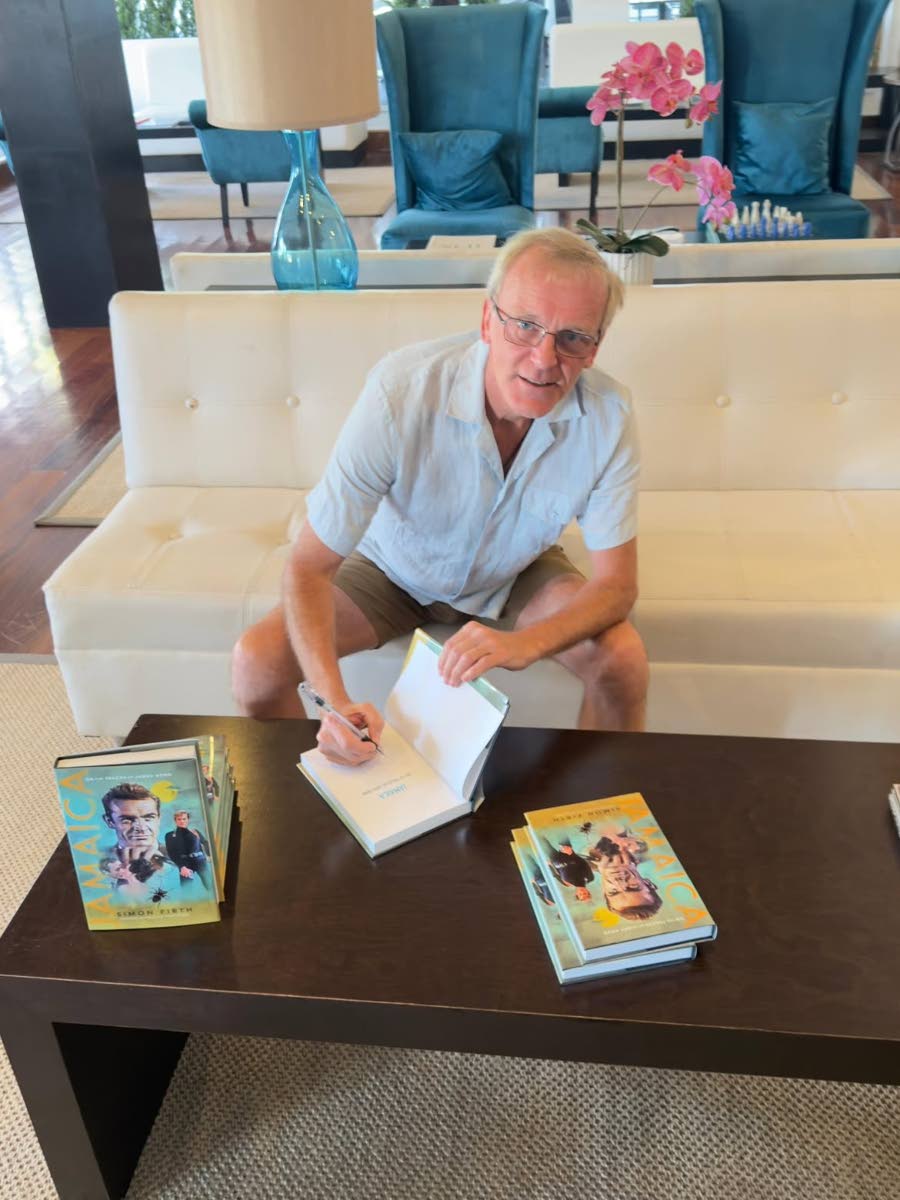 Author Simon Firth signs copies of his book, ‘Bond in Jamaica’.
-
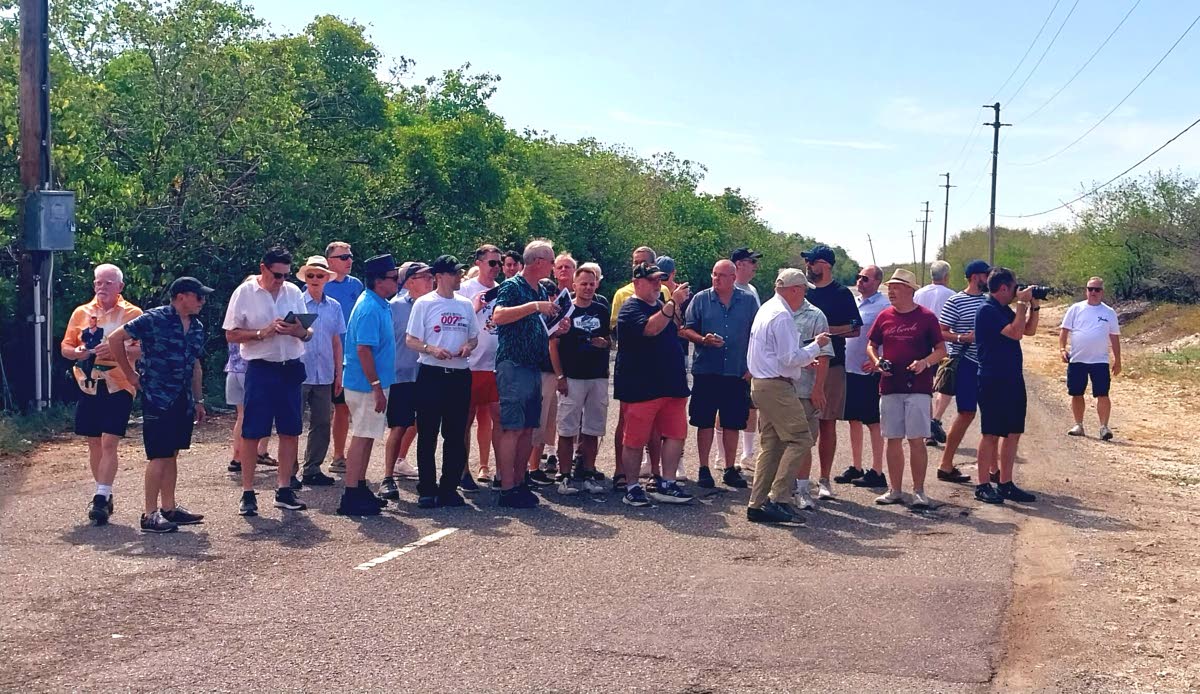 James Bond enthusiasts gather along the Port Royal Main Road, with publisher and tour leader Martijn Mulder (centre) holding an image folder as he guides the group through Jamaica’s 007 history.
-
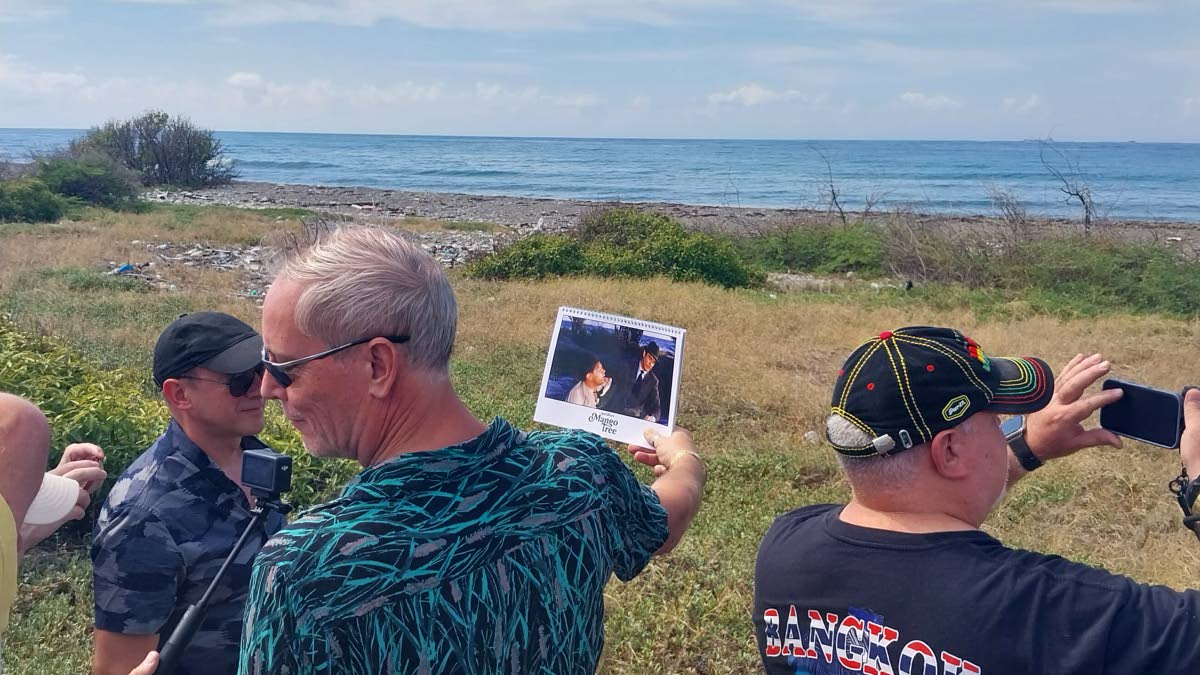 Martijn Mulder (centre) shows the group a screenshot from ‘Dr No’ at a location just off the Port Royal Main Road where the scene was filmed.
-
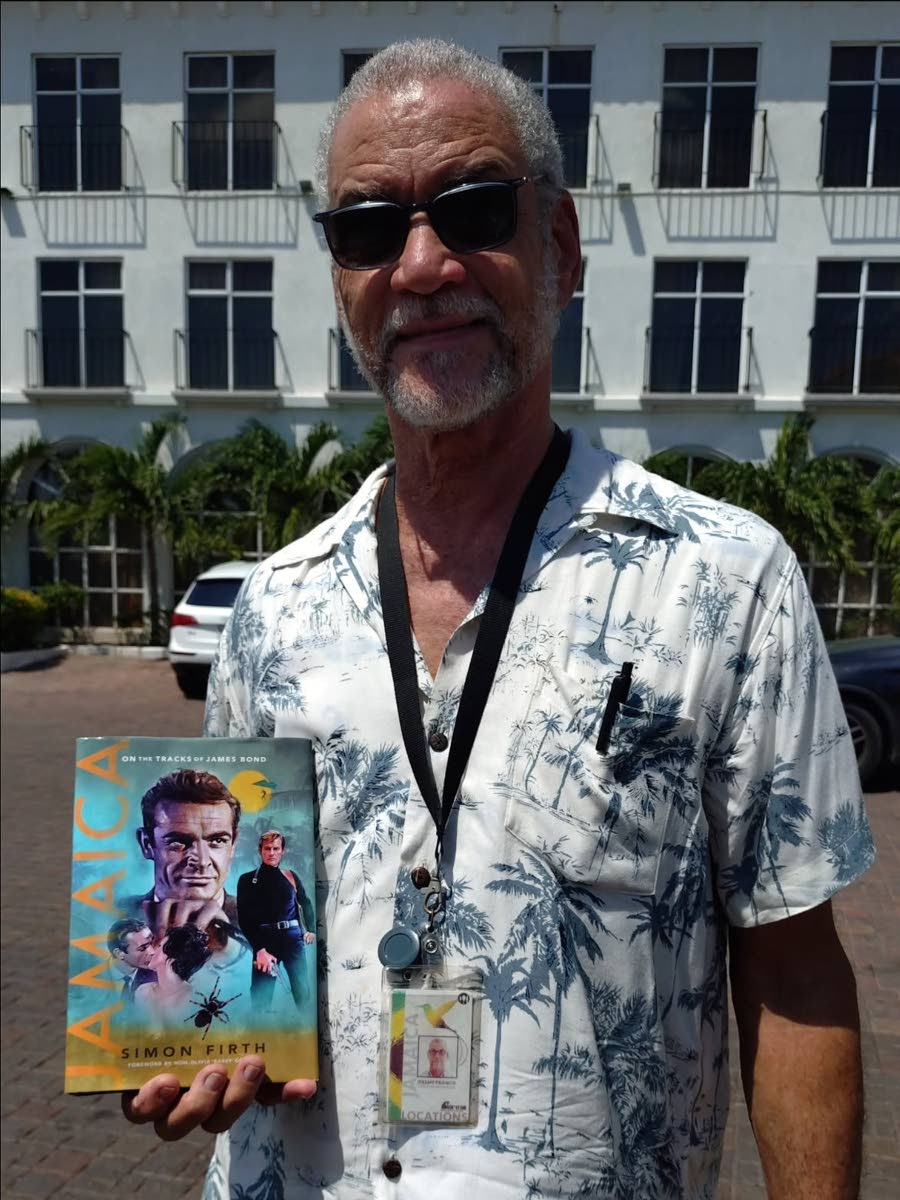 Location manager Jeremy Francis sports his ‘No Time to Die’ shirt and ID pass.
-
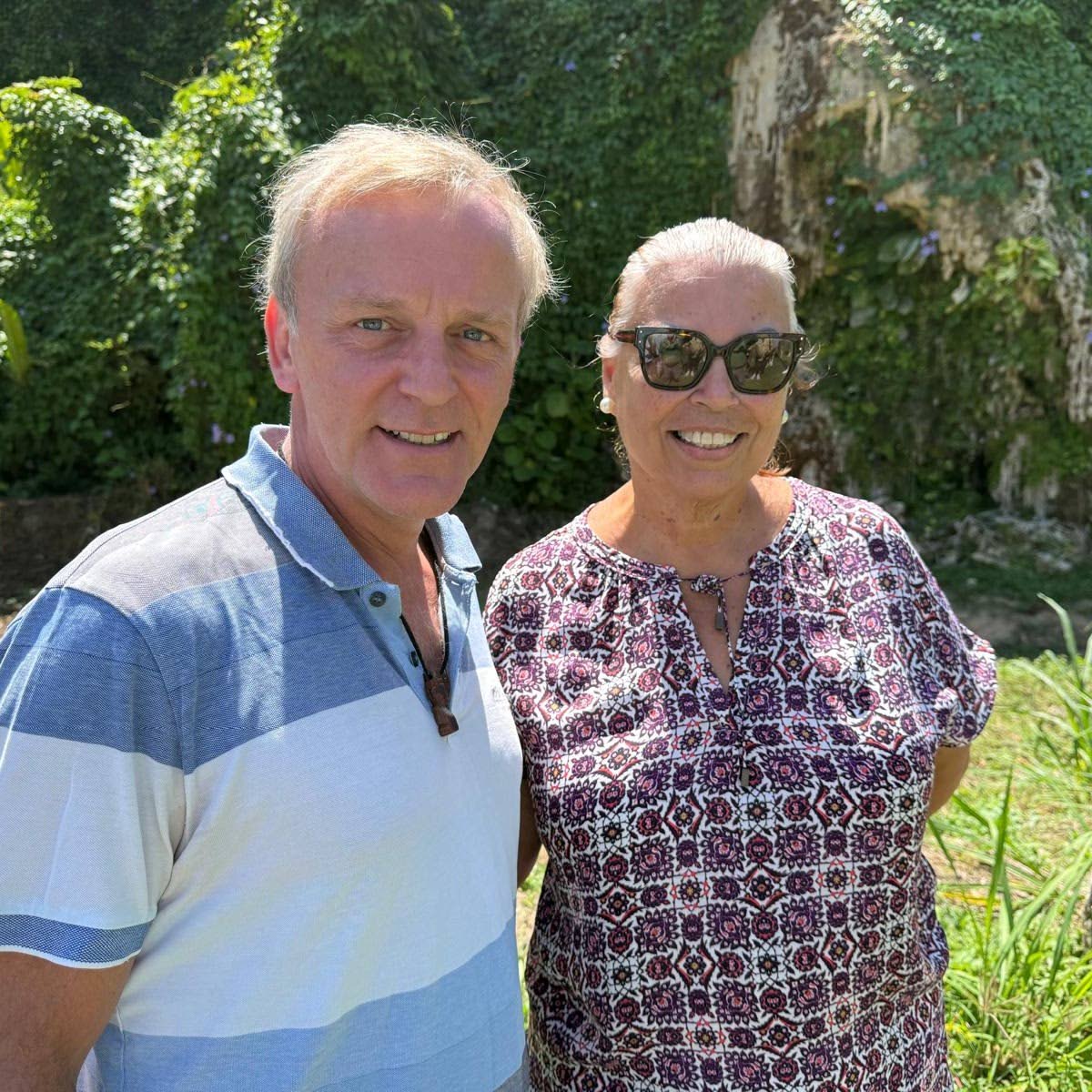 Simon Firth (left) and Angele Nunez-Rhooms, manager of operations for the Rose Hall Great House.
-
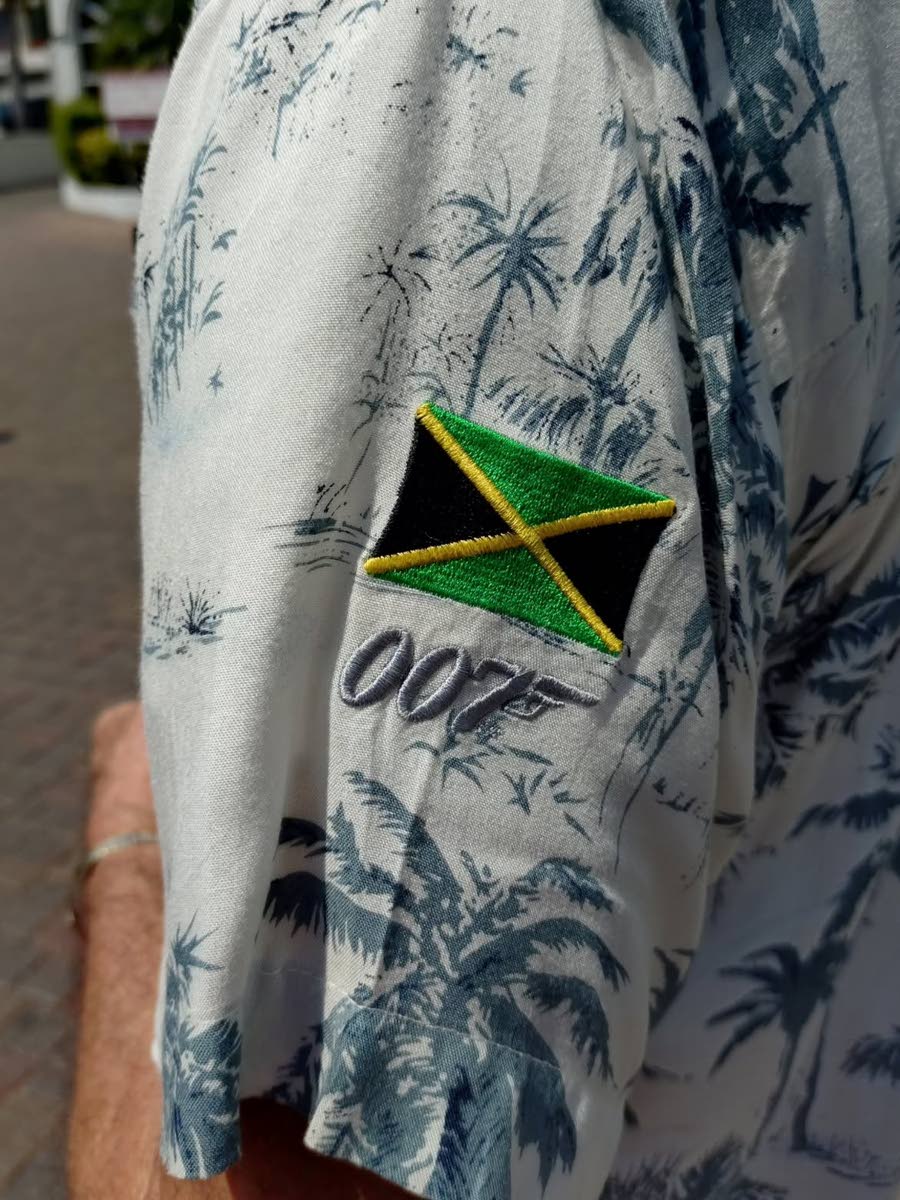 Jeremy Francis shows details of his 007 shirt.
WESTERN BUREAU:
They came looking for James Bond.
Forty devotees of the world’s most famous secret agent descended on Jamaica, chasing 007 through waterfalls and old hotels and into some of the places immortalised on the big screen.
At the centre of this 10-day Bond pilgrimage is Simon Firth, a 60-year-old British writer whose own search for Jamaica’s 007 history has taken him considerably farther, from the room where Sean Connery stayed while filming Dr No to a long-vanished address in Savanna-la-Mar that took him an entire year to prove had actually existed.
For Firth, Jamaica is no ordinary stop on the Bond map. It is the place where Ian Fleming found a home, where he wrote the novels that transformed 007 into a global phenomenon, and where Bond first exploded onto the cinema screen in Dr No.
Now Firth, whose Bond in Jamaica was published in 2025, is back on the island with his publisher, Martijn Mulder, and 40 Bond enthusiasts, retracing some of the places associated with Fleming, Bond, and the films.
Yet Firth insists that the book is about Jamaica first.
“These books that I write, they look to choose a specific country to first and foremost celebrate that country, and then secondly, to celebrate James Bond’s time in them,” he told Sunday Lifestyle.
Previous books have explored Bond’s connections with Italy, The Bahamas, and France, but Jamaica presented something deeper.
“Ian Fleming first visited your country in 1943, chose to build a house here, chose to create a fictional hero or antihero from which a huge following was formed,” Firth said.
“There’s just so much rich history to discuss within Jamaica. So, yes, this book had to be done.”
Firth was also determined that Jamaica’s Bond story would not be told only through foreign eyes. He estimates that 95 per cent of the people whose words appear in Bond in Jamaica or work with the film are Jamaicans.
Among them is Jeremy Francis, location manager for No Time to Die, who Firth interviewed for the book and later befriended. Francis, he said, helped steer him towards Jamaican connections with Fleming that even years of reading and research had not revealed.
Of all the pieces of Bond history Firth chased while researching the Jamaica book, one took him an entire year: Three and a Half Love Lane. The curious address appears in Fleming’s The Man with the Golden Gun and was placed in Savanna-la-Mar, Westmoreland.
But was it real?
“I wanted to find out whether this was a fiction of Ian Fleming’s imagination or whether it was actually a true location,” Firth said.
For 12 months, he searched.
Eventually, two elderly Jamaicans, an 80-year-old historian and an 80-year-old solicitor, provided the corroboration he needed.
“I found it,” Firth said, with the satisfaction of a man who had cracked a particularly stubborn case. “It did exist.”
The address no longer exists, but for Firth, the discovery mattered. Fleming had not simply conjured it from his imagination.
Another mystery involved Bellevue, the house where, Firth says, Fleming stayed when he first came to Jamaica in 1943 for a wartime conference concerning German U-boats.
Home away from home
In researching the book, Firth set out to establish whether anything remained of the property and says he eventually located its remains in the foothills of the Blue Mountains, north of Kingston.
That first visit to Jamaica would prove consequential. Fleming later made the island his home away from home and wrote his Bond novels here.
Not every Bond trail has disappeared. Some are being deliberately preserved.
In Port Royal, Firth and his travelling companions stayed at the Grand Hotel Excelsior Port Royal Hotel, a property he says has strong connections to the Bond world. But one room holds particular fascination: Room 118.
According to Firth, that was where Sean Connery stayed while filming Dr No, and the hotel is now reconstructing it as a James Bond suite.
For Bond devotees, it is the sort of detail that turns an ordinary hotel stay into something approaching pilgrimage.
From Port Royal, the group explored Kingston and St Andrew, including King’s House and the Liguanea Club, before heading east to Port Antonio.
There, they stayed at Jamaica Palace Hotel, which Firth said accommodated cast and crew during the filming of No Time to Die.
Then came Ocho Rios and some of Jamaica’s most recognisable Bond scenery. Dunn’s River Falls and Laughing Waters take them back to Dr No, and Little Dunn’s River Falls provides the connection to L ive and Let Die.
Firth’s research for the book, however, extended beyond the places on the group’s current itinerary. He deliberately explored Jamaica’s south coast and communities such as May Pen and Savanna-la-Mar, building stories around places mentioned in Fleming’s writing.
For some among the group of 40, this is their first encounter with Jamaica. Firth hopes it will not be their last.
In the sprawling international universe of Bond, Firth believes Jamaica occupies a position few destinations can claim. It was here that EON Productions’ cinematic Bond story began with Dr No in 1962.
Bond returned to Jamaica in Live and Let Die, and decades later, the island again became part of the story in No Time to Die. For Firth, the chronology creates an extraordinary circle, particularly with EON Productions having since relinquished creative control of the Bond films.
“You are at the beginning, middle, and end of EON Productions,” he said of Jamaica’s place in that history.
And the story may not be finished. With Amazon now holding creative control of the Bond franchise, no one knows where the next 007 adventure will lead.
If Bond returns to Jamaica, Firth sees another perfect circle.
“You are at the beginning of another cycle.”
Firth first visited Jamaica in 1989, but he has spent years reading about the man whose decision to make the island his retreat forever intertwined Jamaica with James Bond.
He rejects the suggestion that Fleming merely romanticised the Jamaica he presented to the world, seeing him instead as a keen observer. Fleming wrote about Jamaica’s underwater world, birdlife, and landscape, and Firth believes he recorded the country as he saw it.
“He was not one to mince his words,” he said. “He chose to live here because he loved it.”
There is also a delightful footnote for readers of this newspaper. Firth points out that Fleming made The Gleaner James Bond’s favourite newspaper.
Firth’s own Bond writing began almost accidentally in 2020, when he went to the south of France intending to write an online article about the region’s connections with James Bond.
The article grew too large for its intended purpose and eventually became his first Bond location book.
One became another. Italy, The Bahamas, France, and Jamaica followed, with Bond in the Sahara expected later this year.
And Firth is far from finished. He has already completed a book intended for publication in 2028 and is working on another for 2029.
Perhaps the most revealing thing about Bond in Jamaica, however, is where Firth chooses to begin it. Not with Fleming. Not with Connery. Not even with Bond. He starts with the Taínos.
His intention, he says, was to give readers a sense of Jamaica’s history before taking them into Fleming’s Jamaica and the world of 007. That is why Firth believes someone with little interest in Bond could still find something in the book.
He wants readers to encounter the people, places, wildlife, and history of the island and, perhaps, develop enough curiosity to come and see it for themselves. For those already here, he hopes they might look again.
And perhaps that is what makes Jamaica such fertile territory for a man who spends his life following a fictional secret agent around the world.
Bond may provide the clues. But Jamaica is the discovery.
janet.silvera@gleanerjm.com