1500s-1700s a tale of destruction
Loading article...
-
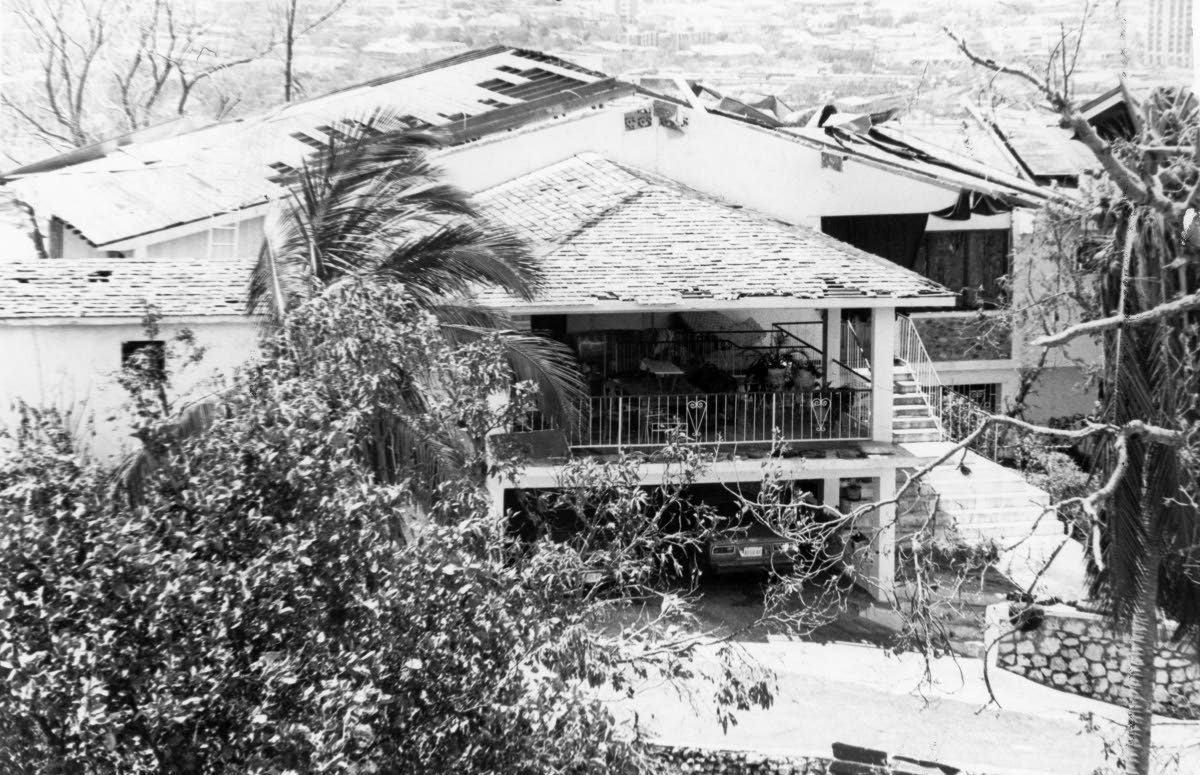 Roofs damaged by Hurricane Gilbert on September 12, 1988.
-
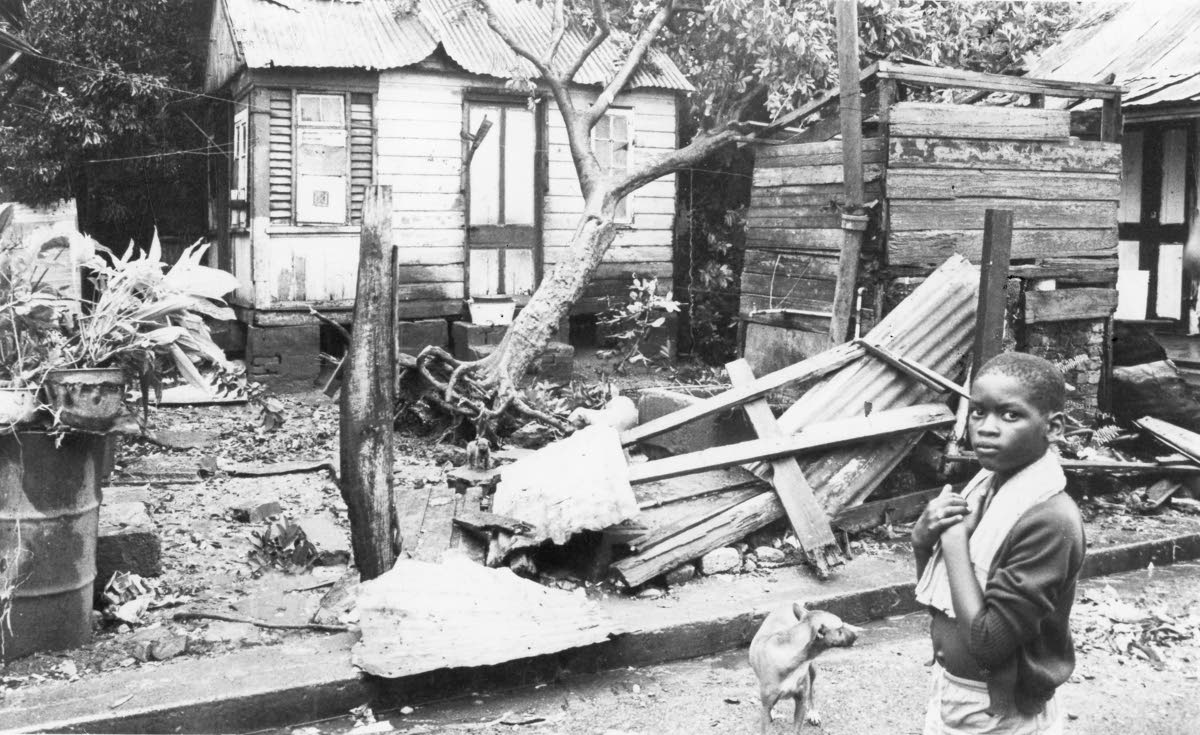 Where is our house? That was what this youngster asked when he returned home after Hurricane Gilbert passed.
THE HISTORY of tropical storms and hurricanes in Jamaica is a history of destruction. The island’s geographic allocation in the north Caribbean Sea makes it a prime target for these natural phenomena and all that they bring with them.
There are warm sea surface temperatures and the influence of climate change, which intensifies storm activities. The island is often in the path of tropical storms and hurricanes that develop in the Atlantic Ocean and move westward. The funnelling effect of the Caribbean Sea allows storms to gain strength as they approach Jamaica, making the island susceptible to direct hits or close encounters with hurricanes.
The island’s mountainous terrain, more so Blue Mountain’s 7,402-foot peak, can disrupt the structure of tropical systems and raise the threat of flooding, mudslides and landslides, as run-off descends into the lower-lying areas of Jamaica. The destruction over the years has been costly, and life-changing for many people.
THE DESTRUCTIVE SEASON
Hurricanes usually affect Jamaica between August and October, the season lasting from June to November. Three storms, Hurricane Dennis, Hurricane Emily and Hurricane Beryl, have impacted the island in July. Hurricanes Dennis and Emily were back-to-back storms in the notorious 2005 hurricane season.
Four Category 3 hurricanes have rocked Jamaica since National Hurricane Center (NHC) records began. Three Category 4 hurricanes travelled just south of Jamaica since 2000, causing the island to experience some of the storm’s worst winds and rainfall.
The island has never recorded a direct landfall from a Category 4 or 5 hurricane, according to records from the NHC dating back to 1850. The closest approach of a Category 5 hurricane was Allen in 1980. It had weakened to Category-4 by the time it made its closest approach to Jamaica, about 25 miles away from the island on August 6. Despite not making landfall, Hurricane Allen caused $100 million in damage and killed eight people.
The research says local folklore about the storms dates as far back as 1556, but one source says the first hurricane on record occurred in 1672. Another says the first arrivals in Jamaica on record took place from September to November 1559, when severe damage was done to Spanish constructions on the island. Many churches were destroyed from 1597 to 1670, including an English fleet that was driven ashore. People were killed, and plantations, houses, ships and crops were devastated in 1678, 1689 and 1692.
From the 8th to the 9th of September 1722, Port Royal and Queenstown (now Passage Fort) were destroyed by a 16-foot surge, which also occurred in Kingston Harbour. Fifty vessels were destroyed, and many lives lost, 18 at sea.
Western Jamaica, more so Westmoreland, seemed to have offered more attraction for these unstoppable forces, like the one in July 1711 which caused damage amounting to £700,000, and in which many lives were lost. The following year, on August 28, a severe storm in western Jamaica was accompanied by an earthquake.
The hurricanes of September 1730 and 1734 did a lot of damage on land and to shipping, likewise that of October 1744, which killed hundreds on land and sea. Ninety vessels were driven aground in Kingston Harbour. Port Royal was flooded, and Savanna-la-Mar badly hit. Western Jamaica was visited again in 1766 and 1773.
MOST DESTRUCTIVE
The most destructive of them all happened in Westmoreland on October 3, 1780. Savanna-la-Mar was totally destroyed by a tsunami. Approximately 300 people died. Over 1,000 deaths occurred in Westmoreland, Hanover and St James, and an epidemic broke out in western Jamaica after the deluge. Much misery was caused by the calamity. Damage, costing £700,000, was done. To assist in relief efforts, England sent £40,000 to the colony.
At the end of 1780, about 15,000 enslaved Africans died as a result of scarcity of provision because of storms, drought and suspension of communication with America. And there was more destruction in August 1781 (over 100 vessels wrecked in Kingston Harbour), July 1782 (Kingston and eastern Jamaica badly affected), July 1784, August 1784 and October 1786 (15,000 lives lost). And there were more to come in the 1800s.