Haiti and Cuba pick up the pieces after Melissa’s destruction
Loading article...
-
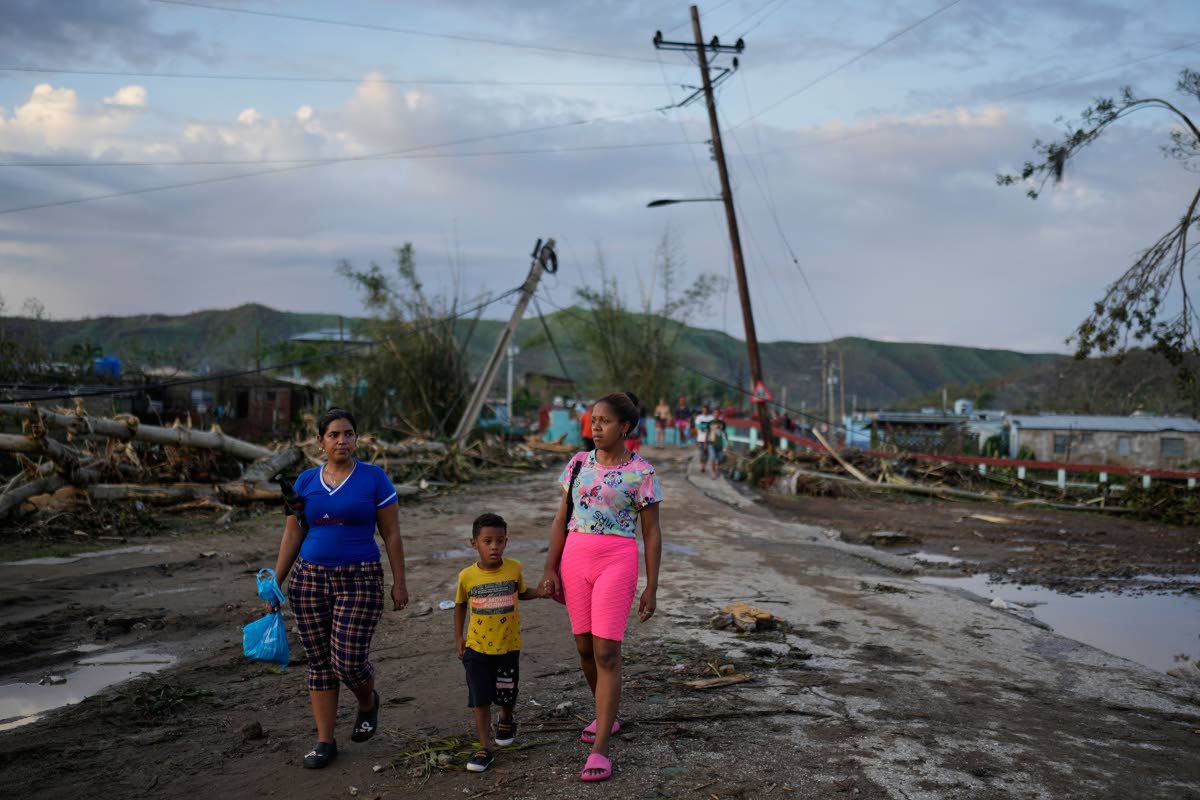 Residents walk in the aftermath of Hurricane Melissa in El Cobre, Cuba, Wednesday, October 29, 2025. (AP Photo/Ramon Espinosa)
-
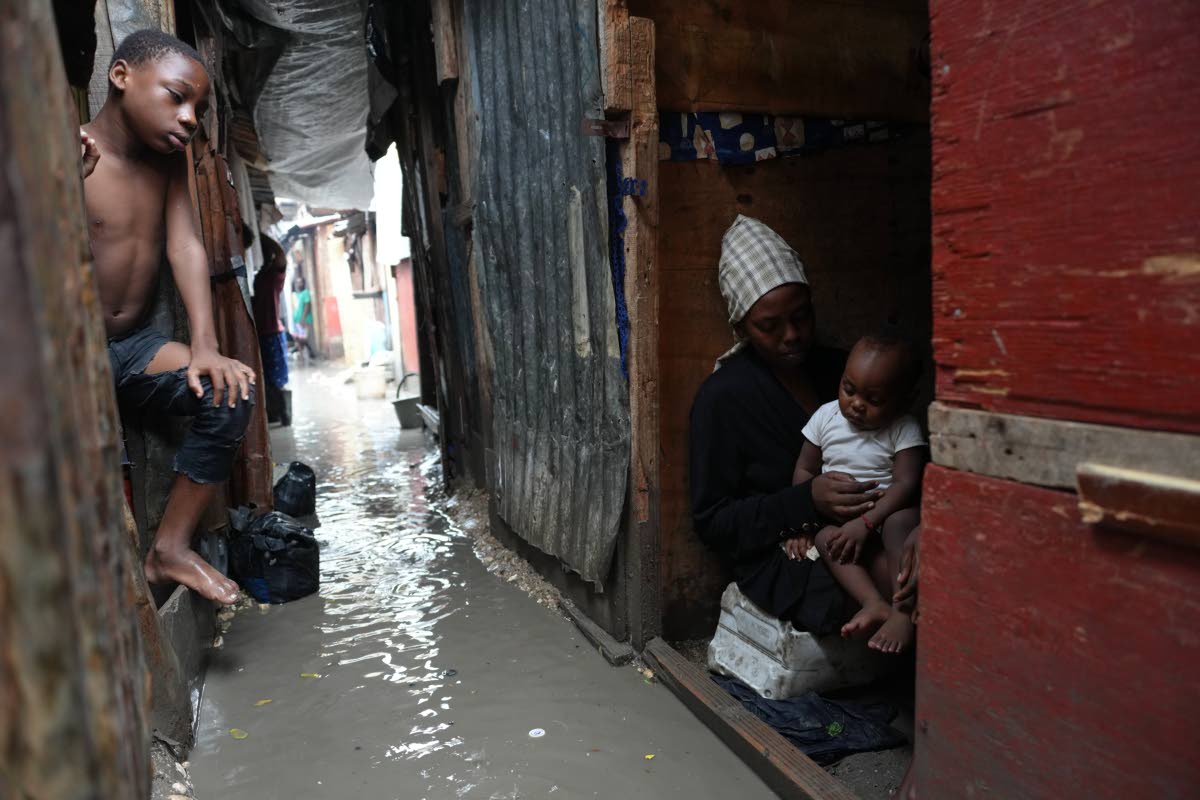 People stay inside a shelter for families displaced by gang violence, flooded by rain brought by Hurricane Melissa, in Port-au-Prince, Haiti, Wednesday, October29, 2025. (AP Photo/Odelyn Joseph)
SANTIAGO DE CUBA, Cuba (AP) — People across the northern Caribbean were digging out from the destruction of Hurricane Melissa on Thursday as deaths from the catastrophic storm climbed.
Melissa unleashed catastrophic flooding in Haiti, where at least 25 people were reported killed and 18 others missing, mostly in the country’s southern region.
Steven Guadard, who lives in Petit-Goâve, said Melissa killed his entire family.
“I had four children at home: a 1-month-old baby, a 7-year-old, an 8-year-old and another who was about to turn 4,” he said.
Haiti’s Civil Protection Agency said Hurricane Melissa killed at least 20 people in Petit-Goâve, including 10 children. It also damaged more than 160 homes and destroyed 80 others.
Officials warned that 152 disabled people in Haiti’s southern region required emergency food assistance. More than 11,600 people remained sheltered in Haiti because of the storm.
“It is a sad moment for the country,” said Laurent Saint-Cyr, president of Haiti’s transitional presidential council.
He said officials expect the death toll to rise and noted that the government is mobilizing all its resources to search for people and provide emergency relief.
Meanwhile, in Cuba, people began to clear blocked roads and highways with heavy equipment and even enlisted the help of the military, which rescued people trapped in isolated communities and at risk from landslides.
No fatalities were reported after the Civil Defense evacuated more than 735,000 people across eastern Cuba.
They slowly were starting to return home.
The small, iconic town of El Cobre in the eastern province of Santiago de Cuba was one of the hardest hit by Hurricane Melissa.
Home to some 7,000 people, it is also the site of the Basilica of Our Lady of Charity, patron saint of Cuba and deeply venerated by Catholics and practitioners of Santería, the Afro-Cuban religion.
“We went through this very badly. So much wind, so much wind. Zinc roofs were torn off, some houses completely collapsed. It was a disaster,” said Odalys Ojeda, a 61-year-old retiree, as she looked up at the sky from her living room where the roofing and other parts of the house were ripped off.
Even the Basilica was damaged.
“Here at the sanctuary, the carpentry, stained glass and even the masonry suffered extensive damage,” Father Rogelio Dean Puerta said. “The town was also badly affected. Many people lost their homes and belongings. We need help.”
In the more rural areas outside the city of Santiago de Cuba, water remained accumulated in vulnerable homes on Wednesday night as residents returned from their shelters to save beds, mattresses, chairs, tables and fans they had elevated ahead of the storm.
A televised Civil Defense meeting chaired by President Miguel Díaz-Canel did not provide an official estimate of the damage. However, officials from the affected provinces — Santiago, Granma, Holguín, Guantánamo, and Las Tunas — reported losses of roofs, power lines, fibre optic telecommunications cables, cut roads, isolated communities and losses of banana, cassava and coffee plantations.
Officials said the rains were beneficial for the reservoirs and for easing a severe drought in eastern Cuba.
Many communities were still without electricity, internet and telephone service due to downed transformers and power lines.
When Melissa came ashore in Jamaica as a Category 5 hurricane with top winds of 185 mph (295 kph) on Tuesday, it tied strength records for Atlantic hurricanes making landfall, both in wind speed and barometric pressure. It was still a Category 3 hurricane when it made landfall again in eastern Cuba early Wednesday.
A hurricane warning remained in effect Thursday for Bermuda. An earlier warning for the central and southeastern Bahamas was lifted but the US.weather agency warned of additional rainfall up to 10 inches (254 millimetres).
Hurricane conditions were expected to continue through the morning in the southeastern Bahamas, where dozens of people were evacuated.
Melissa was a Category 2 storm with top sustained winds near 105 mph (169 kph) Thursday morning and was moving north-northeast at 21 mph (33 kph) according to the U.S. National Hurricane Center in Miami.
The hurricane was centred about 295 miles (475 kilometres) northeast of the central Bahamas and about 605 miles (974 kilometres) southwest of Bermuda.
Melissa was forecast to pass near or to the west of Bermuda late Thursday and may strengthen further before weakening Friday.
Follow The Gleaner on X, formerly Twitter, and Instagram @JamaicaGleaner and on Facebook @GleanerJamaica. Send us a message on WhatsApp at 1-876-499-0169 or email us at onlinefeedback@gleanerjm.com or editors@gleanerjm.com.