Rain and ruin
Loading article...
-
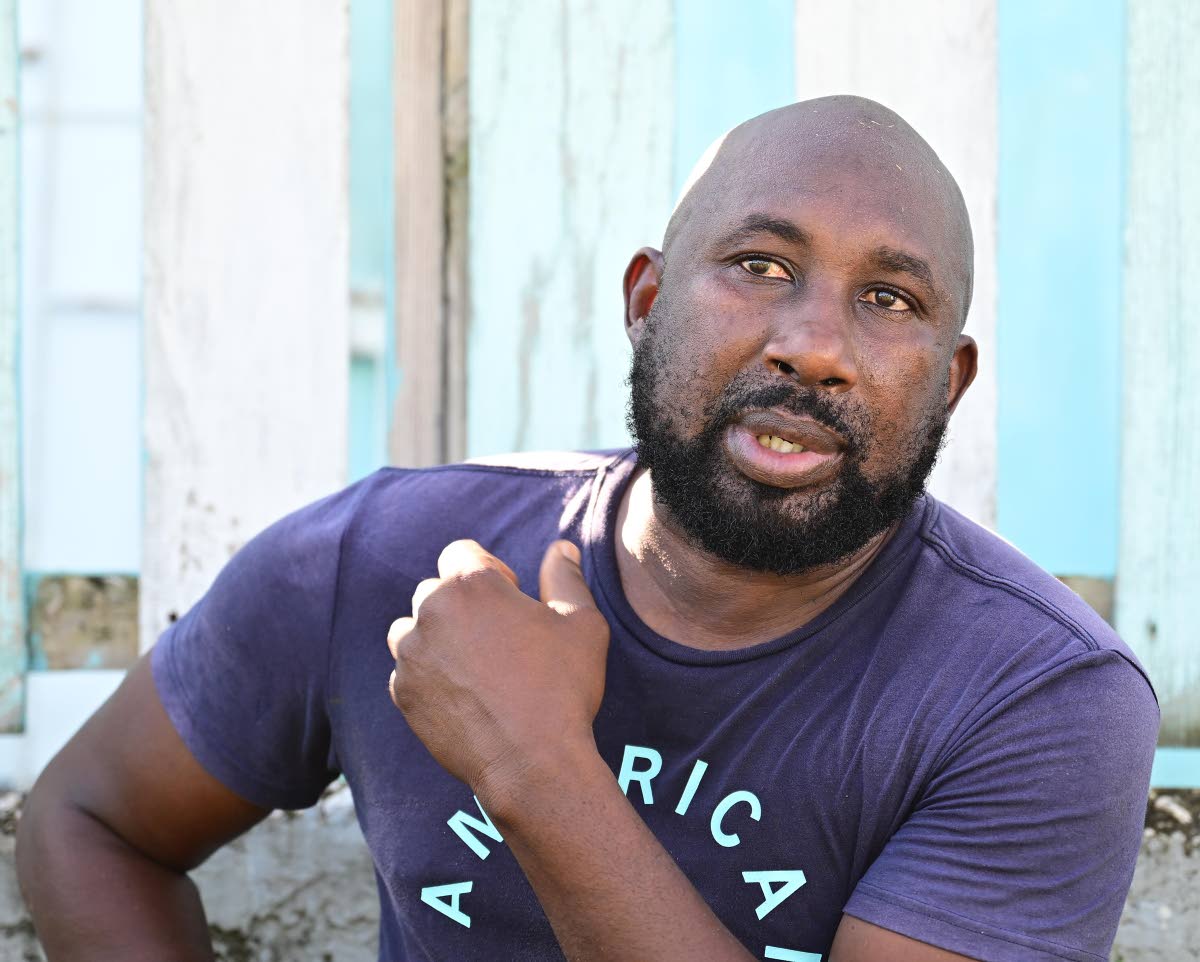 Cossaly ‘Moon’ Ennis, a 48-year-old boat captain.
-
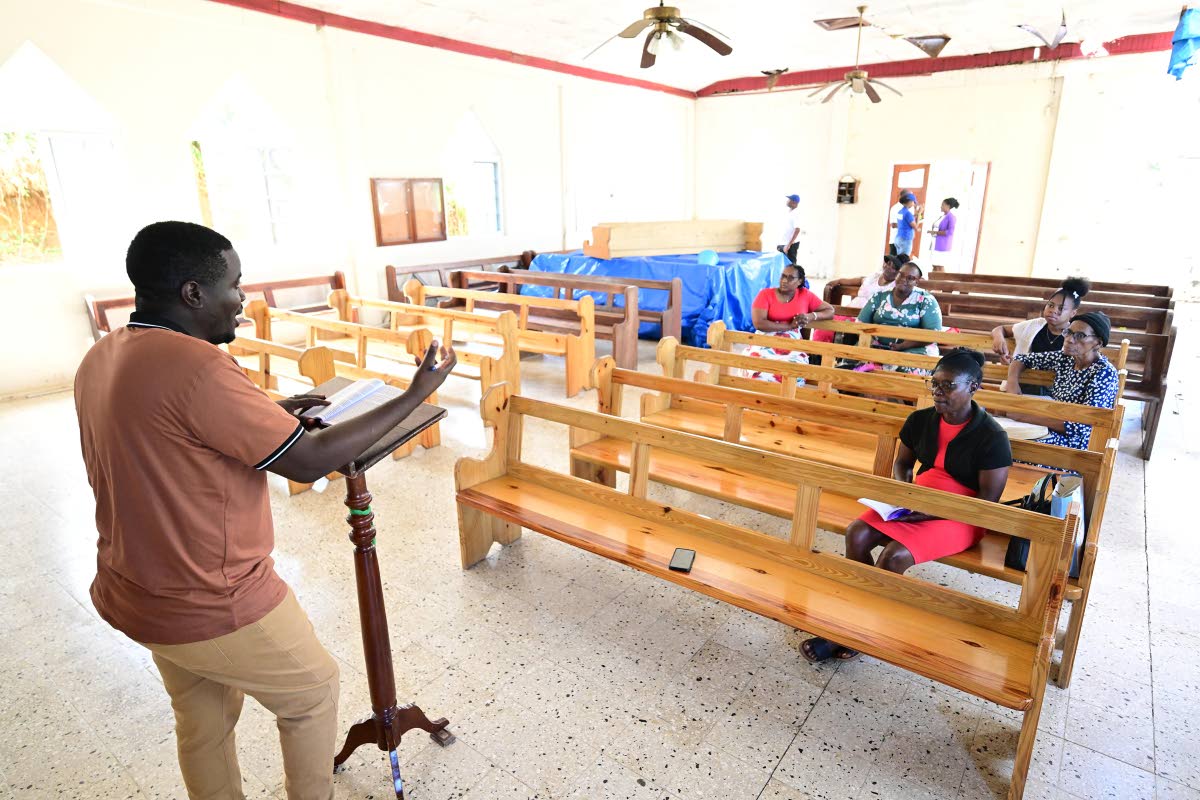 Credentialled Minister Abdel Campbell addresses the congregation on Sunday at the Greenland New Testament Church of God in Hanover.
-
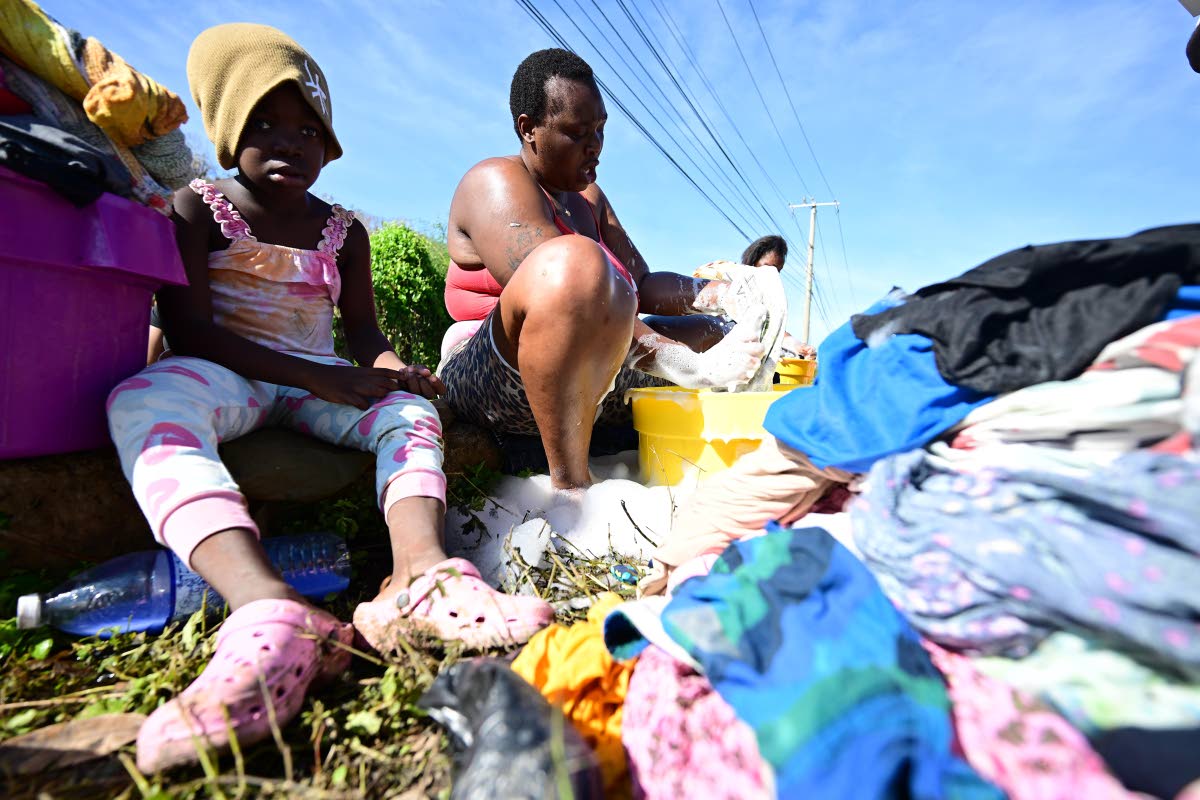 Stacy (right), a resident of Montpelier in St James, is seen at the Blue Hole river along the Sandy Bay main road in Hanover, washing clothes for her children and herself as there has been no water supply at home since the passing of Hurricane Melissa.
-
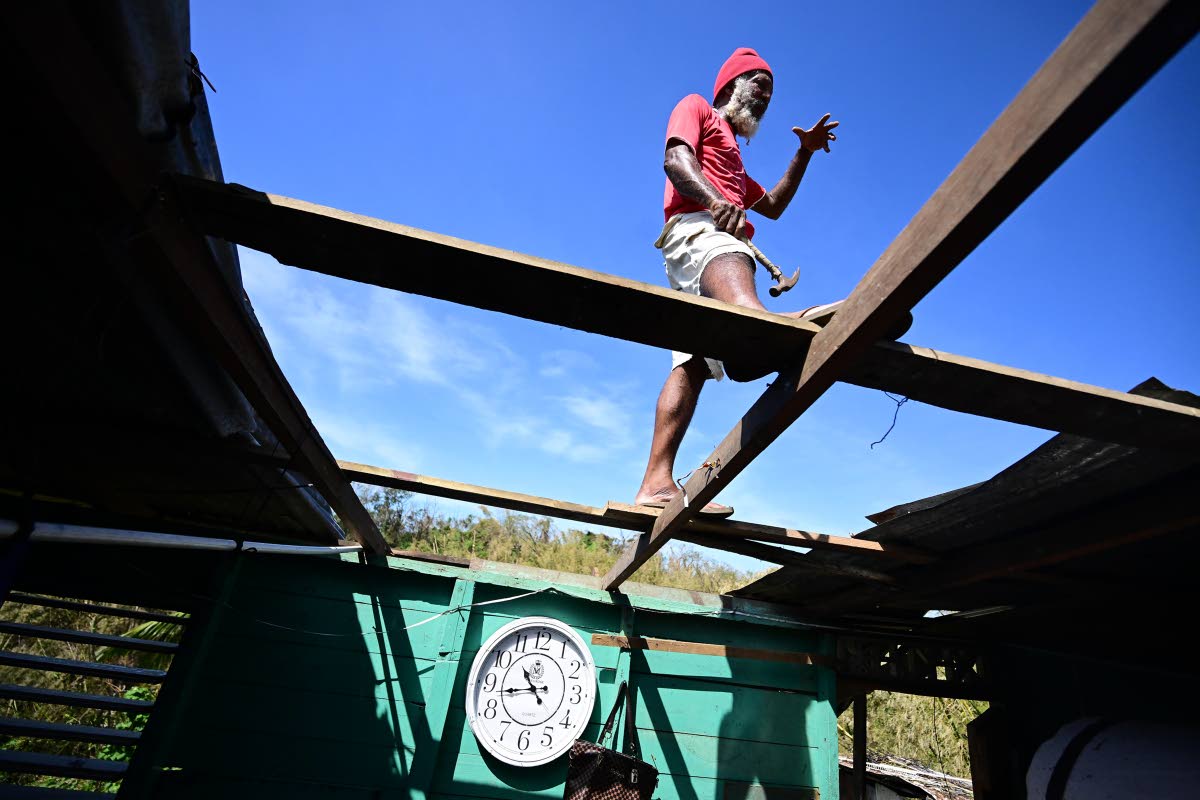 Rohan Getten makes quick repairs to his damaged roof in Green lsland, Hanover. Getten pleads for much-needed help, not just for himself but for others who are unable to help themselves.
-
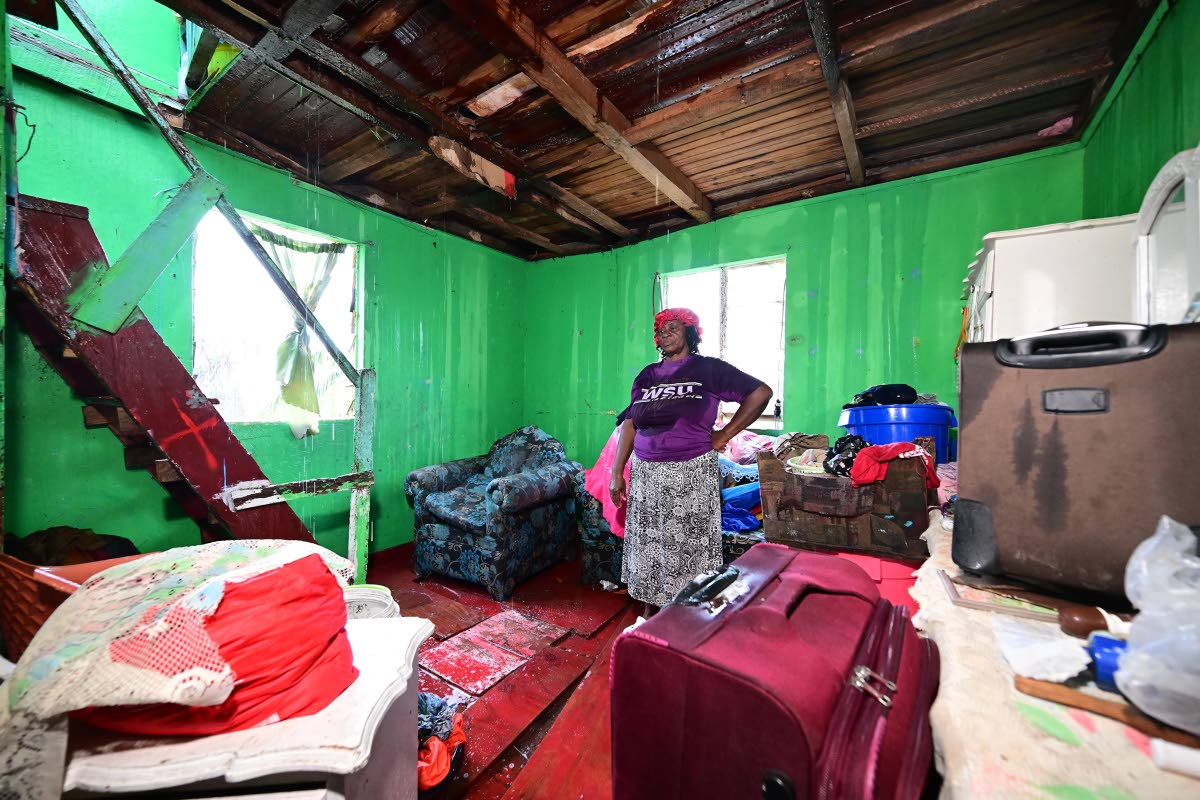 Veronica Grant stands in a room of her Montpelier home in Hanover. Water falls through the floor above as her home lost its roof during the hurricane.
-
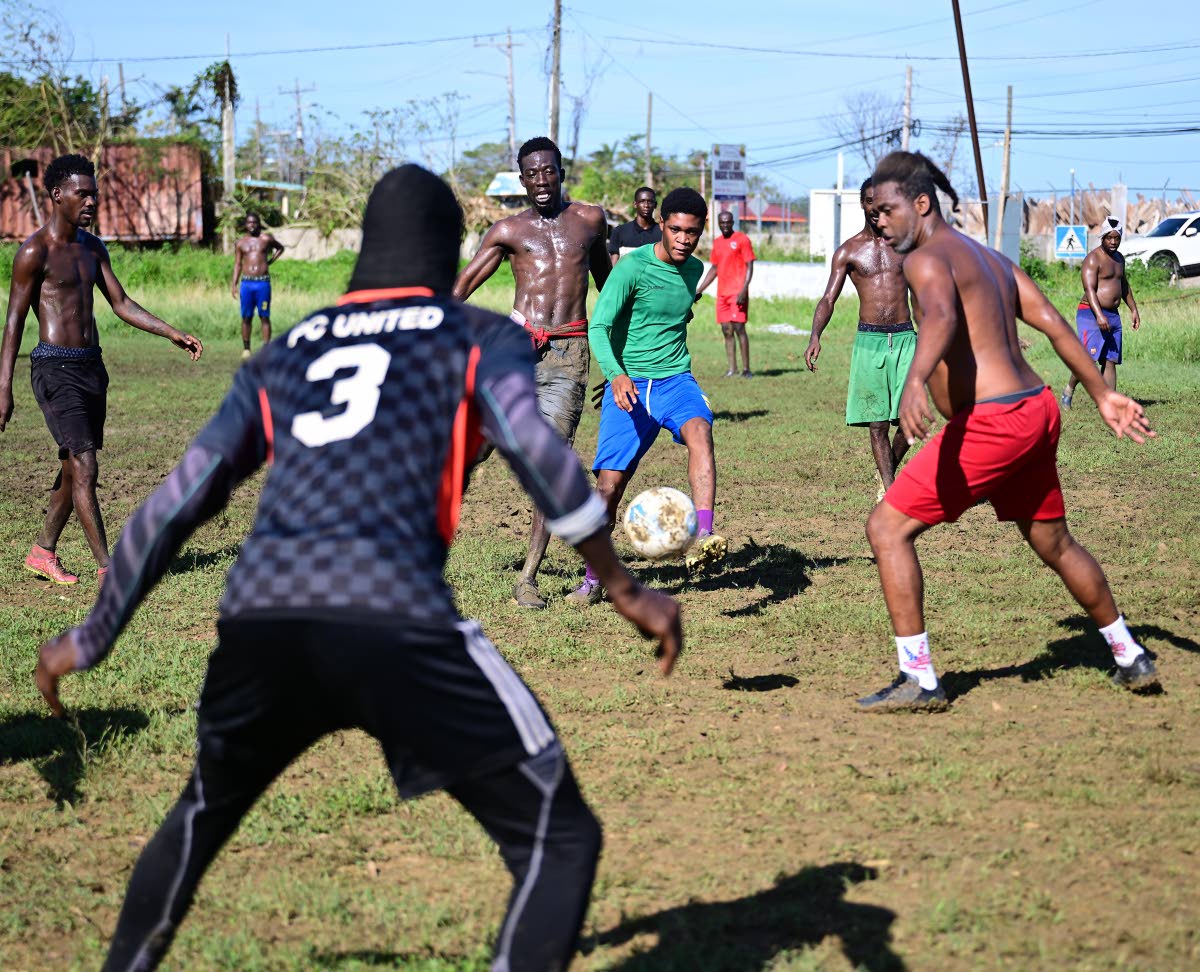 A group of men were seen enjoying a friendly game of scrimmage football at the Sandy Bay Communty Centre, Hanover. ‘life haffi live’ an onlooker said when asked about their activities following the passage of Category 5 Hurricane Melissa.
Rain hammered through damaged roofs as the Grant family in Montpelier, Hanover, prepared Sunday dinner, a meal amid the constant reminder of Hurricane Melissa that the family acknowledged is not the privilege of the many scavenging for food, homeless.
In Montpelier and surrounding communities, people moved between soaked mattresses and salvaged possessions, nursing injuries and losses while trying to stitch a life back together after Melissa barrelled across Jamaica, claiming at least 32 lives and leaving destruction in its trail almost everywhere.
Melissa struck one week ago today, as a Category 5 storm – the strongest to hit the country directly on record, with winds that reached about 185 miles per hour when it made landfall in Westmoreland, south of Hanover.
The hurricane carved a destructive path across Jamaica’s southwest before exiting along the north coast east of Hanover – a track that left some parts of Hanover spared the very worst but still reeling from widespread damage to roofs, crops and services.
But on Sunday, amid the destruction were people trying to claw back routines, even if the way forward isn’t immediately clear. Access to some badly hit areas was difficult, with The Gleaner forced to turn back while attempting to reach Cascade and adjoining areas.
Up the treacherous, tree-choked hills into Hanover’s interior, the lack of power, water, and telephone connectivity had turned life into a pre-modern ordeal. The homes that clung to the parched-looking hillsides or sat precariously on concrete stilts bore the scars of Melissa’s wrath – roofs were peeled back; leafless trees; roads narrowed by downed trees and poles; collapsed houses and shops; dumps with discarded clothes; and people asking for money, food and water.
HAD TO FLEE
It was stark inside a modest family compound in the scarred community where Kenroy Stewart, 40, described how his two-storey, mostly board house lost its roof and all he could save was a suitcase of important documents.
“I was on the step (entrance) and I see when the storm just take off the roof and gone wid it,” he said, recalling how he grabbed documents and fled as the house came apart. His family’s clothing, mattresses and appliances were soaked.
Cleaning and salvaging were the immediate tasks; new zinc and flooring were urgent needs as he helped his mother, Veronica Grant, prepare fish and yellow yam for dinner.
“Me feel bad. Me nuh have nutten fi wear. Me sheet, everything. Me nuh have nutten fi wear; oh God,” said the weeping 64-year-old woman, hands clasped and voice raw, as rain pounded the house and wooden furniture that appeared swollen from their water bath.
Her husband, Canute Stewart, stood by as the water poured in and the family tried to protect what they could.
“Melissa a di wickedess one. Melissa a di wickedness one,” Grant said. “When him come, him stuck, him nuh waah move. Oh God –Melissa bawl. Oh, my.”
Other residents told similar stories of sudden, terrifying loss. Delvarine ‘Emily’ Gordon, 52, described mattresses and clothes ruined and a roof that came off.
“From the storm blow a over me grandma me haffi sleep. Me bed wet up, everything; di roof come down. Right now me nuh have nuh clothes fi put on. Everything wet up. Me haffi deh dry and as yuh out out, the rain. Mi mattress, me haffi guh throw it weh; lots of mi clothes dem mi haffi guh throw it weh,” she said, as leaking tarpaulin and patched zinc tried to keep out the next downpour.
Yet, amid the ruin there were gestures of care. Rowan Getten, 54, a taxi operator in Greenland, was out repairing his roof in a race against the rain that derailed his efforts on Saturday. He did not spare a thought for only his own loss.
“Mi sorry fi myself, but me sorry fi some people out deh more than how me sorry fi myself,” he said, perched on the roof, overlooking rollings hills and trees bereft of leaves and lush.
He continued: “Me can do a ting, some people can’t do nothing at all, nothing at all, di whole a dem house mash up. Dem nuh got nutten. Me a run a likkle bus, me can find two likkle people; dem can’t find nutten at all; mi sorry fi people more than how me sorry fi myself. ‘Cause me a go put on this (roof) and can guh sleep eno; some people cyaa guh sleep. Dem nuh have nutten ... me give thanks weh mi have.”
CHURCH A FOCAL POINT OF SOLACE
Giving thanks was what worshippers at the New Testament Church of God in Greenland attempted to do, despite their varied losses. The church, like other sanctuaries across the parish, became a focal point of shelter and solace.
Pastor Monique Ellis-Campbell said she kept the doors open because people needed a safe space.
“Once I’m pastoring, we have church. So, even if we didn’t have a roof, we would have church this morning,” she said, noting that some members had lost roofs or entire houses. “People need a safe space to come, and especially now; the gathering of the brethren, praising the Lord will encourage and strengthen some of them spiritually, physically and emotionally.”
For congregant Pauline Stephen, of the King’s Vale community, coming to church was important.
“After everything, I’m alive and well,” she said, before acknowledging the setback to her livelihood as a result of the loss of her farm.
“Everything is down. There’s not a fruit tree left standing. Banana, sorrel, sweet pepper, tomato, everything is down. And they were almost ready to reap, so we lost all those crop,” she said as Sunday school wrapped up to make way for the main service.
On plans to get back on her feet, a sigh, then a plain concession.
“Don’t put no plan in place as yet. It’s hard. It’s hard. Don’t know where to start from.”
Some women, tired and hungry, were bent over pans by a river at Blue Hole to wash clothes, even as the water ran brown with silt. For them, that was not routine and just a sense of the normal was eluding them, five days after the storm.
“Di whole place under disaster. Me nuh have no food, me money run out. Me nuh have no light; we haffi a sleep inna dark wid wi pickney dem,” said Stacy, 35, head down over her pan, detailing a life stripped to the bone. “We nuh have no water, we haffi a come a river and di river water dutty; me can duh nuh better, wi nuh have nuh water fi drink, weh wi a go do? Weh wi a go duh?”.
Sodia Reid Barnes, who lost a wall, cried out for help as she washed clothes with members of her family, including her husband.
“A di wickedness sup’m me experience; wickedness sup’m inna my life. Me nuh wah experience tornado,” the 47-year-old said, arguing that the devastation from Hurricane Gilbert in 1988 could not be compared with Melissa.
“Me have di outside toilet, it gone; a toilet bowl alone di deh,” she said, noting that she has been battling several health challenges and was due a surgery at the Noel Holmes Hospital in the parish.
The challenges with getting immediate relief was also biting, and Reid-Barnes did not hide her lament.
“Dem nah give wi nuh food; nutten we nah get down here,” she said, as a woman interjected, “Mi nuh wah no food, a money mi want.”
FOOD BEFORE MONEY
But Reid Barnes hit back.
“Food come before the money; we need food,” she said, pointing to a curried goat meal she said she had from Saturday. However she acknowledged that some persons have suffered worse damage.
“People weh dem house flat, worse dan mi.”
Near them, at the Sandy Bay community centre, a group of men played football on Sunday, a ritual that has become a release valve.
Taveno Smith, 40, watched the match and captured why a game mattered.
“Bwoy, a di only way we can sit down the stress. ‘Cause, to how the time serious yah now. No light, nutten at all. A di only thing we haffi duh, cuz whole heap a wi under stress. No money, nutten at all.”
For a few hours, laughter and shouts replaced the grinding worry about food, water, and shelter.
Even with the picture of devastation around the field - the debris on the nearby murky coast, the bowed branches of trees, or what’s left of them, and the roofless houses - Cossaly ‘Moon’ Ennis, a 48-year-old boat captain and one of the footballers, did not imagine that the death toll,-then 28, was as many.
“This morning, for the community, it’s very nice for everybody to come together after the storm, relax, have little fun, then can go back home, sit down have little drink and feel good,” he said, acknowledging the deaths.
jovan.johnson@gleanerjm.com