Earth Today | Running on empty?
Loading article...
-
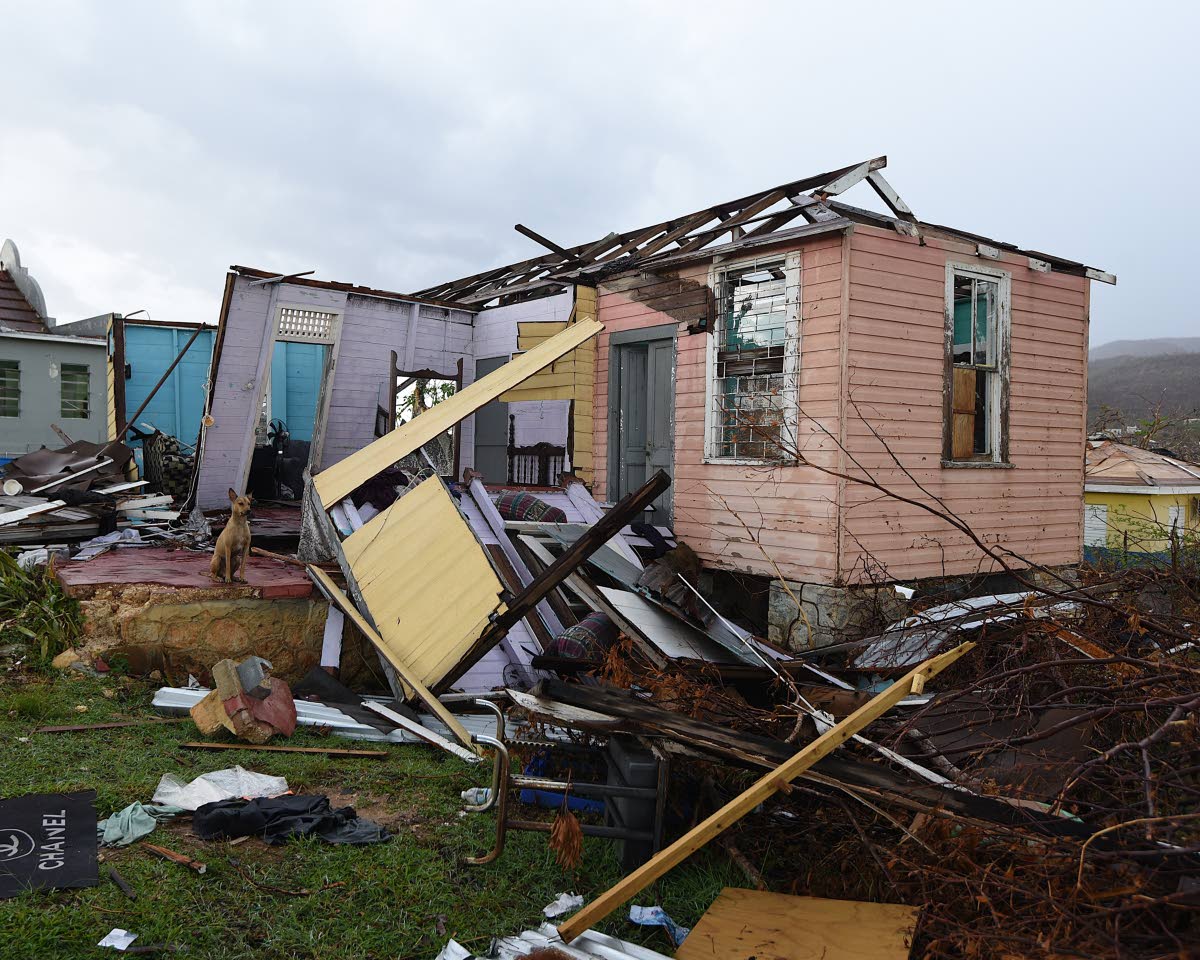 A house in Brompton, St Elizabeth that was destroyed by Hurricane Melissa.
-
EVEN AS the catastrophic consequences of climate change rain down on the developing world – as evidenced by the destruction and devastation brought to Jamaica’s shores by the Category 5 Hurricane Melissa recently – new research reveals that the global coffers for adaptation financing may be running on empty.
“Although there is clear evidence of accelerating climate impacts, changing geopolitical priorities and increasing fiscal constraints are making it more challenging to mobilise the resources needed for climate mitigation, adaptation, and loss and damage,” said the 2025 Adaptation Gap Report.
According to the report, the situation is grave.
“The adaptation finance needs of developing countries by 2035 are at least 12 times as much as current international public adaptation finance flows,” it said.
In addition, the report noted that the Glasgow Climate Pact goal of doubling 2019 adaptation finance flows by 2025 to approximately US$40 billion is likely to be missed, given current trends, while “the new collective quantified goal for climate finance (NCQG) is insufficient to meet developing countries’ adaptation finance needs in 2035”.
“In view of the timeline for the NCQG, it is pertinent to reassess the adaptation finance gap and align it with the year 2035. The reanalysis estimates the costs of adaptation to be in a plausible central range of US$310-US$365 billion per year for developing countries by the year 2035 (in 2023 prices). The range reflects evidence from an updated modelling analysis of adaptation costs, as well as an updated assessment of submitted adaptation finance needs based on National Adaptation Plans and Nationally Determined Contributions, with extrapolation to all developing countries,” the report explained.
“Contrasting this, the latest available international public adaptation finance flows from developed country Parties to developing country Parties were tracked at US$26 billion in 2023 (constant 2023 prices). This is a slight decline compared to 2022 and was due to a drop in funding from the multilateral development banks,” it added.
It is this “levelling off of finance, and recent policy announcements on the reduction of official development assistance” that is seeming to stand in the way of “the Glasgow Climate Pact goal of doubling international public adaptation finance from 2019 levels to around US$40 billion by 2025 will be missed if current trends continue”.
“Comparing the estimated adaptation finance needs with the current finance flows shows that the adaptation finance gap is now US$284–339 billion per year until 2035, with needs that are 12-14 times as much as current finance flows . The more positive news is that the adaptation finance gap is lower for LDCs and SIDS, though the levels still fall far below needs for these most vulnerable countries,” the report said further.
SOLUTIONS
Meanwhile, the report, titled Running on Empty: The world is gearing up for climate resilience – without the money to get there, said remedial measures must be pursued.
“Investments in climate action far outweigh the costs of inaction. For instance, every US$1 spent on coastal protection avoids US$14 in damages; urban nature-based solutions reduce ambient temperatures by over one degree Celsius on average, a significant improvement during the summer heat; and health-related capacity-building can further reduce symptoms of heat stress,” the report noted.
The solution, it has proposed, include containment of the growth of the adaptation gap by giving attention, not only to increasing the volume of available financing, but also to accelerating mitigation actions that bring about a marked decline in emissions by decreasing investments in fossil fuel assets.
It is also recommended that the financial system be engaged “more broadly”.
“It is imperative to integrate climate resilience in investment decisions in both public and private sectors. A draft negotiation text on the NCQG (“streamlined compilation of proposals”) referred to relevant actors for this, including central banks, commercial banks, credit rating agencies and export credit agencies,” the report said.
“While the integration of physical climate risks into financial decision-making is less straightforward than for transition risks, their integration is critical to managing financial risks of climate change. Some central banks are starting to manage these risks. The insurance sector also needs to integrate physical risks in its policies and is increasingly central to climate change adaptation efforts,” it said further.
pwr.gleaner@gmail.com