Black River: From Gravesend to ghost town to ruin
Loading article...
-
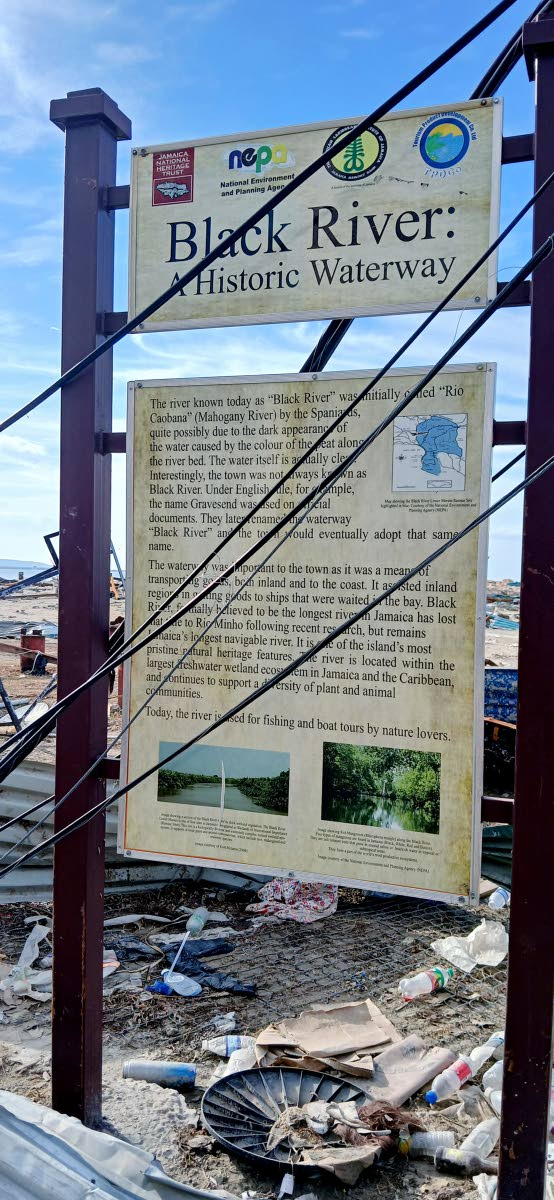 The storyboard of the history of Black River is still standing after Hurricane Melissa.
-
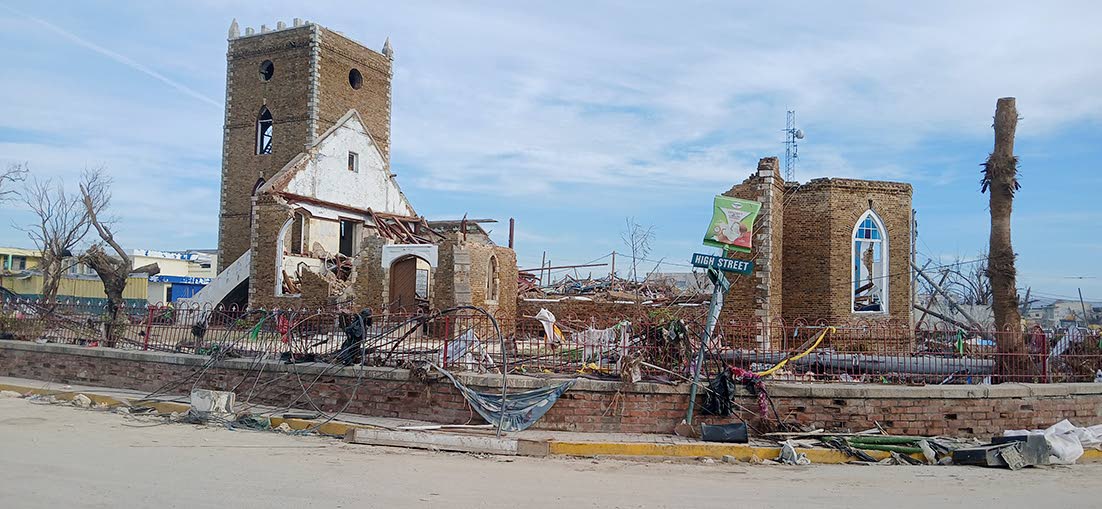 The remains of the Parish Church of St John The Evangelist in the aftermath of Hurricane Melissa.
-
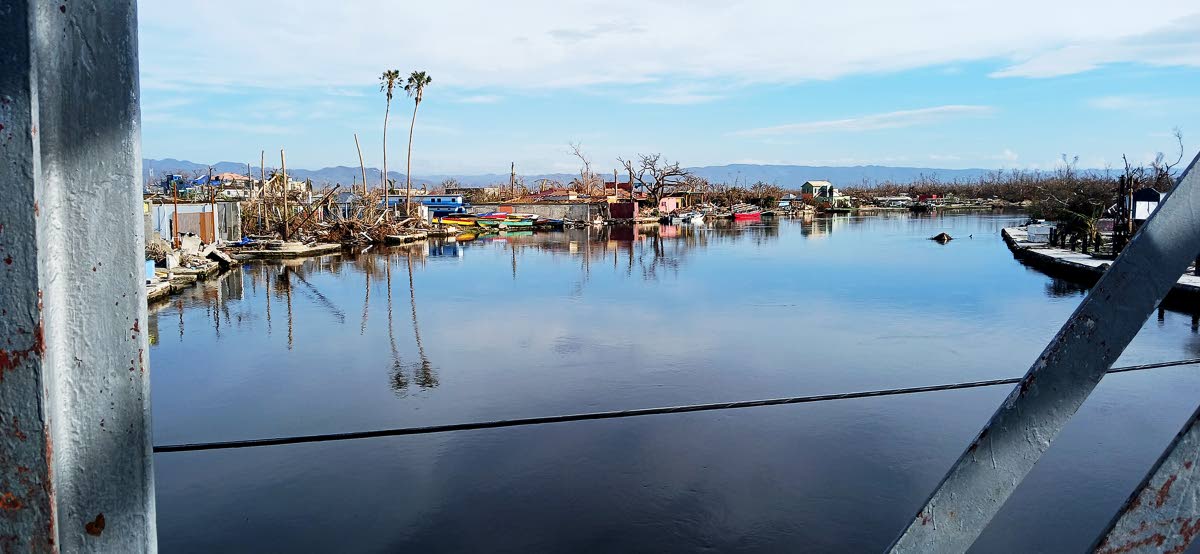 Black River waterfront, damaged by Hurricane Melissa on October 28.
-
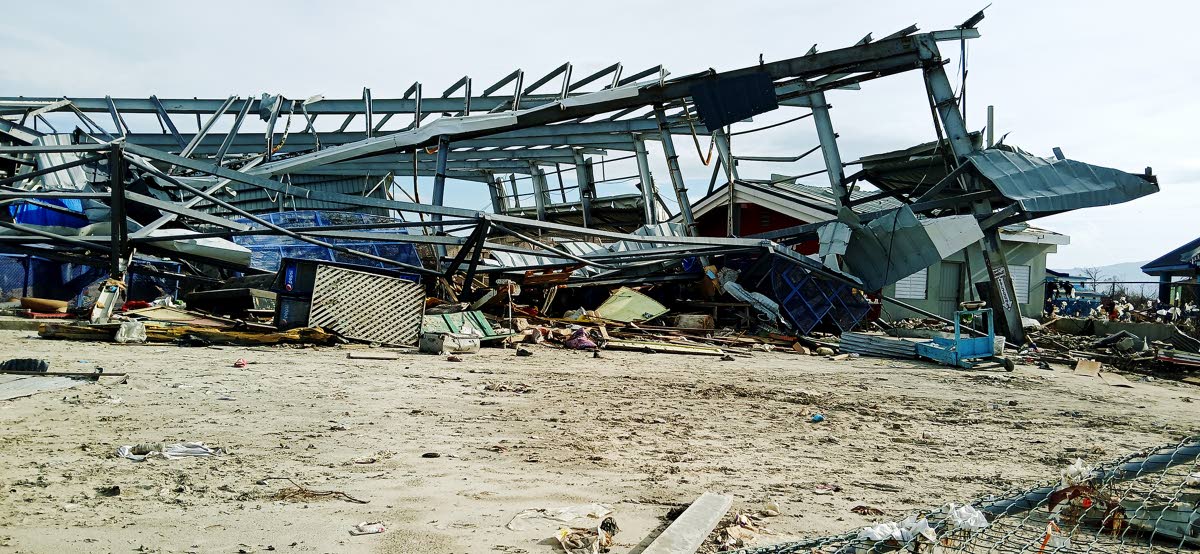 Mangled metal frame of Black River Market after Hurricane Melissa on October 28, 2025
The parish of St Elizabeth was among 12 Anglican parishes established between 1655 and 1675, named after Elizabeth, Lady Modyford, wife of Governor Thomas Modyford.
In 1773, Black River replaced Lacovia as the parish capital. Once called Gravesend because of the high number of deaths in the area, the town sat on Jamaica’s wetland, a breeding ground for mosquitoes, carriers of the yellow fever virus and malaria, which combined with the miasma gas from the swamps to cut the lives of colonists short.
The town got its name from the river, which looks black on the surface because of the decomposed or decomposing leaves therein. It was originally called Caobana by the Tainos, but named Rio Caobana by the Spanish colonisers.
The river starts as Hector’s River, near Coleyville, Manchester, and is part of the boundary between Manchester and Trelawny. It travels over land and underground until it emerges again at Siloah, St Elizabeth, from which it flows as Black River. It is 53.4 kilometres long, making it the second-longest river in Jamaica, but the longest navigable one.
Where the river meets the Caribbean Sea, the town of Black River developed into an important commercial seaport, where enslaved Africans were landed.
From there, logwood, transported on the river, and other much-sought-after produce were exported. The river supported an important shrimp and freshwater fishery in the early 20th century. Sugar estates and cattle pens, too, abounded in the region. The Hendricks Wharf was also a hive of economic activities in its heyday.
The town of Black River was a post-Emancipation days social hub. There were colourful balls and banquets, and an annual circus that attracted visitors from far and wide. It was the first place in Jamaica to have motor cars, and to get domestic electricity. This was at Waterloo, the home of the local Leyden family. It is said that the original Leyden brothers from England designed the town. Invercauld, built in 1890, was another famous residence. The Parish Church of St John the Evangelist was built in 1837, the year before Emancipation.
Black River’s development had never been rapid and solid. It was mainly a laid-back, easy-going place, away from the major road networks, and the madding crowds. Yet, it was once the biggest transport hub in the parish with main roads leading to Westmoreland in the west and Manchester to the east. Crocodile safari tours had also contributed significantly to the town’s economy in one way or the other.
But while the safari businesses thrived, the Black River economy steadily declined. Junction, serving the south, and Santa Cruz, the hub for the north, central and east, have surpassed Black River’s commercial and social importance and popularity. Even some government and non-government entities have relocated their branches to Santa Cruz.
On February 28, 2022, The Gleaner published an article headlined, ‘Black River needs an injection’, in a Jamaica 60 St Elizabeth commemorative supplement, on which ‘Black River is a ghost town’ is emblazoned on the front page.
The article says, among other things, “Now, 60 years after Jamaica gained Independence from Britain, Black River is all but dead, and is oft-referred to as a ‘ghost town’ … In essence, people would not want to go to Black River unless it is absolutely necessary.”
When The Gleaner team chanced upon Sylton Sibblies, manager for the market, which is operated by the St Elizabeth Municipal Corporation, he spoke candidly about the state of affairs in Black River in general, and the market in particular. “It is the people who do a little buying and selling who come into the town,” Sibblies stated, “There is no appetite for people to come here.”
“Life seemed to have stood still. Unflattering shacks and stalls are scattered all over. The brand-new market with brand-new metal stalls were bereft of shoppers. Only a few vendors were holding the fort. The others are elsewhere selling on the streets, while they use the market stalls only to store their stuff,” The Gleaner reported
“What, then, is going to become of the town of Black River? Will the line on the monitor to which it is attached, fighting for its life, finally go flat?” The Gleaner also asks.
“We have a market that the government invested so much money in and you can’t get the people of the streets,” Sibblies claimed. “Black River needs some injection of capital into the town, need somebody to come in and put in some investment. That is the key.”
“And until that key is turned, the town of Black River continues to be moribund like the little fishes wriggling from the hooks of three youths whom The Gleaner team saw fishing for their supper in Jamaica’s longest navigable river,” The Gleaner story ends.
And, on Tuesday, October 28, Category 5 Hurricane Melissa brought a destructive end to another era of that storied place surrounded by swamps, morasses and the sea.
editorial@gleanerjm.com