‘Food soldiers’ struggle
Loading article...
-
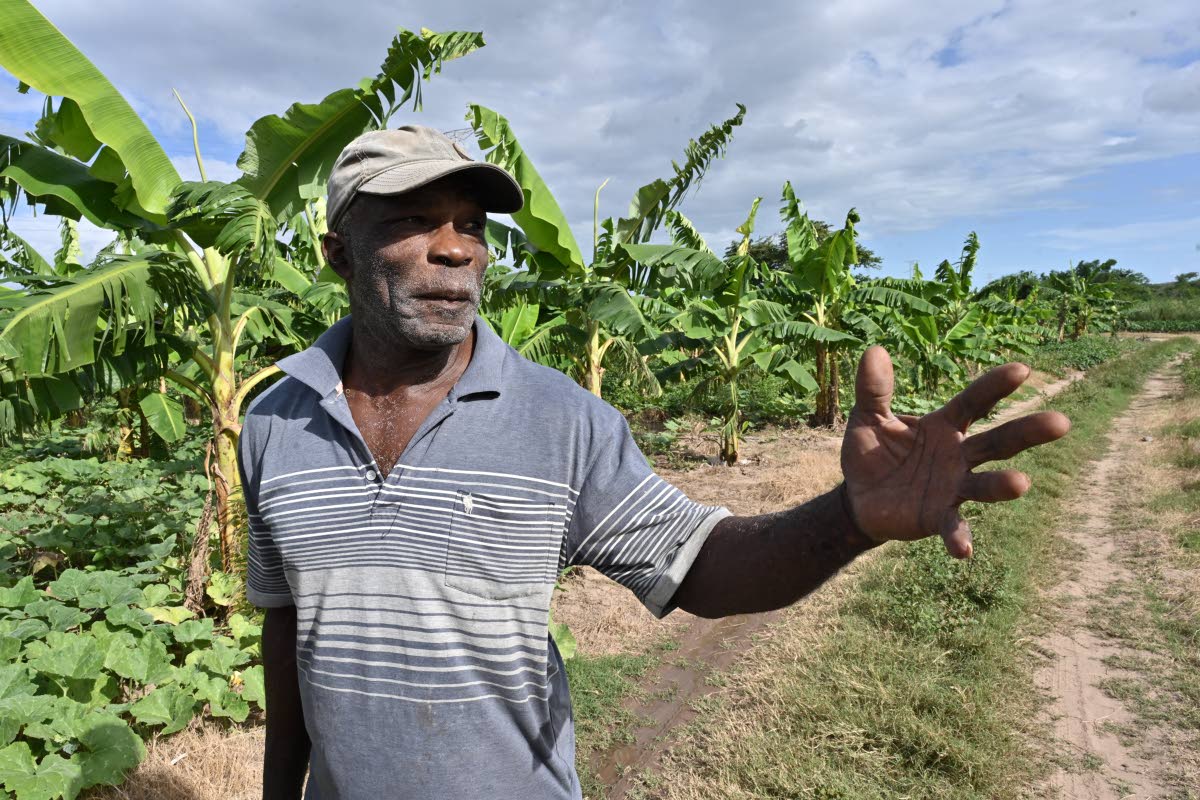 Daniel Goulbourne, a RADA-registered farmer for 15 years, farms two and a half acres at Parnassus, paying $20,000 per acre annually in lease fees. Despite this, he said there is no verification of storm damage to his farm and no meaningful assistance.
-
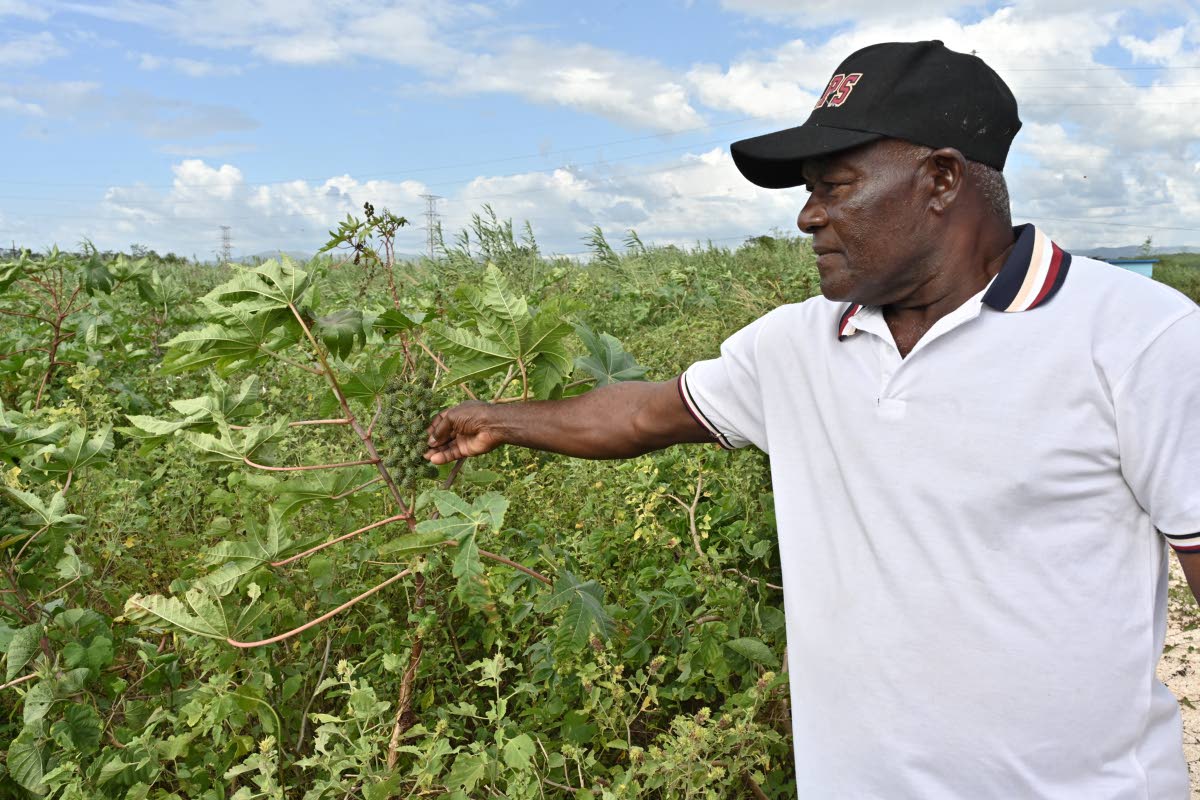 Raymond Currie, a farmer since 1986, said he received just one bag of fertiliser for his
six-and-a-half-acre plot, planted mainly with okra. He said his crops were to be reaped in December, but Melissa said otherwise.
Raymond Currie, a farmer since 1986, said he received just one bag of fertiliser for his
six-and-a-half-acre plot, planted mainly with okra. He said his crops were to be reaped in December, but Melissa said otherwise.
-
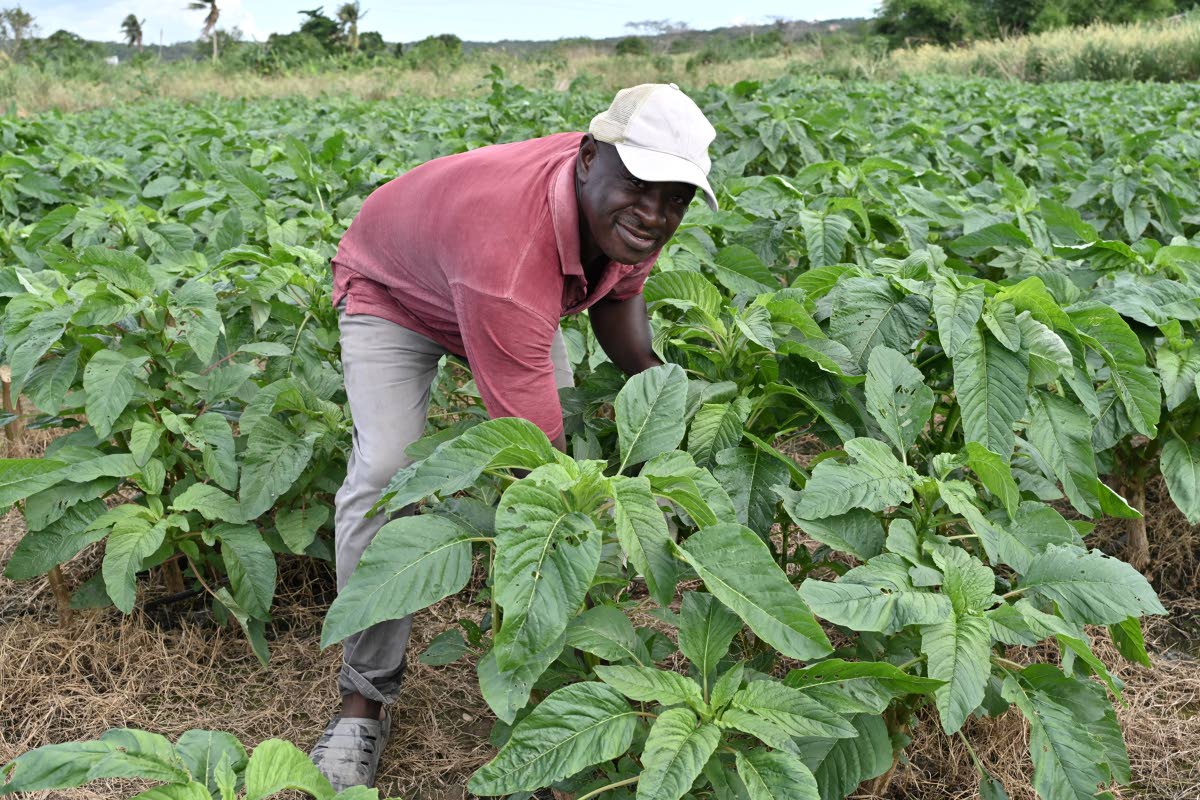 A farmer working in his field in the Parnassus agro park in Clarendon on December 18, 2025.
With climate resilience and national food security at the heart of Jamaica’s agricultural policy, farmers at the Parnassus, Spring Plains, and Ebony Park agro parks in Clarendon say they are relied on most when drought, gluts, and natural disasters leave food scarce. Yet, after Hurricane Melissa, many of those same farmers say they have been left to fend for themselves.
In the aftermath of Melissa, farmers across the three agro parks describe being forgotten, forced to rebuild on their own after floods and winds wiped out crops that were destined for Jamaican tables. Many say they lost everything.
Scattered across the island, agro parks are meant to be hubs of intensive agricultural production, integrating the value chain from pre-production to harvesting and marketing. But farmers at the three visited by The Sunday Gleaner say marketing remains the weakest link, and post-hurricane support has been minimal, even as they struggle to keep Jamaica food secure.
The parks span thousands of acres of government-owned land, remnants of the 1980s Agro 21 programme under the Edward Seaga administration. That initiative aimed to export winter vegetables to the United States, create more than 30,000 agricultural jobs, and supply the local market.
When The Sunday Gleaner visited recently, farm workers were busy replanting, trying to recover from Melissa’s damage. What they shared were stories of devastation: crops lost, little or no assistance, and millions of dollars in produce destroyed by the most intense storm to make landfall in the island just weeks before the lucrative Christmas season.
At Parnassus, farmers vented their despair but also their determination to try again.
“We cannot win. Just to make sure that your produce don’t rot in the ground, you have to sell to the person buying the most. And for every 1,000 pounds of products, we have to give 100 pounds free. And just because you don’t want a glut and for it to rot on you, you sell to the person. Sometimes the person buying is going to sell it back,” said pumpkin farmer Godfrey Hines.
$3-million loss
A registered farmer with the Rural Agricultural Development Authority (RADA), he told The Sunday Gleaner he lost more than $3 million from Hurricane Melissa. Pumpkins, sorrel, and okra were destroyed when the Rio Minho burst its banks, submerging his fields under more than 10 feet of water. Water marks were still visible nearly two months later.
Hines has since replanted pumpkins, which are now thriving, but support has been limited. He said he received just one bag of fertiliser for his entire farm.
Daniel Goulbourne, a RADA-registered farmer for 15 years, farms two and a half acres at Parnassus, paying $20,000 per acre annually in lease fees. Despite this, he said there is no verification of storm damage to his farm and no meaningful assistance.
“The farm was under water. I replanted the melons. They are growing now. Plantains were everywhere, but I was luckier than most; mine was saved. Sometimes I am here and for the whole day, I don’t eat, I can’t even sell anything to eat. I do everything – from clearing the land to marketing the produce. When we have a glut, it just rot, or we give it away,” he told The Sunday Gleaner.
His farm uses drip irrigation, but replacement hoses cost more than $25,000 per roll. He spent over $80,000 after the hurricane.
“People don’t understand how hard we have to work to put food on their table, although everywhere they talk about producing our way to food security and reducing the agricultural importation bill,” he said.
Still, he offered papayas from trees that had been heavily laden before strong winds knocked them down.
“Honestly, I think they have forgotten us, or they don’t care about us farmers down here. Everything is about St Elizabeth farmers. We were badly impacted by the hurricane, too,” he bemoaned. “All the attention is down there (St Elizabeth).”
Across the parks, farmers described widespread post-hurricane suffering. Pumpkins, watermelon, corn, and other crops were destroyed by flooding and wind. Many farmers referred to themselves as “the forgotten farmers”, noting that the most assistance some received was a single bag of fertiliser, far from enough to nourish even an acre of most crops.
Ground provisions such as sweet potatoes, cassava, and carrots were smothered by floodwaters and overgrowth. Above-ground crops including corn, bananas, plantains, callaloo, cabbage, and peppers were flattened or drowned. Melissa, they said, not only destroyed crops, but morale.
Received no help
Next to Goulbourne’s plot, Irvin Ryan had about a quarter-acre of callaloo ready for market before the hurricane. Registered with RADA, he said he received no help.
“My farm size is two and a half acres. I pay lease to the Government, but like most of the other farmers, we didn’t benefit from anything after the hurricane,” he told The Sunday Gleaner.
Raymond Currie, a farmer since 1986, said he received just one bag of fertiliser for his six-and-a-half-acre plot, planted mainly with okra. During our visit, heavy overgrowth blanketed much of his land. He said his crops were to be reaped in December, but Melissa said otherwise, noting that he last reaped a crop in April.
“I don’t know if one bag of fertiliser is the benefit we get, but that’s all I received. I pay lease totalling $134,000 per year, and when I enquired of RADA what, if any, benefits I can get, I was told that I came too late and only 10 bags of fertiliser were left,” Currie said.
Over the years, Currie added, benefits from RADA have dwindled.
“Not even seeds I have not got. I don’t hear anybody else say they received any either,” he said.
Former Jamaica Agricultural Society (JAS) President Norman Grant said registration with RADA is meant to give farmers access to government support after disasters.
Production-incentive scheme
“The main benefit that they get is to fall under the Government’s production-incentive scheme whereby if there is distribution of relief, like now there is Melissa, they would get seeds, they would get input supply ... to help them to rebuild after the disaster – seeds, fertilisers, tools, all of those inputs,” Grant explained.
He explained that damage assessments are usually carried out by RADA field officers, sometimes supported by JAS representatives. However, he said he was unsure how effectively that system now worked.
“Quite frankly, RADA and the politicians sort of take objection to it because it’s like I was trying to steal their thunder,” the former senator explained.
Now, farmers say, there are no intermediaries.
Spring Plains was the first stop on The Sunday Gleaner’s trek. Once the flagship Israeli-partnered Agro 21 project, it was designed to export winter vegetables to the US alongside ventures in tilapia, macadamia nuts, and hearts of palm.
Today, about 50 acres are under cultivation with crops such as sweet corn, cucumber, peppers, bongo peas, and cassava, most replanted after Melissa. Workers said peppers were destroyed, and most December crops will not reach market until February or March. Cucumbers, however, were harvested early and have since flooded markets, with prices dropping to between $50 and $100 per pound.
Spring Plains and the adjoining Ebony Park Agro Park together cover nearly 2,000 acres, leased to about 60 farmers on plots averaging two-and-a-half acres. After the collapse of the winter vegetable experiment, the area shifted to mangoes and other crops, but few mango trees were seen, and none of the farmers interviewed grew them.
“Some crops were ready to be reaped when Beryl came. Since Beryl, dasheen and pumpkins that were replanted were destroyed by Melissa. Only the cucumber was reaped before Melissa,” said one farmer at Ebony Park, which is separated from Spring Plains by a tributary of the Rio Minho.
Wells dug during the Agro 21 era now supply water to the parks.
At Ebony Park, some farms were still producing, with sweet corn, cabbage, sweet potatoes, and cassava under irrigation. On one plot, a distraught farmer was unsure if he would restart and replant.
“Mi lose all a that,” he said, pointing to lost coconut, sorrel, and pineapples over the years.
erica.virtue@gleanerjm.com