Tufton: Gov't 'not sitting down' as it tackles fallout from end of Cuban medical programme
Loading article...
-
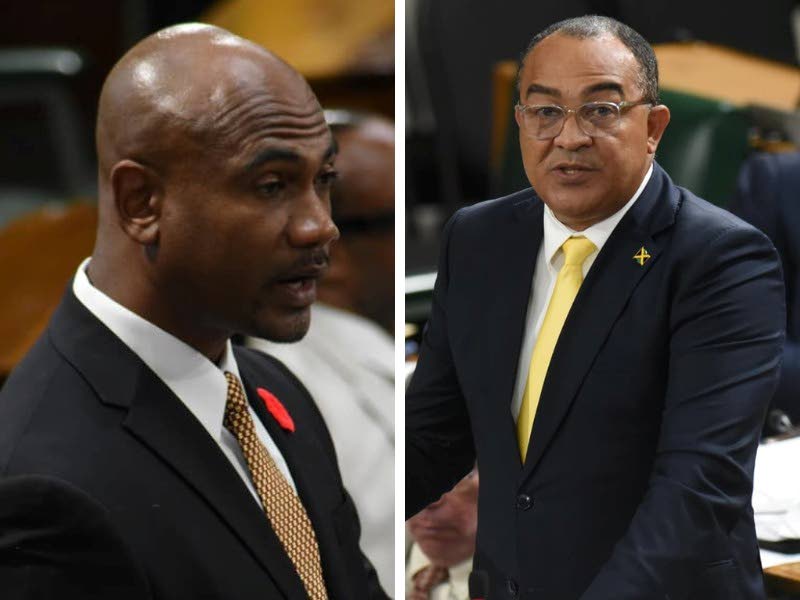 Opposition Health Spokesman Dr Alfred Dawes (left) and Health and Wellness Minister Dr Christopher Tufton.
-
Opposition Health Spokesman Dr Alfred Dawes (left) and Health and Wellness Minister Dr Christopher Tufton.
-
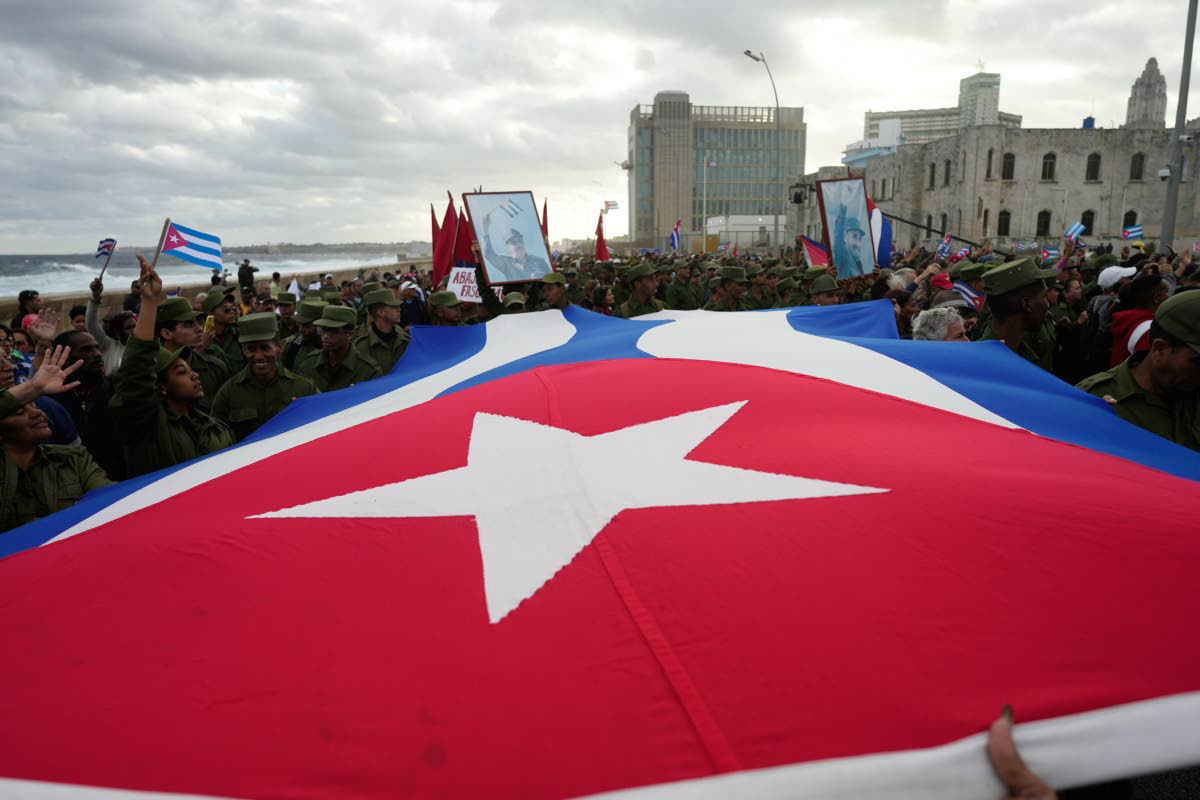 People carry a Cuban flag during a government-organized rally protesting the killing of Cuban officers in Venezuela while United States forces captured Venezuelan President Nicolas Maduro and his wife, in Havana, Cuba on January 16, 2026. (AP Photo/Ramon Espinosa)
Health Minister Christopher Tufton says the Government is “not sitting down and not doing anything” as it moves to address gaps in the public health system following Jamaica’s decision to end its medical cooperation programme with Cuba.
“We have a multipronged approach to dealing with the human resource challenge,” Tufton said late Thursday, pointing to the general shortage of healthcare workers in certain areas of the sector. “Any fallout from the Cuban agreement, meaning persons going back as opposed to exercising the option to stay, will amplify that problem. It’s a risk and we understand that… but we’re not just sitting down and not doing anything.”
He was speaking as the ministry appeared before lawmakers on Parliament's Standing Finance Committee reviewing the proposed 2026–2027 national budget.
Tufton said the Government has been expanding recruitment and training efforts to address the general shortage.
His comments came after Opposition Spokesman on Health Dr Alfred Dawes questioned whether the ministry had conducted a gap analysis to determine the likely impact if Cuban medical personnel leave the public health system.
Dawes said he was particularly concerned about the Cuban-supported eye-care programme, which he said performs more cataract surgeries than all public hospitals combined.
“The eye programme is the main source of eye care for Jamaicans who can’t afford to go privately and pay $500,000 for a cataract surgery,” he said.
Dawes also asked how the Government planned to fill positions in underserved communities where Cuban personnel have historically worked. “What are your plans for filling the gaps in the underserved areas, the community centres and hospitals where no Jamaicans want to go for social reasons and we fill them with Cubans?” he asked.
Tufton told lawmakers there are currently about 280 Cuban medical professionals in the health system, down from just under 350 over the past six to eight months as work permits expired under the previous agreement with Cuba.
He said Jamaica and Cuba have traditionally negotiated memoranda of understanding to govern the engagement of the medical personnel. However, negotiations on a new arrangement have stalled for nearly a year.
“The last point was that the proposal is with the government (Cuba) and they have not responded over a few months, and the Government took the decision not to renew on that basis, having had a series of conversations,” Tufton said.
He stressed that the decision should not be interpreted as a rejection of the broader relationship between the two countries.
“This is not a termination of the desired relationship that we have,” Tufton said. “It’s not a recognition of anything beyond what we have said publicly - that it has been a valuable relationship and we appreciate it and it has helped the Jamaican people.”
The minister noted that the Government has offered Cuban medical personnel currently in Jamaica the option of individual contracts to serve out the remainder of their tenure.
To address potential gaps, Tufton said the ministry is expanding training and recruitment initiatives. He also noted that as part of the broader response to shortages, the government has provided scholarships with bonding obligations, improved retention measures, working conditions and compensation and is now pushing and overseas recruitment.
More than 100 trainees in specialised areas are expected to enter the system later this year, he said.
The ministry is also pursuing agreements with countries such as Ghana, Philippines, and India to recruit healthcare workers, including educators, while a diaspora recruitment campaign has already generated 136 expressions of interest.
“I hope for the sake of everyone who relies on the system that we can find some substitutes,” the opposition spokesman said.
The Kamina Johnson Smith-led Ministry of Foreign Affairs and Foreign Trade announced earlier Thursday that Jamaica has discontinued its medical cooperation programme with Cuba after both governments were “were unable to agree on the terms and conditions of a new technical cooperation arrangement” following the expiration of the previous agreement in February 2023.
The programme, which began in 1976, has long provided doctors, nurses and other specialists to help fill gaps in Jamaica’s public health system.
The decision comes as the United States has been pressing regional governments to review their participation in Cuba’s overseas medical missions, which Washington alleges involve forced labour. Caribbean leaders, including from Jamaica, have rejected the claims though some have stated they are seeking various kinds of modifications to the arrangement.
Cuba has also trained hundreds of Caribbean doctors and dentists under government scholarships since the 1970s, many of whom now serve across the region.
Follow The Gleaner on X, formerly Twitter, and Instagram @JamaicaGleaner and on Facebook @GleanerJamaica. Send us a message on WhatsApp at 1-876-499-0169 or email us at onlinefeedback@gleanerjm.com or editors@gleanerjm.com.