From remediation to recognition
Loading article...
-
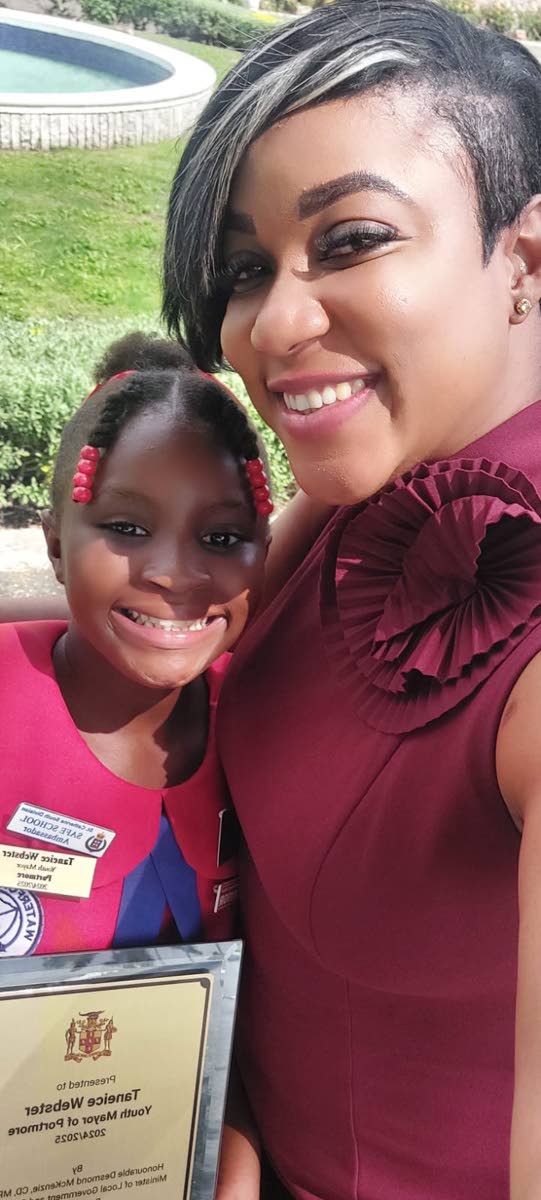 Nicola Grizzelle, principal of Waterford Primary School, with top girl, Tanice Webster.
-
 Dashawn Stewart, Waterford Primary.
-
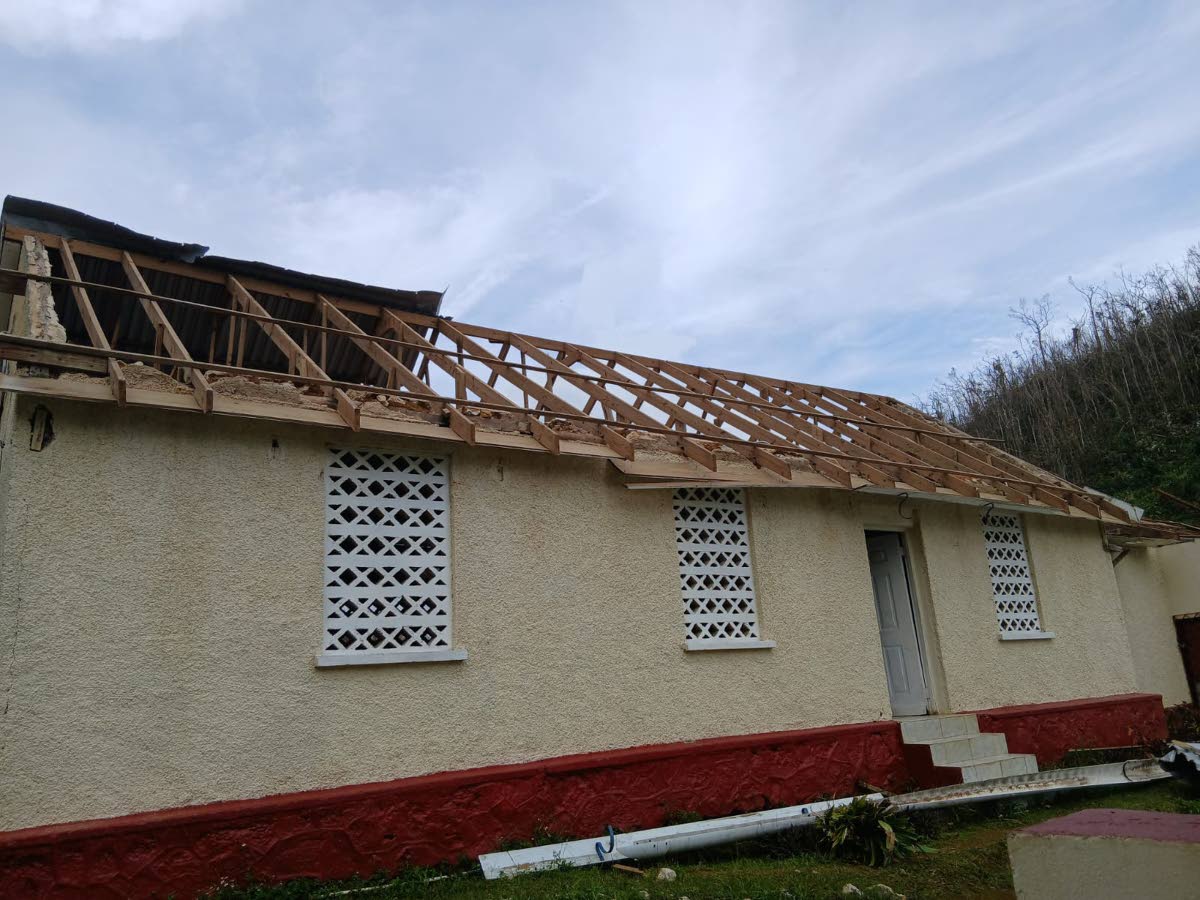 Quick Step Primary, which suffered damage as a result of Hurricane Melissa.
-
 Tanice Webster, Waterford Primary.
At the ‘blackboard’ of assessing learning trajectories and outcomes, particularly in the island’s 189 National School Learning and Intervention Programme (NSLIP) primary schools deemed in need of support by the National Education Inspectorate (NEI), a number of principals are asserting that academic achievement is influenced by the interaction of several variables.
The 189 listed schools benefit from targeted interventions and the strategic approach of the NSLIP, introduced by the Ministry of Education, Skills, Youth and Information in 2022. The programme was established in response to the learning gaps and losses experienced by students following the COVID-19 pandemic.
The education ministry has noted that “evidence from diagnostic assessments, post-intervention evaluations, and ongoing student performance monitoring, demonstrates that holiday camps, Easter programmes, summer interventions, and extra classes have contributed positively to literacy and numeracy outcomes.
“Assessment data consistently show improvements in foundational skills among participating students, particularly those identified as performing below expected levels,” the ministry said.
“These programmes provide targeted remediation, additional instructional time, and individualised support that complement regular classroom instruction. Attendance records, student achievement data, and teacher observations indicate that students who participate consistently often make greater learning gains.”
Principals, while affirming the progress being made, nevertheless highlight the continuing challenges presented by each new cohort of students, contending that discussions on outcomes must address how the education system is largely tasked with responding to unequal starting points.
“There are issues, such as the wide range of ability levels within classrooms, the increasing number of students with exceptionalities, socio-economic challenges, and limited parental support, that can impact student achievement,” said Anthony St Aubyn Murray of Barrett Town Primary in St James.
“Large class sizes also make differentiation and individualized support more challenging.
“To address these challenges, the school continues to utilise ability grouping, targeted intervention programmes, workshops, and data-driven instruction informed by assessment. Additional strategies being considered include strengthening parent engagement initiatives, expanding remediation opportunities, increasing support for students with exceptionalities, and providing ongoing professional development to enhance teachers’ capacity to meet diverse learning needs.”
Trevor McKenzie, principal of Bamboo Primary in St Ann, also cited the lack of parental support and reinforcement.
“Some parents are also not able to assist their children with reading,” he remarked.
“As such, we have developed a reading programme using a series of books called the Reading Triumph and have held reading classes that have helped. We have also instituted the School Wide Positive Behaviour Intervention and Support (SWPBIS) programme, with guidance counsellors having face-to-face sessions with students based on their referral cases and conducting home visits.
“Due to the guidance counselling student leadership training exercise, there has been improvement in attendance and behaviour. We have a consistent spiritual intervention and psychosocial outreach programme of activities during orientation and when students return to school after each term. All this has helped to improve academic outcomes.”
Alecia Black, principal of Quick Step Primary in North East St Elizabeth, a school damaged by Hurricane Melissa, points to learning gaps caused by interrupted schooling as particularly challenging.
“In addition to the problem of limited parental involvement, there is limited access to literacy resources in some homes and the issue of mathematics anxiety among a number of learners,” she said.
“We have endeavoured to strengthen home-school partnerships, increasing parent education workshops.
“Of course, one is heartened by the response from our children, whom we continue to celebrate. It’s motivational, and they warm to being recognised, gleeful when receiving the awarded stars and calling up their friends to share in the excitement. This helps to drive everyone to achieve.”
Passion and patience
Nicola Grizzelle, principal of Waterford Primary and an educator who is ready to dare and do what’s different, advocates passion and patience as critical factors in the transformation in education being pursued. It is her firm advice, especially to young principals and teachers guiding slow learners.
“Without these attributes, you’re setting up yourself for failure. When the children feel you and realise you have a passion for them to learn, it is easier to execute anything,” she said.
“You must genuinely want to help them and get the parents on board because some of them have already given up. It’s why we’re big on celebration – for students, parents, grandparents and guardians.”
To strengthen parental involvement, she engaged the HEART NSTA/Trust in an apprenticeship programme, through which parents serve as apprentice teachers and clerical staff members for a monthly stipend, with participants rotating each year. Buy-in deepened with the scholarship fund she organised with family members, friends and a number of the school’s stakeholders to sponsor selected students in their first year of high school.
Grizzelle realised that special grit was required when she assumed the post of principal at Waterford Primary in 2020. The COVID-19 pandemic and suspension of face-to-face classes gave her an entire year to study the culture of the school. Having acquired a label as a school for slow learners, she discovered that a number of parents in the community felt it best to send their children elsewhere.
“I walked the scheme, I listened to their grouses, I shared the plans of my staff and myself doubling down to turn things around and I invited the students taking PEP [because most of them had no laptop for online classes] to be at school, properly masked up and in the open quadrangles and space, on a rotation basis, for the required preparations,” she said.