Earth Today | Bleached and broken
Loading article...
-
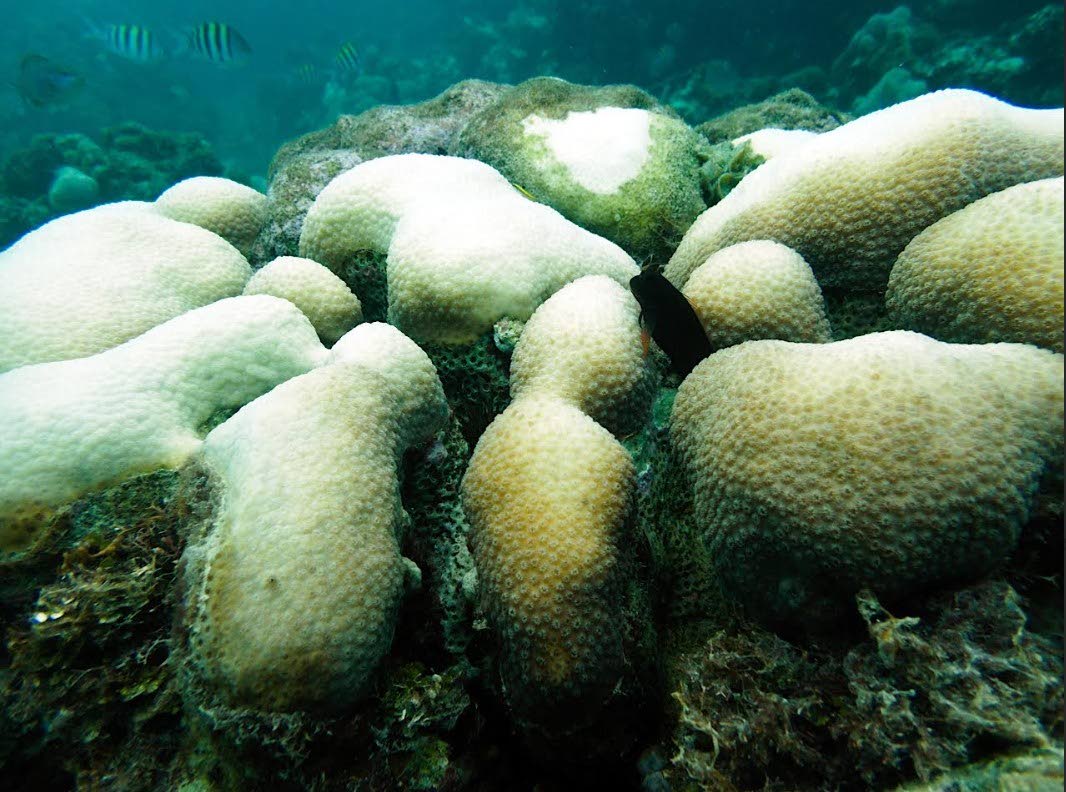 Coral bleaching in the Dominican Republic.
-
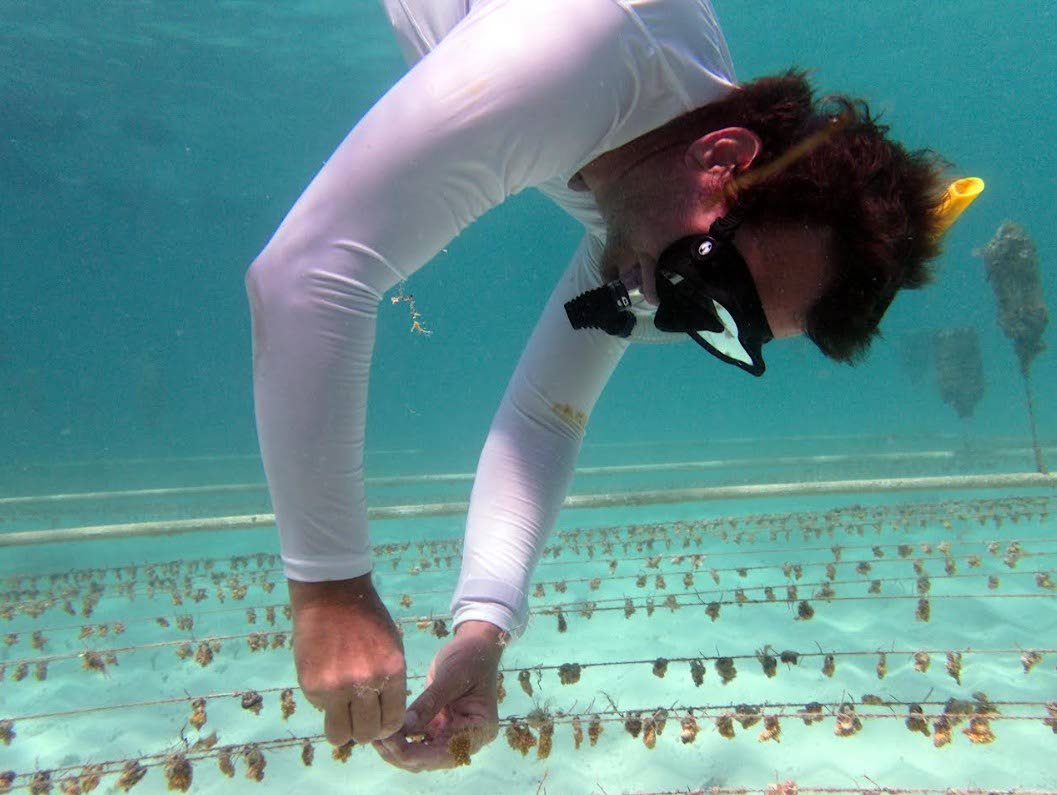 Andrew Ross from Seascape Caribbean works on a coral restoration project in Jamaica funded by the CBF.
AUGUST IS the month most of the Caribbean watches for storm systems forming off the African coast. It is also the month ocean temperatures in the region tend to reach their annual peak.
Those two facts should concern anyone who lives near a coastline, farms fish, or earns a living from tourism in our region.
For decades, coral reefs throughout the Caribbean had been suffering from disease, pollution, overfishing, and rising sea temperatures, yet most continued to grow. That changed in 2023 when a record-breaking marine heatwave spread across the Tropics. National Oceanic and Atmospheric Administration (NOAA) satellites tracked heat stress that was severe enough to bleach coral across more than 80 per cent of the planet’s reefs.
A May 2026 study by researchers at the University of Exeter and Universidad Nacional Autónoma de México found that this heatwave, worsened by stony coral tissue loss disease, pushed over 70 per cent of monitored Caribbean reefs past a critical tipping point, from net growth into net erosion – a threshold that scientists had not expected to be crossed for at least another decade.
According to the UN World Meteorological Organization, a strong El Niño is expected to intensify between August and October 2026, adding further heat to oceans already running above normal.
“El Niño is not just on our doorstep. It is inside the house and turning up the heat, “UN Secretary-General António Guterres said on August 3.
Why should this matter to us? Because coral reefs provide critical coastal breakwater protection from storms and sea level rise. As coral degrades and reefs flatten over time, their ability to provide coastal protection declines, resulting in increased damage and flooding from tropical storms and hurricanes.
For example, in the US Virgin Islands, fire coral that covered 12.1 per cent of one reef in August 2024 was dead by March 2025, after sea temperatures ran above the 35-year average every single month, peaking at 1.55 degrees Celsius above normal in October. Even under ideal conditions, recovery from mass bleaching takes 10 to 15 years. With recent temperatures, it could take much longer.
Warm surface water feeds tropical storms as they cross the region, and that same warmth holds coral in the prolonged stress that causes bleaching. Surprisingly, storms can stir and cool the water enough to ease heat stress in rare cases. More often, though, storms destroy the reefs that the heat already weakened and remove the protection that took decades to grow in just a few hours.
Organisations such as the Caribbean Biodiversity Fund (CBF) are among those working to help reefs recover. The CBF has supported reef conservation and restoration across the region, including debris clearance and coral nursery development in The Bahamas after Hurricane Dorian, and is now developing a regional framework for post-hurricane reef reco
While we watch for storms this August, it is worth reflecting on the coral reefs that stand between those waves and our shores and the dwindling protection they now offer as ocean temperatures continue to rise.
Contributed by Renée Smith, communications officer, Caribbean Biodiversity Fund.