Navigating tomorrow
Loading article...
-
 Johnann Davy. Photo - Contributed
-
Johnann Davy. Photo - Contributed
-
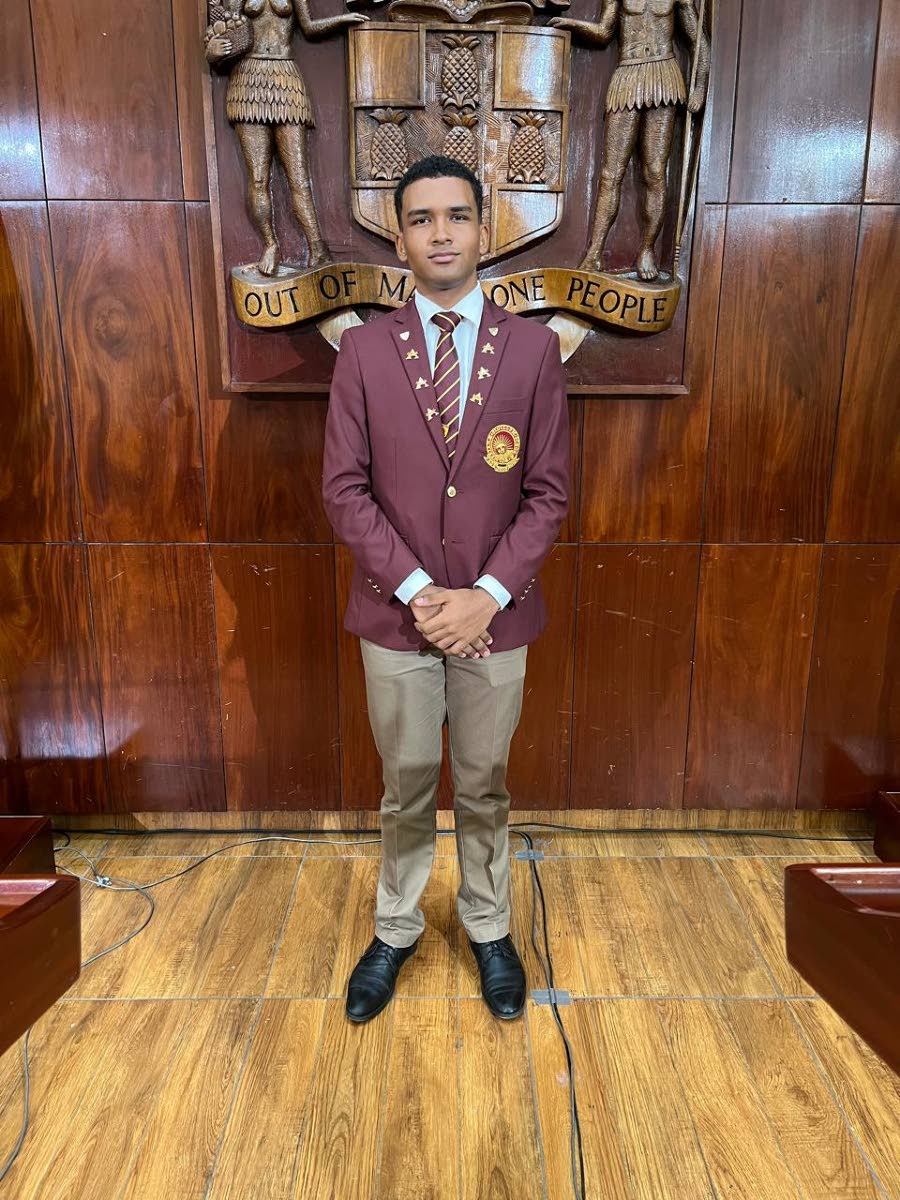 Kyle Kameka. Photo - Contributed
-
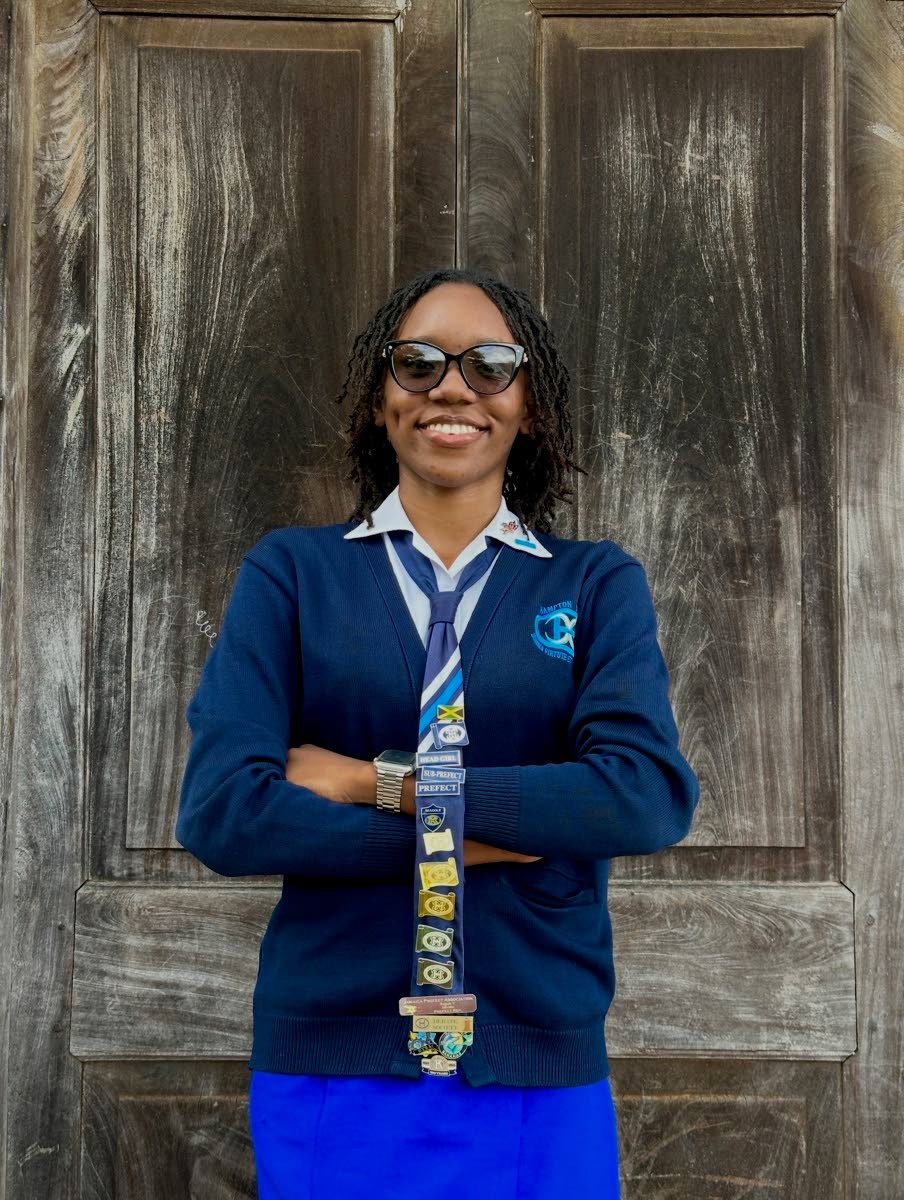 Nashá Patterson. Photo - Contributed
-
 Joanna-Joy Gray. Photo - Contributed
-

-
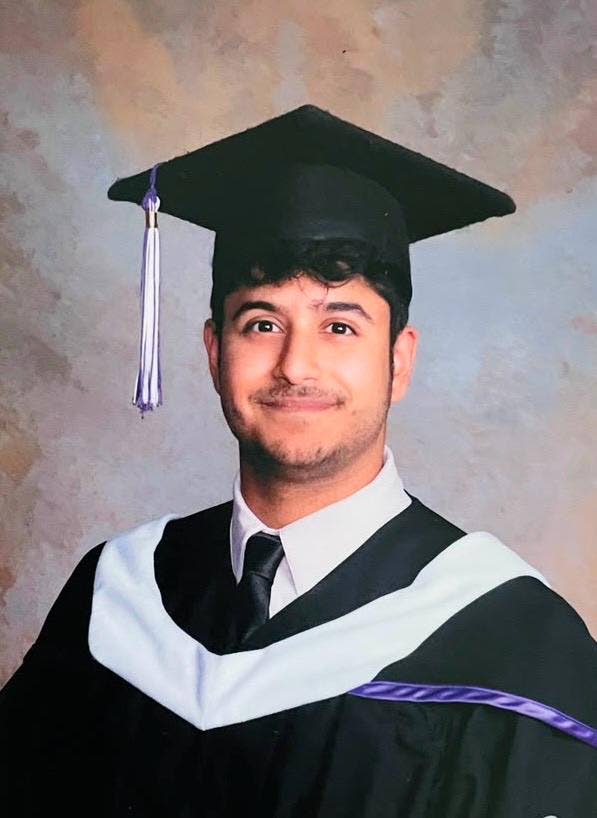 Karan Chatani. Photo - Contributed
International Youth Day, recognised today, celebrates young people and their invaluable contribution to our society. With the proliferation of artificial intelligence, the growing influence of social media and the current changes in the global economy, several young Jamaicans have taken the opportunity to reflect on what they believe should be prioritised in the future. While some have expressed the importance of embracing new technologies, others have stressed the value of having good role models. Even still, some have emphasised the importance of faith and how it should anchor the lives of today’s youths.
NAVIGATING UNCERTAINTIES
Johnann Davy | The compass, not the map: Preparing Jamaican youth to navigate an unpredictable future
Every generation inherits a Jamaica shaped by its time, and each generation will experience the country differently. Today’s young people are entering a new era where economic pressures are reshaping ambitions and technology is transforming how we learn and work. In the face of such rapid change, how do we prepare young people for a future we cannot fully predict?
Providing the compass
We should give them a compass, not a map. A map illustrates specific routes to a destination, while a compass gives direction without specifying where the journey can lead. Preparing Jamaican youth should therefore not be about forcing everyone to follow one definition of success. Instead, we must provide the knowledge, skills, values and opportunities that allow them to find their own path.
However, having a compass is only useful if there are meaningful pathways available. Young people need access to affordable education, training, mentorship and opportunities beyond traditional career paths.
Imagine being placed on a one-way road during rush hour, surrounded by traffic and expected to keep moving in the same direction as everyone else. Eventually, the pressure to keep up can leave you overwhelmed, burnt out and disconnected from the journey. Similarly, young people can become discouraged when success is presented as one fixed route.
This challenge is reflected in Jamaica’s employment landscape. According to the Statistical Institute of Jamaica, youth unemployment stood at 11.7 per cent in April 2026, compared with an overall unemployment rate of 3.7 per cent. Rather than simply assigning blame, these figures should encourage us to reflect on whether young people have enough opportunities to realise their ambitions.
Strengthening education
Improving the compass starts with strengthening education. Being prepared for the future means more than passing examinations. The United Nations Sustainable Development Group notes that today’s young people need skills including digital and artificial intelligence literacy, financial literacy, communication skills, critical thinking and creativity. As technology continues to evolve, these talents will become increasingly more important. Crucially, education must connect young people to real opportunities where they can apply what they have learnt and build meaningful careers.
Young people themselves also have an important role to play. They are not simply passengers on this journey. They should take the initiative to develop their abilities, find mentors, learn from failure and contribute to their communities. A compass can point north, but it cannot walk the journey for you.
Inculcating values of resilience
Beyond skills, young people need strong values to guide their decisions. Integrity, responsibility, discipline, empathy, respect and faith in God can provide direction when circumstances become uncertain. Success without character can ultimately become its own problem.
Finally, a compass does not remove the mountains from the landscape; it helps us find our way through them. Young people will inevitably encounter rejection, difficulties and unexpected challenges. Our goal should not be to create a generation that never struggles, but one equipped with the confidence, adaptability and resilience to continue moving forward when the original route no longer works.
The goal is not to make every young Jamaican follow the same road. It is to ensure that there are enough roads for them to explore. This can be achieved by supporting them with the education, opportunities, skills and values necessary to discover where their abilities, interests and aspirations can take them. Give young people a compass, not a map, and trust them to navigate the journey.
Johnann Davy is a youth advocate who is passionate about volunteerism and education development in Jamaica.
Kyle Kameka | Embrace AI as the solution
Since its popularisation in late 2022, artificial intelligence (AI), has created much ambiguity regarding job opportunities and education. For youth, AI is appreciated for its many applications, primarily its innovative and unique problem-solving capabilities. Yet, there is much uncertainty about its impact on future job prospects and the education system. Nevertheless, AI should be more than a technological tool; it should be a national development priority.
Anxiety of job replacement
A study conducted by the University of Technology, Jamaica found that 22 per cent of the workforce is employed in occupations with medium-to-high exposure to AI automation. In this context, exposure refers not to the replacement of the labour force, but to AI’s potential to maximise output with greater efficiency. Machine learning, for one, can aid in analysing large volumes of information, simplifying monotonous tasks, and supporting innovative ideas, all of which are essential for efficiency.
This, however, does not erase the growing anxiety of job displacement in the near future. According to research done by the Boston Consulting Group, up to 43 per cent of jobs in the United States could be automated. Nevertheless, this research shows that the impact depends on the type of job one holds.
Moreover, it does emphasise that certain human skills are necessary and irreplaceable. The firm illustrated this by presenting a contrast between a call centre representative and a software engineer. Despite many tasks being automatable in both professions, software engineers are still needed for their judgement, with AI only aiding in coding.
Even in call centres, representatives can transition into higher-value roles focused on relationship building and risk mitigation. Thus, while job displacement is possible, the solution is to develop human capital and the skill sets of our youth, rather than building human competitors for AI.
Implications for education
Beyond its ramifications for future employment, AI also presents major challenges and opportunities for education. Recently, the Caribbean Examinations Council suspended certain school-based assessments amid concerns about AI-generated projects. Similarly, The University of the West Indies has implemented protocols to limit AI’s extensive use in light of problems such as the threat to academic integrity and reduced critical thinking.
Notwithstanding that, AI does possess the ability to reshape education by facilitating project-based learning. This presents opportunities to propel the transition from memory-heavy learning to independent thinking. Though it does not solve the problem in its entirety, this shift redirects the use of AI. It can also limit its potentially harmful impact whilst promoting human capital development.
Disparity in AI access
Still, the disparity in AI access serves as the greatest inhibitor to its propagation nationwide. AI depends on high-speed internet connectivity. Yet, there remains a gap in usage between urban and rural areas. Urban internet usage currently stands at 87 per cent, while rural connectivity lags behind at 77 per cent.
Additionally, generative AI tools and training programmes are often pay walled, preventing under-resourced youth from accessing requisite training and technical expertise. This inhibits some youth from experiencing occupational mobility and growth associated with learning new AI skills.
Therefore, this International Youth Day should mark a shift in Jamaica’s hesitancy in embracing AI and its benefits. Through affordable AI literacy campaigns, career guidance sessions, and teacher training, healthy AI integration can spur transformation.
Young people can lead this shift if artificial intelligence is placed at the centre of Jamaica’s economic and educational outlook. The future will not be defined by whether AI replaces Jamaica’s youth but by whether Jamaica equips youth to shape the future through it.
Kyle Kameka is a student at the Wolmer’s Boys’ School who serves as the president of the Jamaica Prefects’ Association. He is also the president of the Wolmer’s Boys’ Debate Society and the co-founder and vice-president of the National Secondary Law Society.
Karan Chatani | Let’s choose role models, not idols
“Young people are our future” is a maxim that every adult says at some point in their life. But today’s youth need guidance and especially someone to look up to. With the influx of information and the monetisation of social media, young people are exposed to more content than ever. Even though ‘influencers’ are not ideally who we should look up to, they are quickly idolised.
Nevertheless, there is a difference between a role model and an idol. An idol is someone you watch. You may admire the person without ever seeing the process that built them. On the other hand, a role model is someone you can study: how they handled failure, what they sacrificed, and especially how they treat people.
Learning from my father
For the first 12 years of my life, my father was someone who I idolised, the kind of admiration a child has before they are old enough to see anyone with clarity. However, the next 12 years taught me something far more useful, my father was human. Though, he had moments where the weight of life showed, he treated everyone with respect.
Watching him carry that weight made me admire him more than the uncomplicated, sanitised version of him ever did. It was through truly understanding him that I learnt the qualities that made him the man I respected. Many young people in Jamaica do not grow up with a father in their lives;. That does not mean that there is no one to look up to.
It is common to hear kids say that they want to be a “footballa” or the next Vybz Kartel or Usain Bolt. Those are among the most visible images of success depicted, but nobody shows the odds of achieving this milestone. Even less shown are the doubt and sacrifices that almost never make it to the highlight reel.
Idols rarely live up to our expectations, because they are imagined as perfect. Still, you do not learn resilience from someone’s best moment. You learn it from watching someone stand through their worst and not dragging anyone else down along the way. We need more examples like this.
Our teachers as role models
Teachers are one of the clearest examples of role models. Their ability to shape the future often has less to do with the subject they teach than their ability to connect with a student. Young people are our future not necessarily because they will become the next “big thing” but because they will still be here when we are not. The focus should never be on becoming someone famous. It should be about becoming somebody worth inheriting a world from.
While it is often said that “One bad apple spoils a whole bunch”, it is surprising how much difference a good apple makes to a group. It costs nothing to be the reason someone’s day shifts for the better. That could make a major difference in a person’s life. From one teacher staying five minutes after class to explain something differently to one coach noticing a child struggling at home, that is enough to plant a seed that outlasts the initial moment entirely.
An idol gives you something to watch from a distance. A good role model gives you something to stand next to. So, if you are a young person reading this, start by being a good apple, spreading happiness where you can. If you are an adult reading this, try your best to understand that your life can change someone else’s, regardless of your standing in society. Be the change.
Karan Chatani is a Jamaican studying law at the University of Kent. He is an ardent advocate for promoting knowledge through human connection.
PROMOTING OPPORTUNITIES
Nashá Patterson | Create opportunities for medical ambitions
For many Jamaican young people, the message is clear: dream big, work hard and pursue a career that can contribute to the country’s development. Yet, for those who aspire to study medicine, the reality can be considerably less inspiring.
The cost of pursuing a medical degree in Jamaica can place that dream well beyond the reach of many families. At The University of the West Indies (UWI), Mona, students face tuition costs that can amount to approximately US$28,000 per year. This does not include accommodation, meals, books, transportation, equipment and other living expenses.
The question, therefore, is not whether Jamaican students are ambitious enough to become doctors. The question is whether we are creating an environment where they can realistically afford to do so.
The cost of ambition
As we celebrate International Youth Day, this is a conversation worth having. Young people are frequently described as the country’s future, but ambition cannot be sustained by encouragement alone. It requires investment.
Even though there is government assistance and a few scholarships available, access to meaningful financial support remains a concern. This is particularly for those pursuing medicine. Therefore, it is important to examine not only whether funding exists, but whether it adequately addresses the actual cost of education.
I have encountered some of these challenges personally. In seeking information about bond arrangements and opportunities to study medicine in China, I searched several government websites for information. In some cases, the information was out of date entirely. This begs the question: What are Jamaican students expected to do when the desire to pursue medicine is greater than their ability to pay for it? The obvious answer is to seek alternatives.
Migrating to study
This fall, I will be studying medicine overseas. One of the most striking aspects of that decision has been the comparison between tuition costs. The amount required for approximately one year of tuition at UWI could cover roughly three years of tuition at the university I will be attending. That comparison is difficult to ignore.
This situation is not unique. There are several Jamaican students with exceptional academic records and a genuine desire to become doctors who are forced to consider whether they can afford the profession they have spent years preparing to enter. Some may argue that sending students overseas contributes to Jamaica’s brain drain. That concern is valid, but it should not become an excuse for failing to invest in medical students in the first place.
We should also ask how many capable students from less financially secure backgrounds are being forced to reconsider their ambitions because the cost is simply too high. If Jamaica wants to retain its brightest young people, it must make it possible for them to develop their potential.
Expand support
One possible solution is the expansion of government-funded scholarships, specifically for medical students, including those studying at accredited institutions overseas. There should also be greater attention to students pursuing medicine in countries such as China. Opportunities exist that may make medicine more financially accessible, but these openings are not always accompanied by adequate information or support for Jamaican students.
International Youth Day should be more than an annual reminder that young people are “Jamaica’s future”. If that statement is to have meaning, then young Jamaicans must be treated as an investment. A country cannot encourage its young people to dream while simultaneously making those dreams financially inaccessible. Ambition should open doors, not lead young people to a dead end because they cannot afford the price of entry. Destiny should not be thwarted by a tuition bill.
Nashá Patterson is a first-year medical student at the Zhejiang University International School of Medicine. She is a former head girl of the Hampton School and immediate past president of the Jamaica Prefects’ Association.
FINDING MEANING
Joanna-Joy Gray | Life without God is meaningless
‘Hevel’ is the Hebrew word often translated to ‘meaningless’, ‘pointless’, ‘vanity’ or ‘futile’ in the biblical book of Ecclesiastes. This text contains the story of a teacher’s search for meaning, purpose and fulfilment in life. He tries everything: pleasure and possessions, hard work and the pursuit of knowledge.
The teacher is commonly believed to be King Solomon, who was the richest and wisest man of his time. He had everything a person could want, along with a remarkable résumé. He was the king who built Israel’s first temple and had a largely peaceful 40-year reign.
Ecclesiastes shows that while all this brought him a measure of happiness and satisfaction, none of these achievements truly fulfilled him. “Futile! Futile!” laments the teacher. “Absolutely futile! Everything is futile!” (Ecclesiastes 1:2 NET).
As young people, we tend to be hopeful and excited about all that life has to offer. Most of us naturally want to explore, achieve and enjoy ourselves. Is this not the same aim King Solomon had?
A worrying trend
Earlier this month, The Gleaner published an article titled ‘Fresh alarm over suicides’ after four suspected suicides were recorded in Jamaica within 24 hours. The article goes on to list six other cases in recent months. Youths between the ages of 14 and 34 were included in those numbers. Evidently, something is wrong.
When we each inevitably come face to face with grief, pain, suffering, disappointment or the apparent futility of life, we must have a reason to continue. King Solomon tested everything that was “under the sun”. Sadly, in all his pursuits, he did not try God. He did not look to God for meaning, purpose or fulfilment. He looked only to what he could see and experience.
Ecclesiastes 3:11 tells us that God has put eternity in our hearts. We are wired to long for more than what the world can offer. If we truly consider the brevity of life, we would recognise that, without a purpose beyond ourselves and even the world around us, Solomon’s experience would also become ours. Though we find temporary satisfaction in pleasure, achievement and knowledge, we should recognise that these cannot fill the void within each of us.
Focusing on a higher calling
At the end of Ecclesiastes, it says, “Having heard everything, I have reached this conclusion: Fear God and obey His commands, for this is everyone’s duty.” (Ecclesiastes 12:13 NET).
At last! The focus is moved from “under the sun” to God. Colossians 3:2 instructs those who trust in God to do the same, by setting our minds not on earthly, temporal things, but rather, on the things which are above.
As young people, this is the view we should take. We should live for more than what we can experience, gain, achieve or learn on this earth. Let us ask ourselves: What am I living for? When it is all said and done, what will truly last?
Relationships may fail. Financial difficulties may come. Hard work may not seem to pay off as, or when, we hope. Our names may be forgotten and our possessions given to those who did not work for them. Our hope and joy should therefore be rooted in something bigger than all these things. They should be rooted in God.
Solomon may be contrasted with his father, King David. Though imperfect, David was recorded in the Bible as “a man after God’s own heart”. In Psalm 4, he writes, “You have given me greater joy than those who have abundant harvests of grain and new wine” (Psalm 4:7 NLT). King David nailed it! He found meaning in Someone bigger than the things he could see or experience. Let us, as young people, imitate David and find true meaning for our lives while we are still young.
Joanna-Joy Gray is a data analyst and past GraceKennedy/Douglas Orane Scholar. A follower of Christ, she is passionate about Christian apologetics and theology.
This article was coordinated by David R. Salmon, Jamaica’s 2023 Rhodes Scholar.