Sean Major-Campbell | Stop making the Bible a god
Loading article...
-
-
 Major-Campbell
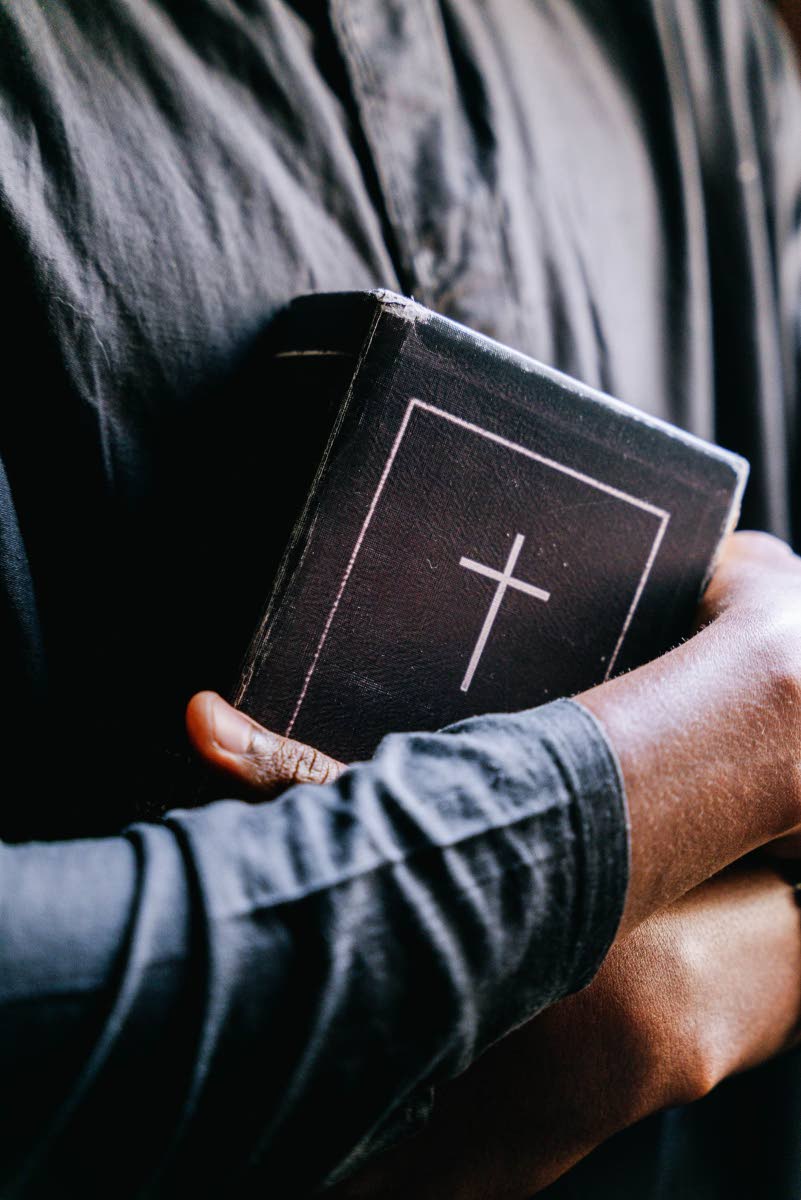
Are you one of those persons who replaces your brain with your pastor? Or maybe you replace your brain with your Bible? Maybe you should explore whether you idolise the Bible.
Too many Christians are doing bibliolatry. They worship a book known as the Bible. This idolatry of the text sees the Bible being treated as an idol. An idol always gets between the worshipper and the object of worship or deity. It replaces the deity. There is a preoccupation with statements declaring the infallibility of the Bible, and the matter of Biblical inerrancy. Such voices end up doing the very thing they do not want to do. They treat with disregard the reality of human vessels used to convey the supposed wisdom and theological understanding of God.
Bibliolatry has led to much religious abuse over the years. Christian adherents were often victims of control freaks who simply appealed to a Bible verse or interpretation without any regard for critical thinking and human wrestling with the text. Many intelligent questions have been shut down by insecure church leaders to include committed lay leaders who just did not know better. What are some unfortunate approaches because of bibliolatry?
1. The mistaken assumption that the biblical text has no mistakes has seen well-intentioned Christians being locked into unhelpful views of what the text was or is saying. While a traditional view holds that the first five books of the Bible (The Torah) are written by Moses, scholarship tells us that, over centuries, these texts were produced with a combination of sources under the JEDP theory. J (Yahwist), E (Elohist), D (Deuteronomist), P (Priestly) are all distinct sources with different foci and writing styles. Authorship of various books is therefore not always readily defined.
2. Then there is the magical way of thinking. While it is not necessarily dangerous to leave a Bible at the head of the bed or a table, it is informed by the belief that it has powers equal to the deity. It may even assume that protection will be enhanced for a baby left sleeping on the bed. Of course, a baby should not be left unattended for any prolonged period; or for any significant distance from the watchful eyes of a caring adult or much older sibling.
3. There is the unnecessary obligation of being beholden to outdated rules which belong to another age and time. It is in the Bible, but there is no sane reason why you need to follow Deuteronomy 22:11 or Leviticus 19:19 regarding, “You shall not wear clothes made of wool and linen woven together.”
4. A popular expression I heard in my teens was, “God says it; I believe it; That settles it.” I will confess that the stage of literal preoccupation with the text may indeed help to nurture faith. However, as one matures and discovers that any book such as the Bible which was subjected to many editors, translators, redactors, and versions, could not possibly be free from human errors. One ought to be able to appreciate that the text, though informative, may not always be instructive or prescriptive. Honestly now, what would you think of your pastor who feels that God is calling him or her to sacrifice a son or daughter?
The realities of the oral tradition or the theological focus of different writers should help us to appreciate differences in a text that really present ordinary human beings attempting to express their understanding, interpretation, theology, and memory of various accounts. An enquiring mind may therefore want to know whether Judas “hanged himself” or “fell headlong”.
Matthew and Luke report that the women carried the news of the resurrection. Mark, however, reports that the women said nothing to anyone since they were afraid. The Bible is simply not a monolithic text. Hence, Ecclesiastes notes in 7:20, “Indeed, there is no one on earth who is righteous, no one who does what is right and never sins.” However, Romans 3:23 notes, “for all have sinned and fall short of the glory of God”. Christian theology and liturgy maintain as seen in 1 John 1:8, “If we claim to be without sin, we deceive ourselves and the truth is not in us.”
It turns out that while we all sin, we all are not slaves to sin. To be born again is to be surrendered to Christ vis-à-vis being given over to sin as an indwelling power.
In John 17, we see the high priestly prayer of Jesus, that we all may be one. The reality of Christians today is however far from any image of unity. We may sing that we are one in the Spirit, and we are one in the Lord. However, the easily observable reality is so much hate and division. Maybe the ongoing reality from the time of Christ among the first disciples is a context of human striving with division while we pray for unity. And maybe the Bible is just a messy text that reflects our struggling humanity amid the quest for a better self, best understood within the imago Dei or image of God in which we are created.
Maybe our task is to unite around realising that common image of God within all of us. Then we may realise that our puffed-up preoccupation with bibliolatry and denominational dominionist approaches are all vanity! It is difficult for some to operate without a sense of superiority over others. And, often, they do not even accept that they are behaving in these ways. This makes it difficult for them to make any adjustments to these divisive ways of being.
Be guided by the African proverb, “One head does not hold all wisdom.” Happy learning and growing.
Fr. Sean Major-Campbell is an Anglican priest and advocate for human rights and dignity. Please send feedback to columns@gleanerjm.com and seanmajorcampbell@gmail.com