Principals do the math as CXC releases results today
Loading article...
-
 Christopher Tyme, principal of Mile Gully High.
-
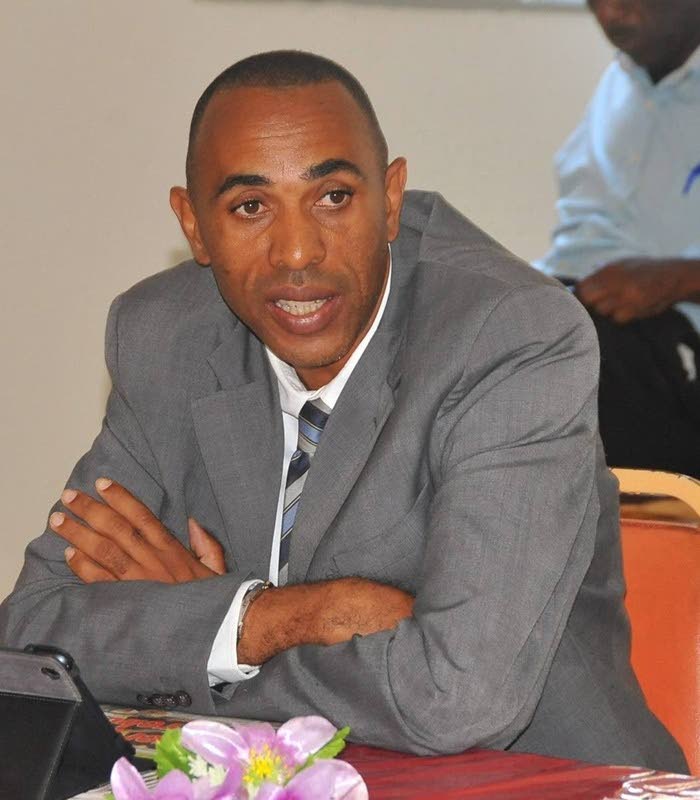 Keith Wellington, principal of St Elizabeth Technical High School.
Principals across Jamaica are hopeful that the strategies employed to improve their students’ mathematics performance will pay off when this year’s Caribbean Secondary Education Certificate (CSEC) examination results are released later today.
Dr Worrel Hibbert, principal of St Andrew Technical High School, said this involved restructuring the school’s approach to the subject.
Although he declined to state the technical school’s pass rate in the subject last year, Hibbert told The Gleaner that it was “way below what was expected”.
To address this, he said the school first assessed its students to determine their deficiencies in the subject. Teachers’ capacity and methodology were also analysed, and necessary training and support provided.
Additionally, mathematics sessions were increased, and classes expanded to include virtual sessions and one-on-one coaching. He said efforts were also made to integrate mathematics concepts into other subjects.
“We are cautiously optimistic about the maths results. We’re really hoping to see some improvements when the results come out,” he said. “My students are still nervous; I guess we all are…anticipating the results.”
He said a cohort of 220 students sat the May/June CSEC exams.
Jamaica’s persistent low pass rate in mathematics at the CSEC level has been described as a crisis over the years.
Last year, the island recorded a 44 per cent pass rate for mathematics. Although it was an improvement from the 39 per cent recorded in 2024, Education Minister Dr Dana Morris Dixon noted at the time that performance in the subject “is still not where we want to be”.
St Catherine-based Old Harbour High School principal Lynton Weir believes the problem is due in part to the migration of experienced mathematics teachers, an issue his school has had to grapple with.
“As soon as we get a set of teachers and they settle down and they do well, in short order after that, they migrate. I remember in 2016, first in the history of Old Harbour High School, we got 69 per cent in mathematics; but shortly after that, five of our mathematics teachers migrated,” he said.
Teacher workshops
Last year, the school recorded a 26 per cent pass rate in the subject from a cohort of 490 students.
To achieve better grades this year, Weir said the school engaged teachers in a series of workshops to improve their methodology.
This was coupled with a suite of incentives designed to reduce teacher migration.
“We have made it a policy here that if you are a member of staff and you have children come to the school, we absorb the school fee, we provide lunch every day for that child, we absorb the examination fee, and we absorb the graduation fee,” he said.
Further, he said teachers are awarded $2,000 per grade one received in any CSEC subject and $2,500 for a grade one in any Caribbean Advanced Proficiency Examination (CAPE) subject.
“We’re pushing because we want to have quality passes.”
He said a cohort of 590 students sat CSEC and CAPE exams this year, including about 40 students in grade nine.
“We believe in early stimulation, so we expose our students very early to write exams – grade eight, grade nine – so I’m rather interested to see what the results are going to be,” he said.
Christopher Tyme, principal of Mile Gully High School in Manchester, is a little more cautious in his predictions.
With only nine per cent of the approximately 70 students passing CSEC mathematics last year, Tyme said the school subsequently extended mathematics classes by an hour each week, brought in specialists to teach certain topics, hosted practice sessions, and had teachers teaming up to teach classes.
Although he is expecting those efforts to produce an improvement in the results, he said he is also cognisant of the challenges that may hamper that improvement.
“There is just this constant thing where you have children who are less interested in education, so you have to be finding ways and means [to reach them], and then the attendance [is poor] also. We have that challenge with them at school consistently,” he said.
But while he is hoping that his students “do well enough to do justice to their abilities”, Keith Wellington, principal of St Elizabeth Technical High School, told The Gleaner he is mindful of the factors that may impact their performance.
His school, located in southwestern Jamaica, suffered extensive structural damage from Hurricane Melissa last October.
As a result, his grade-11 cohort spent about a month out of school.
And even though the Caribbean Examinations Council offered the option of a modified examination for schools impacted by the Category 5 storm, Wellington said his school decided to pass on it.
“We didn’t feel like the students would benefit from it – the option of them doing only multiple choice. It doesn’t necessarily work in the students’ favour who would have been preparing for a particular methodology their entire high school life,” he said.
He noted that last year, approximately 43 per cent of about 200 students passed mathematics, and he is not very optimistic about this year’s results either.
“I think that is one of the areas that will be affected most this year, because maths requires students to spend a lot of time practising, and the effect of the hurricane would mean that many of them did not spend enough time practising and never had enough interactions with the teachers in terms of preparation,” he said.
sashana.small@gleanerjm.com