Earth Today | Trash doesn’t stop at the shoreline
Loading article...
-
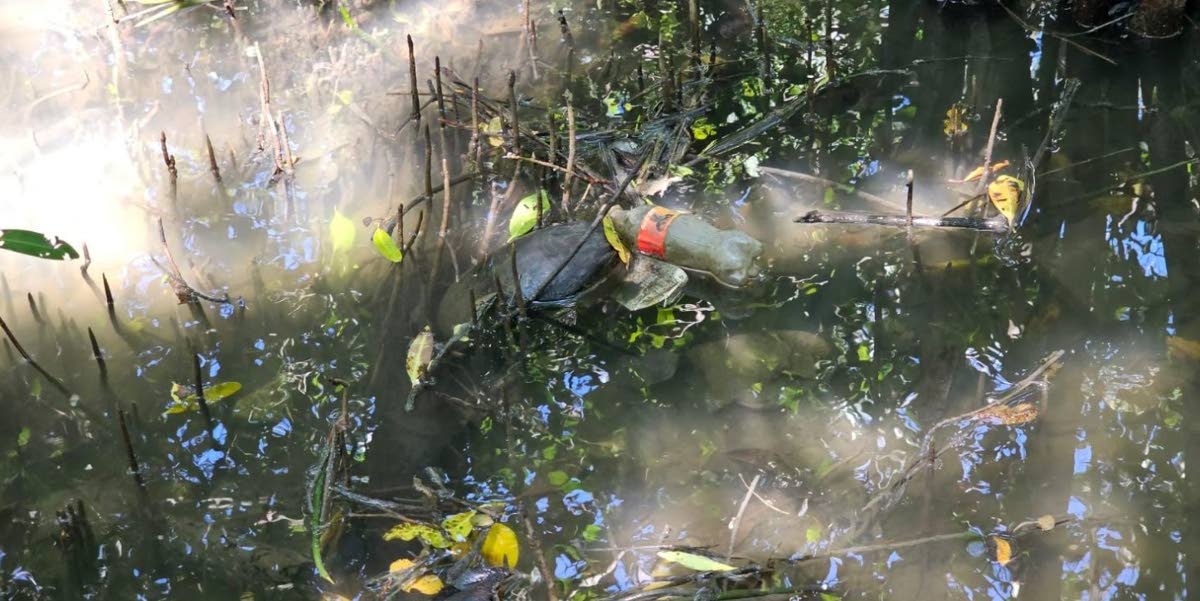 Plastic in a waterway in Trinidad & Tobago.
-
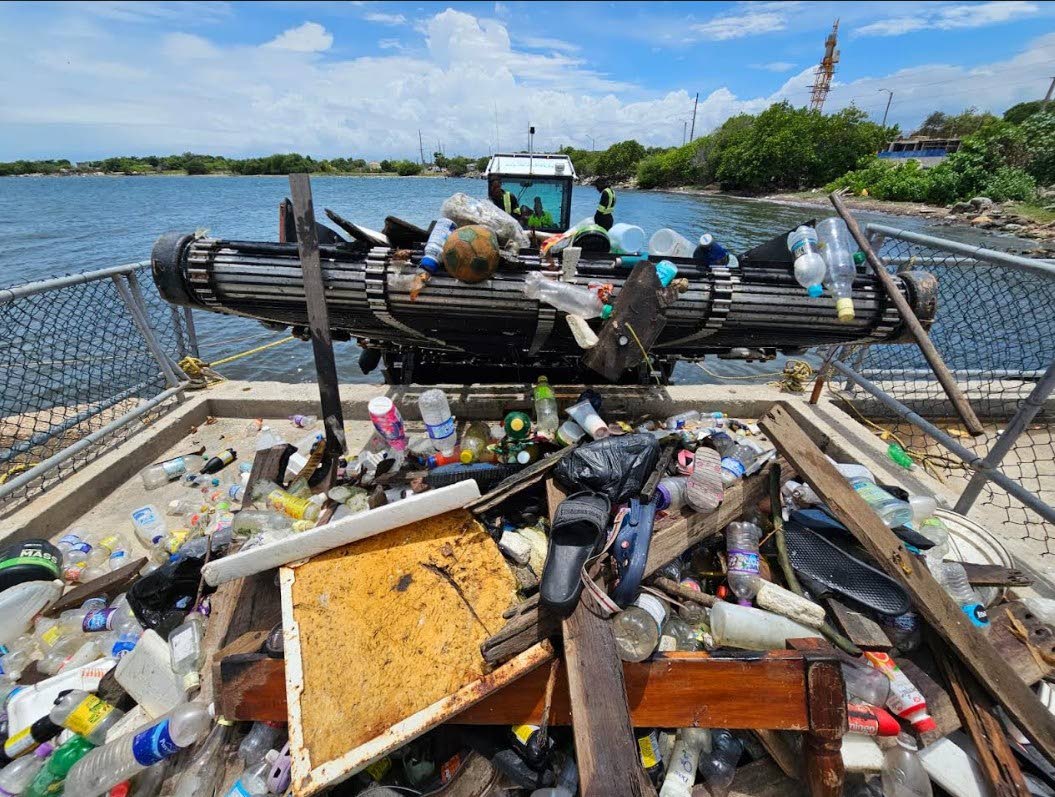 Extracting debris from an interceptor barrier designed to prevent waste from entering the Caribbean Sea.
PICTURE A fisherman returning to shore somewhere in the Caribbean. Alongside his catch, tangled in his net, are plastic bottles, food wrappers, and a lone flip-flop that clearly didn’t come from anyone swimming nearby.
“It didn’t used to be like this,” he grumbles. “Some days I spend more time pulling out garbage than fish!”
For many coastal communities, scenes like this are becoming increasingly familiar. The sea that feeds families, supports tourism, and shapes so much of Caribbean life is also becoming the destination for too much of what we throw away.
The above scenario captures something we don’t talk about enough: trash doesn’t respect the line where land meets sea. An estimated 70–85 per cent of marine litter in the Caribbean comes from land, and much of it is plastic.
A bottle discarded on a roadside can be carried by rain into a drain, from the drain into a river, and eventually, to the sea. What starts as litter in one community can end up on another island’s beach, tangled in fishing gear.
For Caribbean communities, this isn’t simply an environmental problem – it is an economic one. Caribbean fisheries, tourism businesses, and coastal livelihoods depend on healthy marine ecosystems. Every piece of waste reaching the sea carries a cost: clean-up, damaged gear, reduced catches, or degraded coastlines.
That is why beach clean-ups can’t be our only response. We also need to ask: How do we stop materials from becoming waste in the first place? This is where the circular economy offers an opportunity.
Instead of the familiar “take, make, dispose” model, circular-economy principles aim to keep materials in use through better design, reuse, repair, and recycling. For coastal communities, that could mean fishing gear recovered instead of abandoned and better collection systems that support entrepreneurs while stopping waste before it reaches our rivers and coastlines.
At the Caribbean Biodiversity Fund, we are putting these ideas into practice by funding Caribbean-led projects that improve collection and recycling systems, recover marine litter, and create economic opportunities from materials once considered trash. Together, projects financed through the facility aim to prevent or remove 15,000 tonnes of marine litter in our region.
In the Caribbean, we often import not just the product, but the waste that comes with it. As consumers, we have an important role to play in the choices we make and a responsibility for what happens when a product reaches the end of its useful life, which must also be shared by those who put it on our shelves.
None of this replaces the basics such as better waste-management infrastructure, stronger enforcement, and smarter policies in our Caribbean countries. But circular- economy approaches add something important by turning waste into opportunity and making the people living closest to the problem part of the solution.
The next time you are on a Caribbean beach, look at what has washed up onto the shore. Some of it may have travelled farther than you think, and where it goes next or whether it reaches the sea in the first place is still very much up to us.
Contributed by Rachel Ramsey, Nature-based Economies programme manager, Caribbean Biodiversity Fund