Who was Rev’d Philip Beekman Livingston Jr?
Loading article...
-
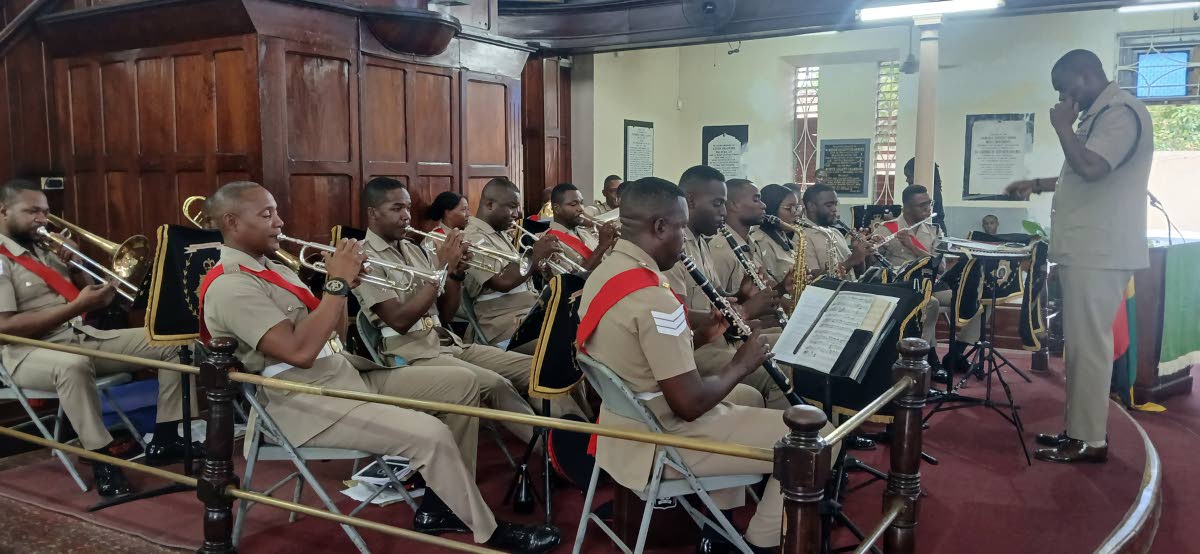 The Jamaica Military Band, under the baton of Warrant Officer Class I Gregory Nicholson, provides entertainment at the recent event at East Queen Street Baptist Church in downtown Kingston to honour ‘emancipator’ Philip Beekman Livingston Jr.
-
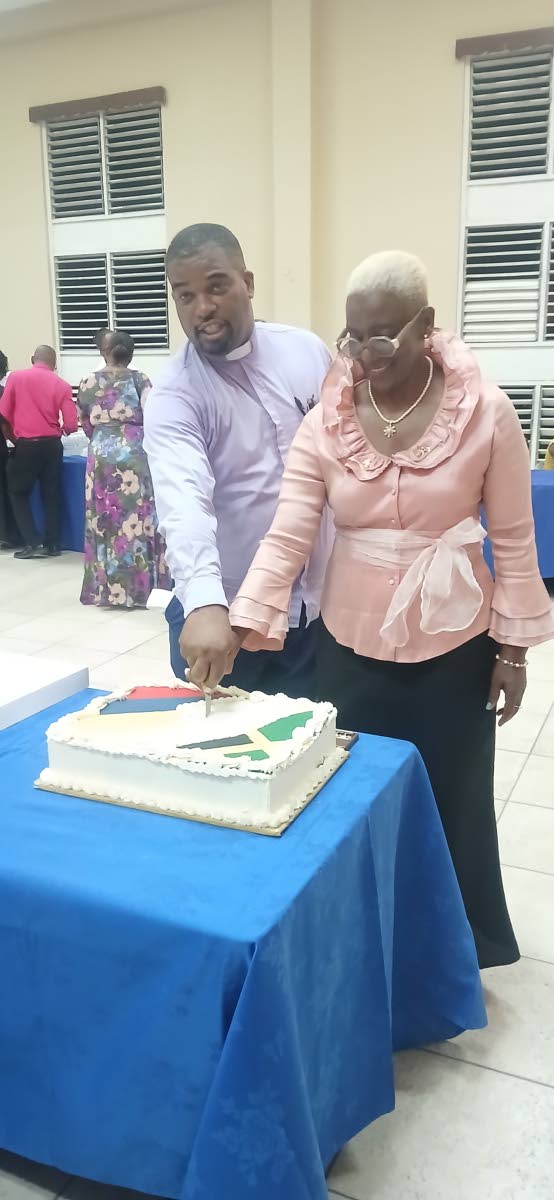 Reverend Devere Nugent, pastor of the East Queen Street Baptist Church in downtown Kingston and Colombian Ambassador to Jamaica Emiliana Bernard Stephenson prepare to cut the ‘unity cake’ between Jamaica and Colombia.
-
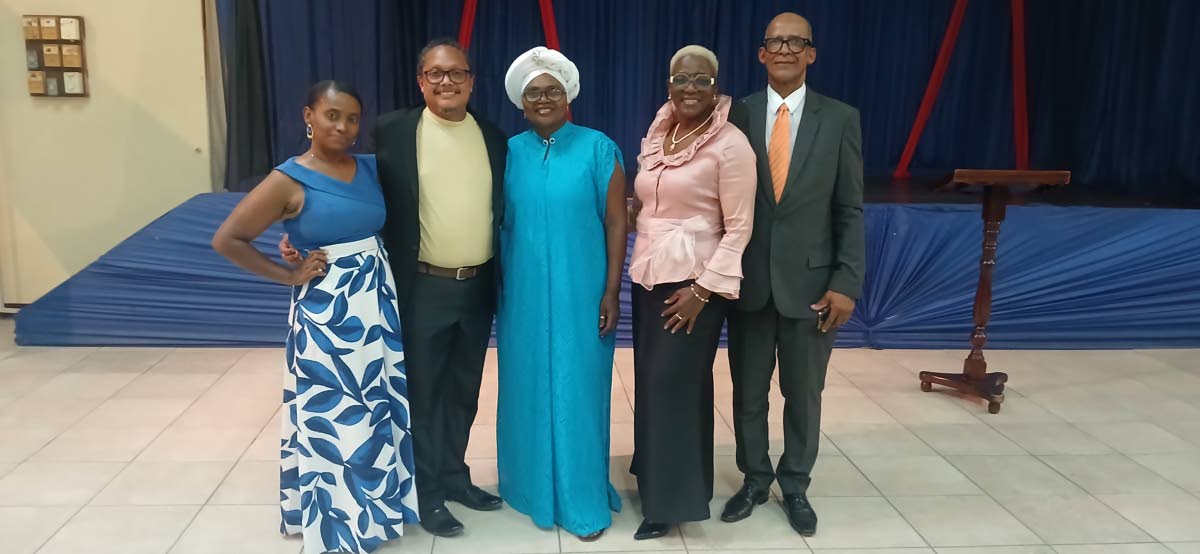 From left: Vocalist Bertha Hooker Bryan, of New Life Tabernacle, on Providence Island; Reverend Ignacio Barrera Kelly of the San Andres Baptist Association; Julia Martinez Reid of the First Baptist Church of San Andres; Colombian Ambassador to Jamaica Emiliana Bernard Stephenson, and her husband, Ishmael May.
On the evening of Sunday, July 16, people from Jamaica and San Andrés, Colombia gathered in the East Queen St Baptist Church, downtown Kingston, to honour the legacy of Reverend Philip Beekman Livingston Jr, a Baptist ‘emancipator’ who lived from 1814 to 1891.
San Andrés is part of an archipelago including the islands of Providencia (Providence) and Catalina, which combine to form a province of Colombia. Enslaved people from Jamaica were brought to the province in the 1600s. Since then, there has been historical, cultural and religious ties between the Jamaican people and the Raizal people of the archipelago who speak English, Spanish, and a variety of Jamaican Creole.
And Livingston was at the centre of it all, starting in the mid-1800s. The literature says that he was considered the fundamental historical figure in the cultural, social and religious formation of the Afro-Anglo-Creole community, as well as a “ crucial bridge in the historical, ecclesiastical, and cultural relations between the said archipelago and Jamaica”.
He was born in Providence, where his British parents owned plantations, as well as in Jamaica. He had deep connections with Kingston and, when ‘Emancipation’ came along in the British West Indies through the 1833 Abolition of Slavery Act to take effect in August 1834 through the Apprenticeship System, his life took on much significance.
Sent by his mother, Mary, he left for Jamaica in March 1834 “to execute the order of freedom for the enslaved people on their estates in San Andrés and Providence”. He arrived first at San Andrés. “ The mandate of Ms. Mary Livingston contained several presentation letters of her son addressed to several British owners on the islands, among which the Bowies are highlighted,” an online outlet called R- source says.
He also distributed portions of the family land to the newly freed people, to secure their livelihood and housing. This laid the foundation for a community of independent small-holders.
On arrival on Providence, he achieved the objective for which he was sent, and August 1, 1834 was regarded as the slavery liberation date. “ This marks the beginning of a campaign for liberation and emancipation of the islands, and turned this purpose in his ministry for the cause of freedom of Afro-Caribbeans in San Andres and Providence, in a material and spiritual manner,” the online source notes.
Following his religious conversion to the Protestant Christian faith in October 1844 in the United States, where he was baptised in Lake Erie, he returned to Jamaica. He organised and founded with other people, in 1845, the First Baptist Church of San Andrés in the district of La Loma (The Hill). The church became the central institution of community life, serving as a space for civil organisation, mutual support and the preservation of Afro-Caribbean values. He also spearheaded linguistic and cultural preservation as there was pressure from Colombia to assimilate the people, to convert them to Spanish-speaking Catholics.
He was ordained pastor at the East Queen Street Baptist Church in Kingston, on June 5, 1849. From Jamaica, he would send teachers, educational material, biblical literature, and missionaries to San Andres and Providencia.
Despite all of Livingston’s work in the archipelago and the existence of the Slavery Freedom Law in Colombian territory since 1851, Emancipation was not a reality on the islands. It was when, initially through the British consul in Bogotá, and after with two agents sent directly from San Andrés, Livingston urged the Colombian government to implement the law, which came fully into effect on the archipelago in 1853.
Reverend Livingston founded the archipelago’s first formal school, under a tamarind tree on May Mount Hill where he taught reading, writing, and arithmetic to newly emancipated adults and their children. He instructed the population in nautical skills, seamanship, and maritime trade. Possessing basic medical knowledge of epidemics and tropical diseases on the islands, he acted as a community doctor in the absence of state infrastructure.
He helped to build the relationship between Colombia and Jamaica by establishing an English-speaking Caribbean network through the extension of the Jamaican Baptist Mission, cooperation and exchange network, and the creation of a migration route and family ties. But his life was not without public controversy.
On July 2, 1862, his wife, Ann Eliza, died. Three years later, in a ceremony officiated by Mayor John C. Smith, he married Josephine Pomare, a black woman in San Andres. She was his housekeeper and his children’s caretaker.
“ This fact was strongly criticized by the white members of the Church. However, Philip ignored the criticism. One Sunday before the sermon, he placed his rifle in the pulpit and stated categorically that his new marriage was his problem,” the online source says.
Livingston went on to father three sons, Brockholst, Philip Beeker III, and Tomas Brockholst, with Pomare. They all became involved in different areas of the Baptist Church.