Earth Today | The case for sharing the Caribbean’s toughest corals
Loading article...
-
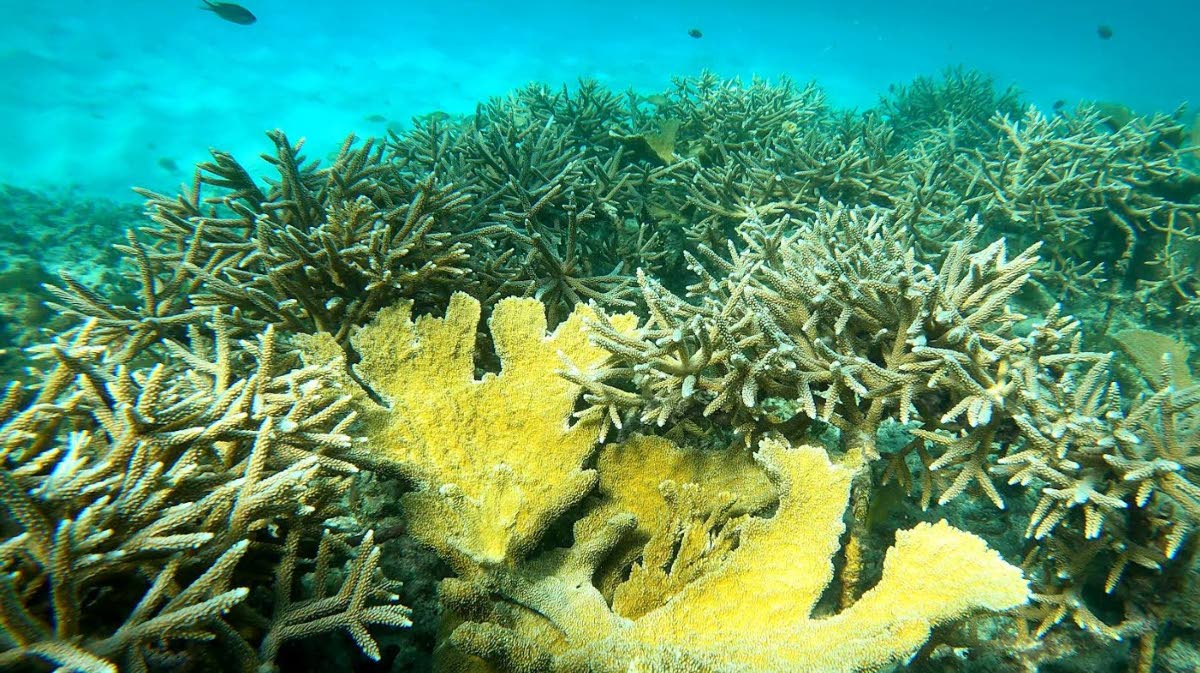 Elkhorn and staghorn corals once dominated Caribbean reefs.
-
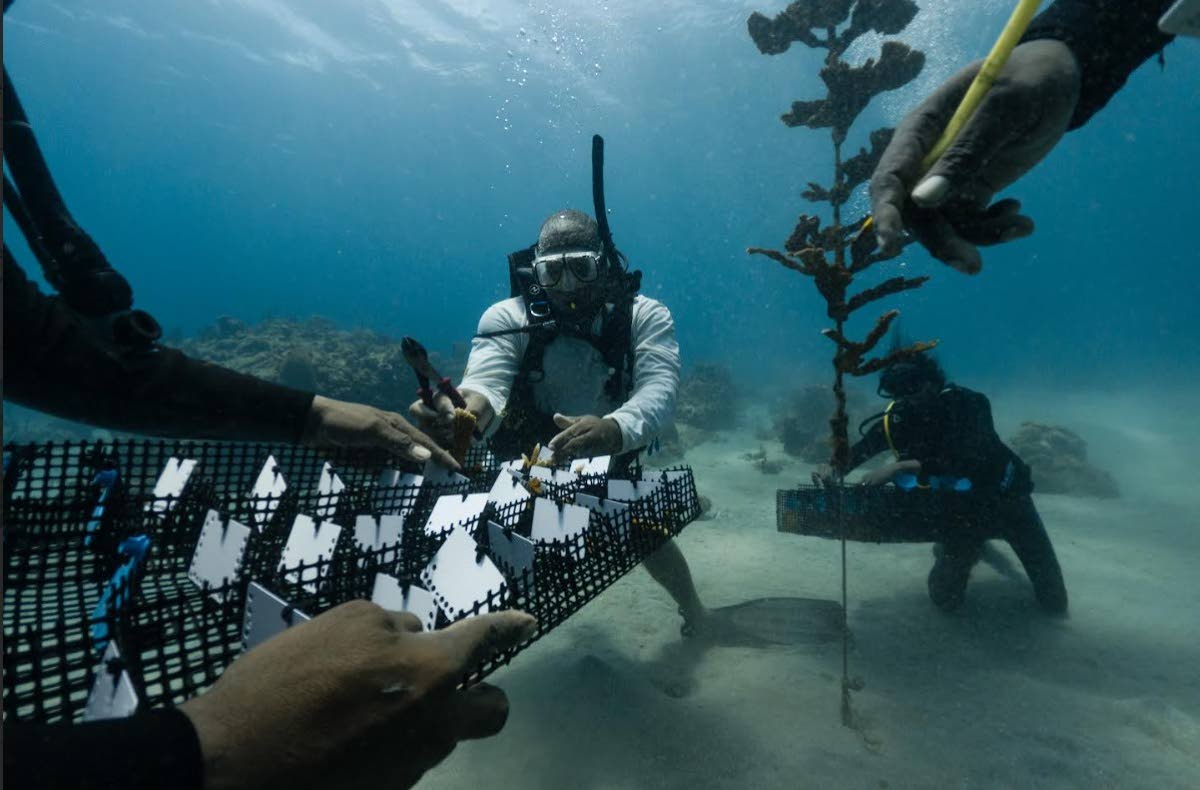 Scientists monitor coral fragments in St Lucia. Photos: CLEAR Caribbean
THE CARIBBEAN’S living reef architecture is disappearing within our lifetime, threatening the future of Caribbean fisheries, beaches and marine tourism.
Across the Caribbean, prolonged heat stress bleaches and then kills corals at an unprecedented scale, with the back-to-back marine heatwaves of 2023 and 2024 being the worst our reefs have ever endured. The two species that built our shallow reefs for millennia – staghorn and elkhorn coral – were hit hardest, and very few survive today.
In a landmark paper published last year in Science, leading coral scientists argued that increasing coral heat tolerance requires scaling up restoration through “assisted gene flow”. Also known as genetic rescue, this approach has been used successfully in other species to help populations adapt to a rapidly warming world.
For corals, it involves carefully moving heat-resilient corals (or their gametes) between populations, allowing heat-tolerant genes to reach reefs where they are most needed. This is where regional cooperation becomes essential. Sharing corals between regional nurseries could be one of our most powerful tools for building climate-resilient reefs, but it must be done responsibly, with appropriate safeguards to prevent disease and protect genetic diversity.
In Jamaica, for example, current policy enforced by the National Environment and Planning Agency does not permit corals to be moved locally between parishes. The intention is to prevent disease and protect local stock. However, in a warming ocean, an overwhelming focus on avoiding risk can itself become the greatest risk of all.
Encouragingly, the mindset in the region is changing. CLEAR Caribbean works with coastal communities across the Eastern Caribbean to restore coastal ecosystems, strengthen livelihoods, support farmers, and build climate resilience through nature-based solutions. Recently, the governments of St Lucia and St Vincent and the Grenadines granted CLEAR Caribbean a historic permit to transfer resilient staghorn and elkhorn corals from their coral nursery in St Lucia to coral nurseries in St. Vincent and the Grenadines.
This transboundary transfer is part of a coral restoration project that is funded by the Caribbean Biodiversity Fund and supported by the German Federal Ministry for the Environment, Climate Action, Nature Conservation and Nuclear Safety through the International Climate Initiative and KfW. It focuses on nature-based solutions to increase genetic diversity and give coral restoration a chance of success in St Vincent and the Grenadines.
Now is the time for bold action and Jamaica is well placed to lead, as it has done before. The island’s network of fish sanctuaries is a genuine Caribbean success story and a model of regional environmental stewardship. That same leadership is now needed to help CARICOM and Caribbean governments develop clear, shared protocols for the safe movement of corals, with appropriate safeguards against disease and misuse. This would allow heat-resilient genetic material to reach the reefs that need it most, before the ecosystems that feed and protect our coastal communities are lost forever.
Contributed by Owen Day, PhD, and Newton Eristhee, MSc, CLEAR Caribbean.