Earth Today | UNEP report champions Drought Resilience Capacity Index
Loading article...
-
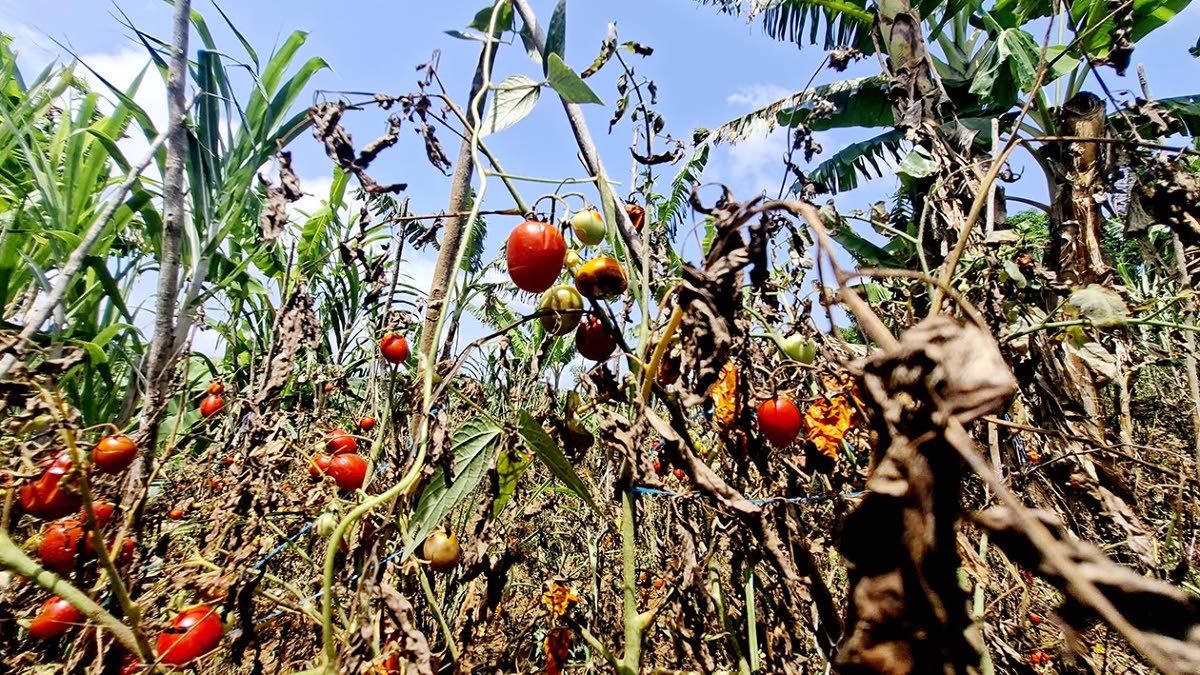 Dorreth Heman, female Farmer in Waterford, Guys Hill, tries to salvage tomatoes from her field. She says the drought has affected her entire farm forcing her to purchase food that she normally produced.
-
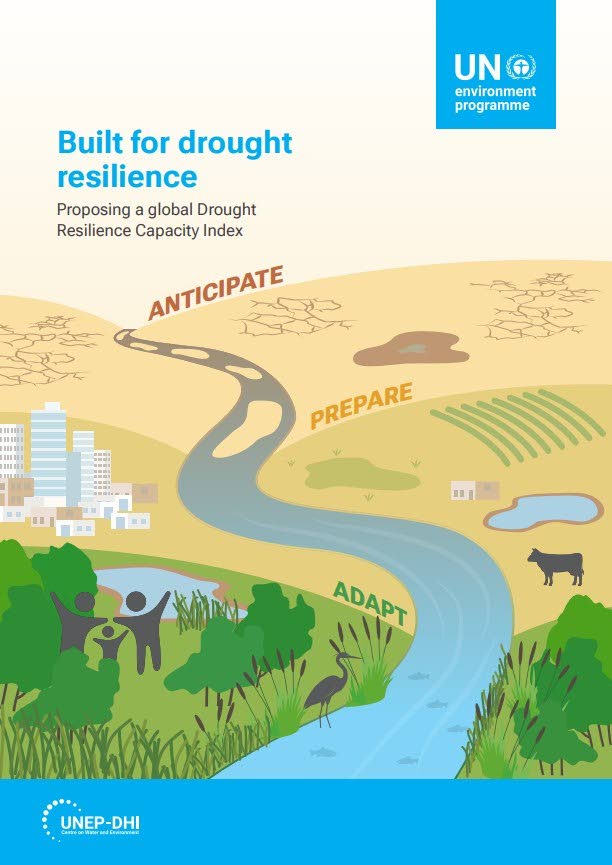
AS PARTS of the world, including Jamaica, wrestle with drought conditions made worse by the intense heat, the United Nations Environment Programme (UNEP) has published a technical report that proposes a global Drought Resilience Capacity Index (DRCI).
Built on three dimensions of drought resilience, notably “Anticipate, Prepare and Adapt”, the new DRCI, the Built for Resilience report said, is “a simple, globally applicable index to assess and monitor drought resilience capacity that can catalyse a step change in global efforts to improve drought resilience capacity”.
The dimensions, it explains, combine to form a dimension score, and each dimension score is combined to create the overall index. The “anticipate” dimension includes considerations related to risk knowledge, early warning, and early response while the “prepare” dimension includes planning, decision support systems, and socio-economic safeguards.
The adapt dimension is concerned with adaptive resilience programmes, economic and financial adaptation mechanisms, as well as monitoring, evaluation, and learning.
“ The dimensions should not be treated as silos. When designed and implemented in an integrated manner, actions under each dimension support the other dimensions, thus increasing resilience overall. Similarly, for highly effective drought resilience, integration and feedback loops are required between each of the indicators across the dimensions,” noted the report, which was launched earlier this week, during the 17th session of the UN Convention to Combat Desertification (UNCCD COP17) in Ulaanbaatar, Mongolia.
It has proposed a structured 12-month pilot phase to test scoring approaches, data collection, comparability, and policy relevance in countries.
Ultimately, by identifying exact weaknesses in early warning or policy coordination, the tool, if applied, should help governments and international donors prioritise resources to protect vulnerable populations and ecosystems.
“Drought resilience requires approaches that move beyond sectoral and reactive approaches. It requires approaches that strengthen the capacity of systems to anticipate, prepare for, and adapt to drought over time. However, resilience itself is complex as it reflects the capacity of systems to cope with, respond to, and adapt to drought across multiple domains and scales,” the publication revealed.
“While this complexity is well recognised, it poses a significant challenge for measurement, monitoring, and decision-making. While important progress has been made in developing indicators related to drought risk and impacts, there is a lack of a clear, global policy signal on drought-resilience capacity that can support prioritization and guide action,” it added.
Inger Andersen, head of the UNEP, has herself pointed to the value of the proposed DRCI.
“Drought is a systemic, worsening crisis, causing hundreds of billions of dollars in damages each year. Public water supplies, agriculture, energy, and livelihoods suffer deep and growing harm amidst intensifying climate change,” she noted, speaking at the report launch.
“This is not an arid country problem. It is a global problem. Land degradation, desertification, and drought already affect three billion people. But when nations build drought resilience rather than scrambling to respond when disaster strikes, they can build peace and stability and reduce hunger and poverty,” she added.
And building resilience, Andersen said, must be science-informed.
“The science and data do exist. The problem is fragmentation. As this report shows, 30-50 drought-relevant indicators are directly tracked, and 100 more are indirectly tracked across six Multilateral Environmental Agreements. But there is no clear indicator on drought resilience. This is why the DRCI could be useful,” she said.
“This proposed index is a self-assessment tool built around three dimensions: Anticipate, Prepare and Adapt. It has only nine indicators. It builds on existing data. It is designed to plug into Multilateral Environmental Agreement reporting, and it is envisaged as a complement to the UNCCD/IDRA International Drought Resilience Observatory’s Drought Resilience Index. This index could provide one clear, comparable score that could help countries see where their drought-resilience capacity is strong and where the gaps lie,” Andersen added.
pwr.gleaner@gmail.com