Will your bank cease to exist? - The ‘fear-of-money’ factor and the digital evolution
Loading article...

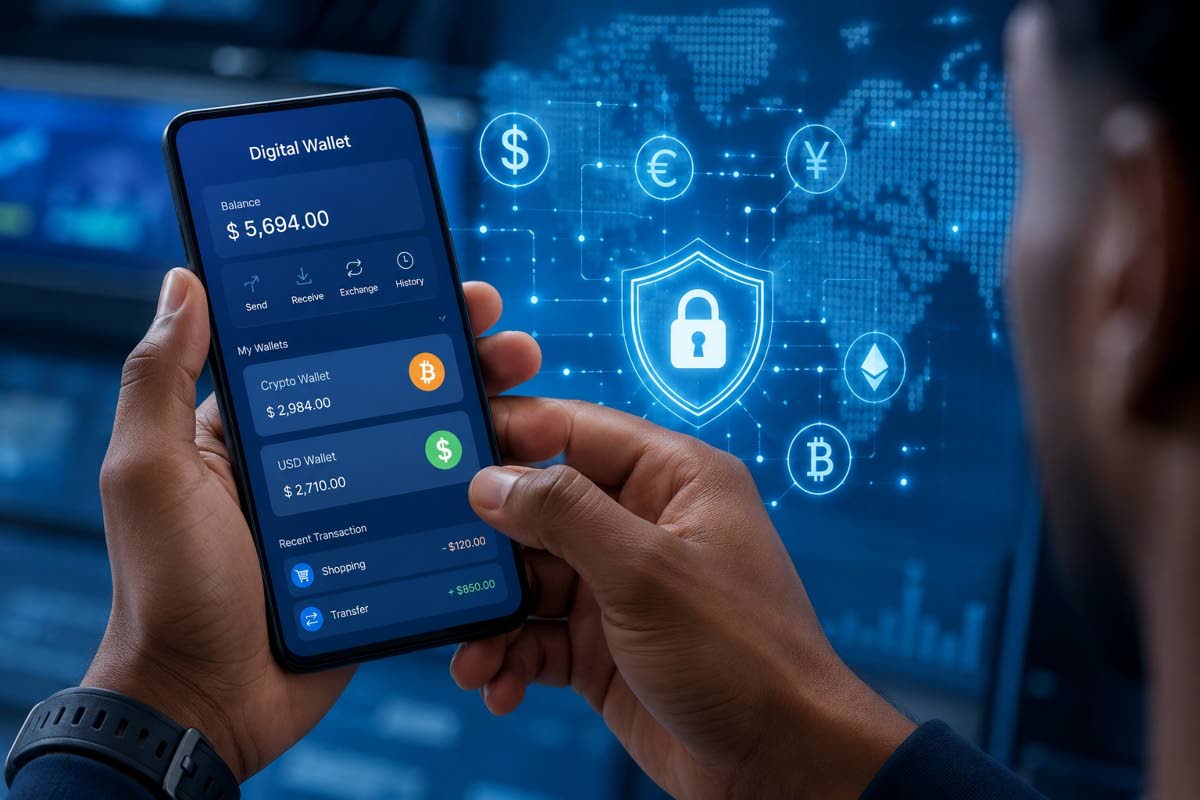
In January, we explored how stablecoins are reshaping global finance, offering faster, cheaper, and more accessible alternatives to traditional banking.
The natural follow-up question is: if we can all carry digital wallets holding bitcoin, stablecoins, or Central Bank Digital Currency (CBDC), what happens to the bank? Will it simply disappear, rendered redundant by technology that puts the power of money directly into our hands?
The proponents of the digital revolution have a clear answer. They tell you to “be your own bank” and move your liquid cash to a digital wallet, take control, and free yourself from the institution. On paper, it makes perfect sense. You have access anytime, anywhere in the world. Your money is not exposed to the whims of a bank’s balance sheet. The arguments are compelling.
My thesis is that while this is technically true, it misses a fundamental human factor: the psychology of fear of money.
Five hundred years of confidence
Banks have served as the safe place to keep your money for roughly 500 years. This is second only to keeping it under your bed, which has become wildly impractical in the modern era. That trust is not easily broken. The confidence built up over centuries is so deep that, even when a bank is robbed or collapses, people do not abandon the system. They simply seek out another bank. They do this partly for transaction convenience, but also because of something deeper: a psychological safety net.
Think about it this way. A man walking down the road with a million dollars in his pocket is a far more circumspect figure than if he were wearing a gold chain or watch of equal value. A woman clutching a bag of cash will hold it tighter than she would a designer handbag. This fear is unique to money itself. It is not quite the same anxiety we feel about other valuables. We can wear a fortune in jewellery and feel a sense of pride. We carry a fortune in cash and feel a sense of terror.
The digital-wallet dilemma
Now, consider the concept of being your own bank in the digital age. This means keeping your cash in a digital wallet on your mobile device instead of in a bank. This is where the fear of money becomes critical. The mobile device has not yet earned the level of trust we unconsciously grant to a bricks-and-mortar bank. The complex digital world, where physical paper is removed and replaced by numbers on a screen, is still difficult to comprehend.
The fear of having too much money “on your person”, even in digital form, is a powerful inhibitor. Many people already avoid checking their digital balances because of a “money avoidance mindset”, a fear of confronting their own finances. This fear often trumps even the more tangible anxieties. It trumps the fear of the bank being robbed or the bank collapsing. It can even, for many, override the fear of the phone being hacked, lost, or the digital wallet itself failing. The anxiety is primal: the money is there, in your hand or on your device, and you are responsible for it.
The digital era is here, not coming
Now, let me be absolutely clear. This thesis does not suggest that banks will continue to operate as usual. The digital era is here, not coming, and banks will have to adapt to survive. Like any industry facing a technology wave, some players will resist and perish; some will adapt and thrive.
Currently, the movement of digital currencies is handled by digital exchanges such as Binance and Coinbase. I can see this role as the natural role of the bank going forward. In fact, I believe this is the natural role awaiting the banking industry, and those who move quickly will survive.
We are already seeing this shift. Major financial institutions are moving boldly into digital assets.
Elliptic, a blockchain analytics firm, in its 2026 Regulatory Outlook confirms that “banks around the world will continue to expand their digital asset activity rapidly”, with tokenisation and stablecoins as key areas of focus. In a significant development, the US Office of the Comptroller of the Currency (OCC) has issued guidance enabling banks to act as crypto brokers, setting the stage for mainstream banks to offer crypto trading, custody, and investment services directly to customers.
The new role of banks
The question is not whether banks will survive, but how they will evolve. As the core components of crypto trading become “plug-and-play”, the frontier of competition shifts. Firms like Morgan Stanley can integrate crypto trading in mere months, turning it into a bundled feature of their existing brokerage and advisory services.
The trust that banks have built over centuries gives them a decisive advantage over crypto-native exchanges. “Even Coinbase, which built its brand on being the most compliant exchange in the industry, is still relatively unknown outside of crypto. Morgan Stanley, however, doesn’t need to build a brand. It already has 40 years of institutional trust and regulatory infrastructure ready to deploy.”
The winning banks will not be the first to issue a token; they will be the ones that make digital money “boringly reliable at enterprise scale”. They will evolve from deposit-taking institutions into digital asset platforms, offering tokenised deposits, bonds, securities, and the seamless integration of traditional and digital finance.
The fear of money ensures that individuals will still want a trusted intermediary, but the “how” of banking will be fundamentally transformed. Those who adapt quickly to this new role will survive; those who cling to the old model will not.
Let the conversation continue.
Michael Ennis BA, MBA is an information system consultant. He can be reached via mail: mail2michaelennis@gmail.com.
Full disclosure: The author is not an investor in digital assets, including bitcoin. He, however, is a director of a bitcoin technology company. This article is a follow-up to “Stablecoin: The Future of Money (Part 2)” published in the Jamaica Gleaner on January 20, 2026.