Ambulance errors
Loading article...
-
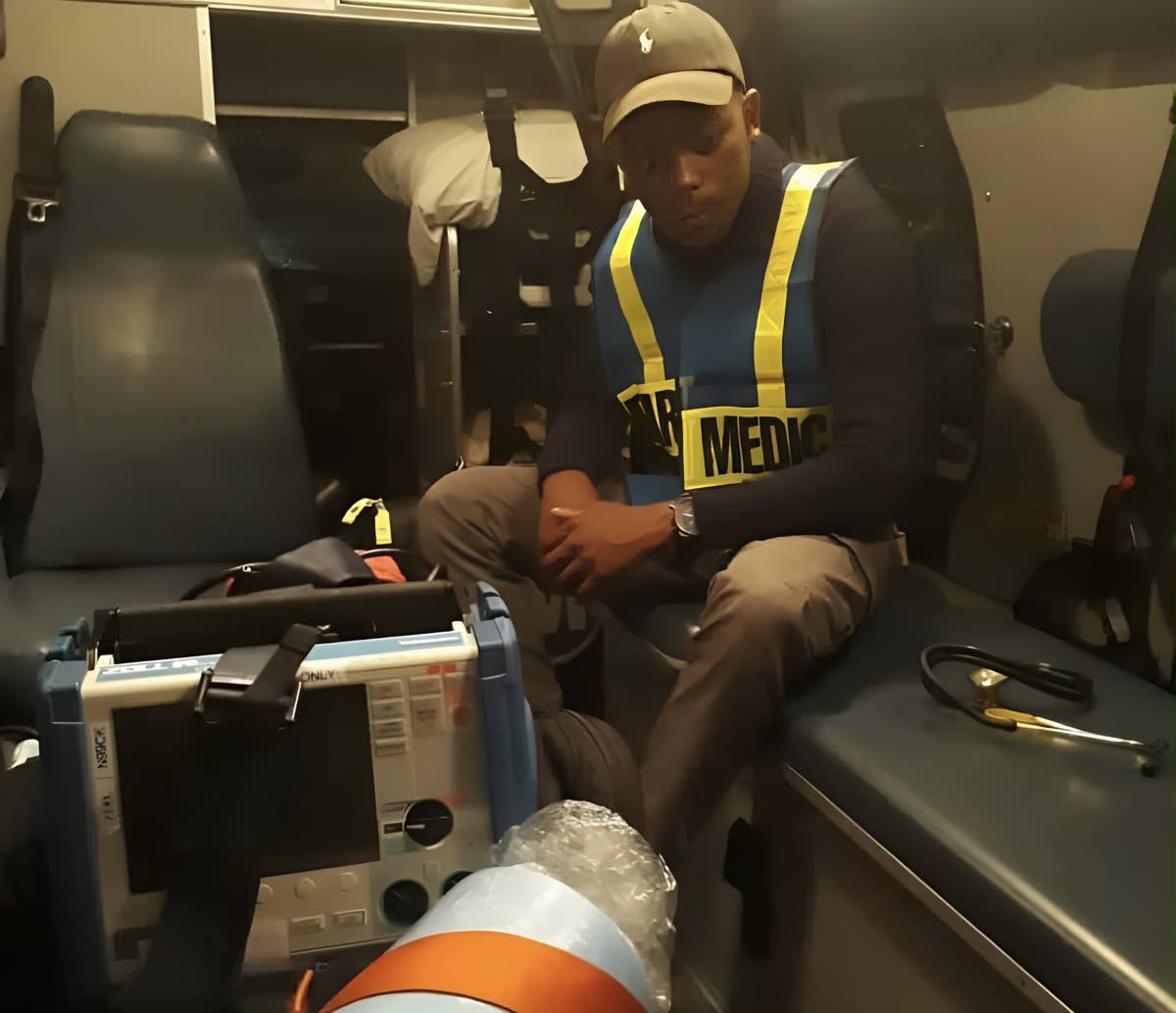 Chester Chambers, a former emergency medical technician.
-
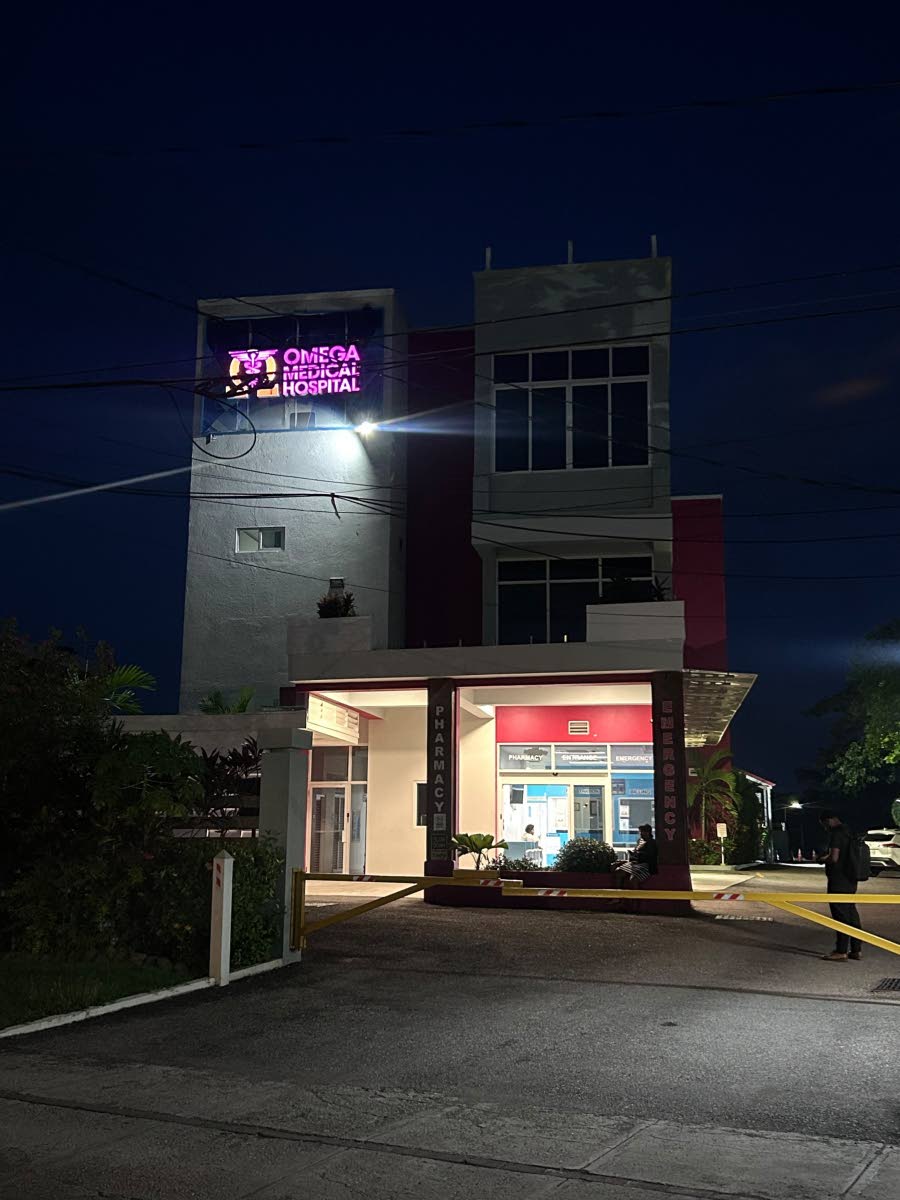 Omega Medical Hospital in Westmoreland.
-
 Omega Medical Hospital in Westmoreland.
-
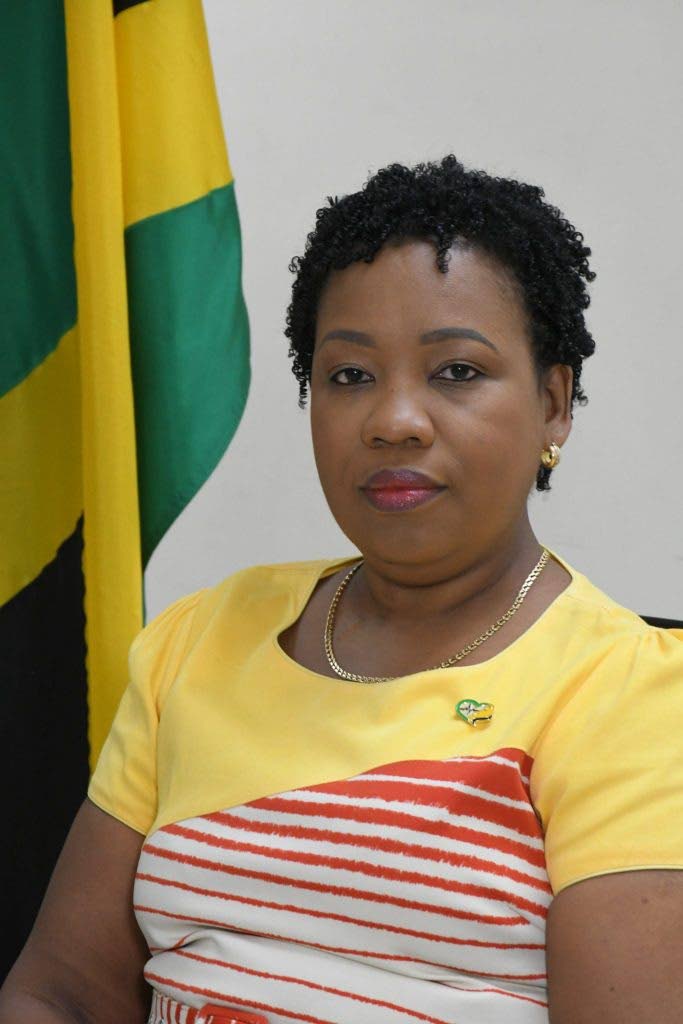 Nicola Dawkins-Wright, director, emergency, disaster management and special services.
A botched emergency response at a multi-vehicle crash scene on Norman Manley Boulevard in Negril, Westmoreland, has led to the disclosure by the Ministry of Health and Wellness that the ambulance and company involved have not been inspected for operation.
Several people were injured, two seriously, after a Toyota Coaster bus, Corolla Fielder and Toyota Voxy collided on the busy thoroughfare in July. However, the transport of the injured was hampered because the Jamaica Fire Brigade’s (JFB’s) ambulance was down for repairs.
The JFB confirmed that a private ambulance subsequently responded and transported the victims to nearby Omega Medical Hospital.
However, the response of the emergency medical technicians (EMTs), which was captured on video and seen by The Sunday Gleaner, sparked public outrage and exposed significant procedural lapses. The two-minute, 40-second recording captured a dramatic situation that almost turned tragic.
It shows the ambulance arriving at the scene of the accident, after which a driver and a gloveless EMT wearing basic personal protective equipment emerge from the vehicle.
The two are assisted by bystanders to strap a woman, who had been lying on the ground, to a stretcher before placing her into the back of the emergency vehicle. The two men then re-enter the vehicle on opposite sides.
However, as the ambulance speeds away from the scene with its emergency lights flashing, one of its rear doors swings open along the busy roadway, triggering panic among bystanders.
A desperate onlooker who recorded the incident chased the ambulance, shouting in a bid to alert the driver.
It is not clear whether the two-man team was ultimately alerted, as the video ends with the door still open.
“The standard operating procedures are you must use trained personnel to operate an ambulance,” US-certified Advanced Emergency Medical Technician Peter Wynter said.
“Based on what I saw, none of the persons on that ambulance [appeared to be] trained; none,” he added.
Wynter, who has 30 years of field experience and 29 years of instructional experience training medical students at The University of the West Indies (UWI) and the University of Technology (UTech), said neither the driver nor the secondary personnel demonstrated basic first aid or standard emergency care skills.
Wynter noted that the EMT entered the rear of the moving ambulance while it was backing up without a spotter safely directing the driver. He said this created an extreme hazard for the crew.
“What they did could have cost life to the patient to the bystanders. The person who should be the EMT, I observed him going into the back of the ambulance as it was backing up. That’s a dangerous thing. To sum it up, no training was done,” said Wynter.
He said the EMTs failed to correctly deploy a one-person stretcher, removing it from the vehicle incorrectly. He said, for victims with suspected spinal or hip trauma, the crew failed to manually stabilise or properly ‘package’ the patient before moving them.
Wynter also asserted that the crew operated without basic personal protective equipment (gloves), oxygen or adequate patient-care supplies.
He noted further that no crew member remained in the back with the patient during transport to monitor vital signs or prevent the unsecured stretcher from shifting.
Indiscriminate
use of sirens
He cautioned that the indiscriminate use of sirens during transport can trigger seizures or exacerbate severe head injuries in compromised trauma patients, noting that it is not always necessary.
“It is dangerous for the public. What I saw is very dangerous for the public,” said Wynter, who added that recorded incidents like this one can affect the country’s tourism product.
“It’s a pre-hospital service you’re offering, meaning, most of the things that the hospital will be offering the patient, you are trained to do it out in the field. By the time you get to the hospital, the doctors do the X-rays and the bloodwork. The patient should be fully immobilised, especially if it’s a motor vehicle accident,” he said, noting that, in addition to training EMTs, he lectures in mass casualty and vital signs.
Former EMT Chester Chambers also offered a critical assessment of the response, highlighting severe gaps in standard emergency procedures, crew training and public health oversight.
Prevent neck rotation
Chambers said that, in trauma or motor-vehicle incidents, standard procedure mandates approaching the patient strictly within their direct line of sight to prevent neck rotation. He said an emergency responder must immediately apply manual inline cervical stabilisation before placing a C-collar and securing the patient to a rigid backboard to protect the spine.
Chambers, who operated in the field for seven years, noted that emergency crews must arrive on scene equipped with basic life support (BLS) kits, including a Bag-Valve-Mask (BVM), sphygmomanometer (blood pressure cuff), stethoscope, pulse oximeter and oxygen supplies.
He said arriving with only a stretcher renders responders no more effective than untrained bystanders.
“With that scene specifically, they did nothing right. They went, took up the patient, threw her in the back of the ambulance and make up some noise go down the road,” he asserted.
Chambers said first responders must prioritise circulation, airway and breathing (CAB) in severe haemorrhages to control life-threatening bleeding before addressing airway obstruction, or ABC in stable trauma cases.
Silent or non-verbal victims, he said, must be triaged ahead of vocal victims who are actively communicating.
The former first responder argued that Jamaica lacks a unified national EMS framework, leaving the public reliant primarily on the JFB’s limited fleet or private, sometimes unregulated, operators running commercial transport without standardised medical oversight.
75 working ambulances
The health ministry confirmed that there are 75 working ambulances within the public health system. The ministry said that, as at July 2026, there are five private medical facilities approved to provide ambulance services in the country. It did not give the names.
Chambers said a lack of basic life support and CPR training among the general public and transport operators leads to the improper handling of accident victims before official EMS arrival.
Checks made by The Sunday Gleaner revealed that the ambulance that arrived at the scene was registered to Negril-based Concierge Emergency Medical Services Limited.
Companies Office of Jamaica (COJ) records indicate that the company was incorporated in 2013.
Doctors Sonja King-Foster and Dale Foster are the sole directors and shareholders of the company.
Both are also sole directors and shareholders in Omega Medical, according to COJ records.
Omega charges $44,100 for ambulance coverage in the Savanna-la-Mar area and $96,600 for areas outside such as Bluefields. The per-kilometre billing rate was not disclosed.
The Sunday Gleaner sent questions to Omega Medical concerning the emergency response a month ago, on August 4. A representative acknowledged receiving the questions but, after multiple follow-ups, the company said it would not respond.
Subsequently, on August 22, The Sunday Gleaner contacted Foster, who said the recording “is a misrepresented video” but insisted he had no further comment.
Pressed about the aspect of the video that “misrepresented” the linked companies, Foster said “what was done was for ulterior motives and reasons”, noting that there was nothing else he could say about the video.
Foster said he would have the company respond to the questions. However, up to press time, The Sunday Gleaner had not received a response.
The Ministry of Health said it has interim guidelines which mandate that registered ambulances meet strict operational, staffing and vehicle standards under a medical director.
Dr Nicole Dawkins-Wright, director, the Emergency, Disaster Management and Special Services (EDMSS) Branch within the ministry, responding to queries from The Sunday Gleaner, noted that the medical director of an emergency medical service company is accountable for breaches in operations of its ambulance service.
Dawkins-Wright said the ministry inspects the response base for emergency response services and imported ambulances against set criteria before approving their operation, while enforcing specific staffing levels for basic and advanced life support units.
However, she disclosed that while Concierge is a registered emergency medical service “there is no record of inspection of the response base”.
She also confirmed that the company imported two ambulances in 2018 and 2019 to support its emergency response operations, but said, with respect to the inspection of ambulances, files dating back to 2015 show “no record for inspection for Concierge”.
“All ambulances imported into Jamaica are approved based on the respective ambulance service meeting a specific set of criteria,” said Dawkins-Wright. “Thereafter, these ambulances are to be presented to the Ministry of Health for inspection prior to being incorporated into the respective fleet of vehicles used for the medical transportation of patients as a part of the approved operations of the emergency medical service agency.”
Further, the director said Omega Medical Services received approval from the health ministry for the importation of an ambulance in 2025.
“The Ministry of Health is awaiting indication from this medical facility that they are ready for the Ministry of Health’s inspection of their ambulance and emergency medical service response base,” she said.
She explained that a response base serves as the operational headquarters for ambulances and emergency response teams. Inspection of this facility is a mandatory step before any vehicle receives certification, ensuring the business is legitimate, possesses a dedicated call-taking structure, and maintains medical oversight by a registered director.
The base also enforces vital accountability and safety standards across the service. It provides centralised controls to monitor response times, safeguard confidential patient records, ensure daily equipment maintenance, and uphold infection prevention protocols for staff, supplies and vehicles before dispatch.
The ministry did not indicate whether it is investigating the matter.
kimone.francis@gleanerjm.com