Earth Today | Integrated action said key to solving the world’s climate, clean air woes
Loading article...
-
-
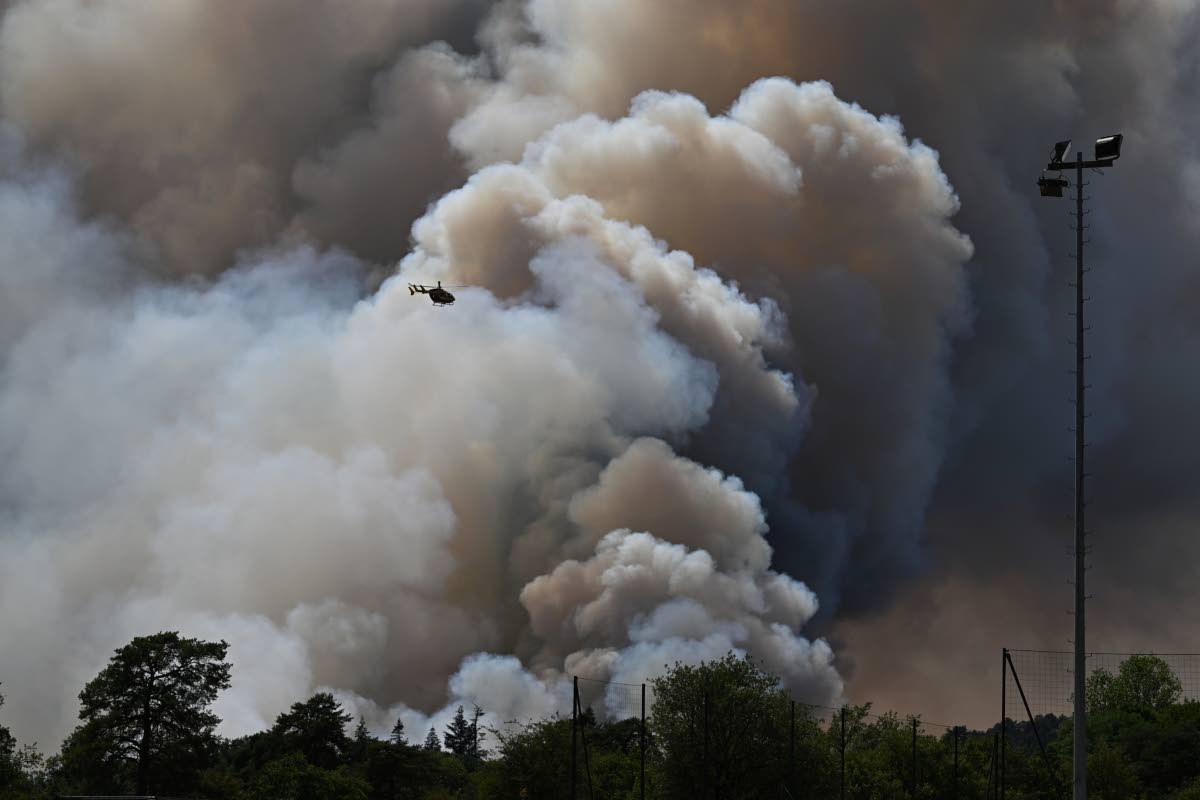 A pyrocumulonimbus, or pyroCb – a giant cloud created by a large wildfire – is seen in the Fontainebleau forest region, about 60 kilometers (37 miles) south of Paris, France.
WITH THE world appearing set to exceed, if only temporarily, 1.5 degrees Celsius of warming while air pollution claims the lives of millions each year, there is an urgent call to action for an integrated approach to solving climate change and clean air challenges.
According to the latest global economic assessment of integrated climate and clean air action, published by the United Nations Environment Programme (UNEP), such a move promises not only better results but also better returns on investment, at a time when people are being asked to do more with less.
“ Pursuing climate and air quality action together rather than separately generates approximately 0.2 per cent of gross domestic product in additional economic benefits. These gains arise because many benefit channels – avoided climate damage, reduced healthcare expenditure, higher labour productivity and quality-of-life improvements linked to reduced morbidity and mortality – only materialise fully when the climate and clean air agendas are pursued together,” noted the publication titled Hidden assets: The economic and health case for climate and clean air action.
And, the report explained, there is no question that climate change and air pollution are “inextricably linked”.
“ They share many of the same drivers and sources, above all fossil-fuel combustion, and certain agricultural practices and industrial processes. Many pollutants cause both climate change and air pollution, and their impacts compound one another, harming human health, ecosystems and economic activity,” it said.
To effectively and efficiently solve the dual challenge, however, requires that they be looked at together and that governments make “deliberate choices across five areas”, including making integrated climate and clean air policy “a core economic strategy”.
“Governments should embed air quality and climate action jointly in national growth plans, fiscal frameworks, and investment strategies. Avoided health costs, productivity gains, and reduced fiscal exposure to climate damage are economic objectives in their own right and should be reflected in budget and planning processes,” the report noted further.
Also key, the report said, is “investing early and consistently in enabling conditions” and targeting “rapid wins to meet near-term commitments”.
“Governments should prioritise spending that shortens implementation delays, including affordable finance and risk-sharing instruments, institutional capacity and cross-ministerial coordination, and planning, budgeting and enforcement systems,” it said.
“Solutions, including clean cooking, methane controls addressing leaks, venting and flaring, organic waste, and transport and air quality measures are largely within national control and deliver direct economic and health returns in less than a decade,” it added.
“Accelerating these, alongside longer-term decarbonisation, is not only fiscally sound. It is a direct path to meeting the WHO 2040 voluntary target of halving air-pollution mortality and keeping peak warming as low as possible during a period of 1.5 degrees Celsius overshoot,” the UNEP publication said further.
According to the report, “Governments that move quickly on these solutions will capture near-term fiscal space, build the political foundation for sustained climate action, and demonstrate measurable progress against commitments already made.”
Also proposed is the alignment of international cooperation with implementation and finance needs, together with investing in the needed data and monitoring infrastructure to guide decision-making.
pwr.gleaner@gmail.com