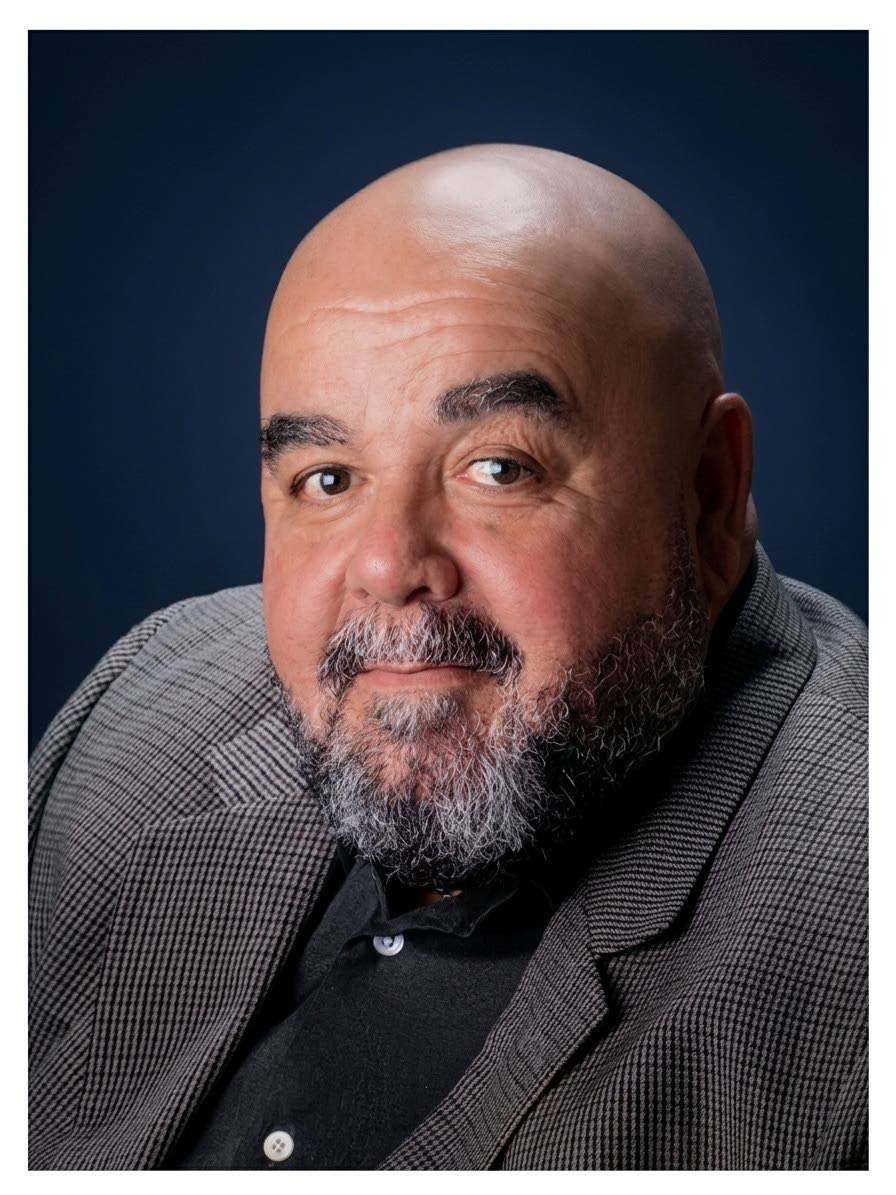
Veteran journalist, diaspora leader Philip Mascoll dies at 77
Loading article...
-
-
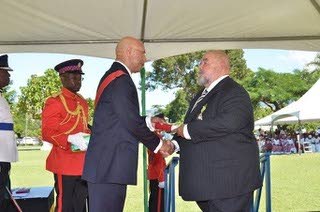 Governor General Sir Patrick Allen with Philip Mascoll being invested with the Order of Distinction, Officer Class, October 20, 2013. Mascoll also received the Governor General’s Diaspora Award on June 17, 2008.
Veteran Jamaican journalist and diaspora leader Philip Mascoll, whose career at the Toronto Star spanned more than 27 years, died in Toronto on Monday, September 14.
He was 77.
Mascoll, an editor, reporter and former member of the Star’s investigative team, was also the inaugural president of the Jamaican Diaspora Canada Foundation and a former member of Jamaica’s Diaspora Advisory Board.
He had been ailing for several months.
Born on November 19, 1948, Mascoll joined the Toronto Star in February 1981. He worked as a writer, editor and assignment editor, covering crime, courts, civic affairs and Toronto’s diverse communities before leaving the newspaper in 2008.
His work was marked by persistence and a willingness to pursue difficult stories. In 1992, Mascoll and fellow Star reporter Kevin Donovan were detained for four hours during an undercover investigation into allegations that a provincial liquor inspector had accepted a bribe. Neither journalist was charged. The newspaper later defended its refusal to surrender their tapes, notes and photographs without a subpoena, insisting that reporters gathered information for their readers, not for the police.
The Toronto Star public editor Donovan Vincent told the Jamaica Gleaner in a telephone interview that he worked with Mascoll in one of the newspaper’s suburban bureaus in Scarborough for a few years.
“He was like a mentor, a very gregarious guy with a real presence, certainly in the office and later in the newsroom. Later, we got called downtown to work at the head
office on Yonge Street where we covered the police beat and courts. We ended up on a story that won a national newspaper award,” he said recalling that the article earned them that recognition.
“Basically, it was about a woman who falsely claimed that she had her purse stolen, and the public ended up giving her over $100,000, which the police later found out that it was not true but didn’t really divulge that to the public right away. And so, Phil, myself and another gentleman, got the news break and we just hit the ground. It was a whole day of research, and the story ended up getting nominated for a national newspaper award and winning spot news.”
Mascoll’s journalism extended beyond breaking news and investigations. He also documented the work of activists, community builders and Caribbean Canadians whose contributions were often overlooked. Colleagues knew him as an exacting newsman with strong opinions, a sharp sense of public duty and a perennial attachment to Jamaica.
Maureen Murray, who first met Mascoll in 1984, described him as godsent due to his mentorship when she needed it the most.
“I was a young, green, summer student, bright-eyed and scared walking into this massive newsroom with very few people who looked like me.
Phil, I think, was on the copy desk at the time and was one of the guys who kind of took me under his wing and would point out my mistakes and guide me in the right direction.
Phil was a no-nonsense, straight-talking person and he would tell me pointedly what I needed to do and so you remembered his advice. He was also very funny and laughed from the belly,” Murray said endearingly.
That attachment to Jamaica became the driving force of Mascoll’s work outside the newsroom. Following the inaugural Jamaica Diaspora Conference in 2004, he helped establish the Jamaican Diaspora Canada Foundation and became its first president. He argued that Jamaicans abroad possessed the expertise, resources and influence to contribute more deliberately to national development.
Under his leadership, the organisation addressed education, health, social development, security and immigration. Its projects included support for learning and healthcare in Rose Town, mentorship at the secondary and post-secondary levels, and plans for a major community-development initiative in Rocky Point, St Thomas.
Mascoll was especially committed to preparing young Jamaicans for leadership. The future leadership arm of the Canadian foundation brought a large youth delegation to the 2008 Jamaica Diaspora Conference as he maintained that young people had to be trained, encouraged and given meaningful places in decision-making.
Mascoll contended that preparing young people to serve their communities was not simply succession planning; it was “necessary for the community to live”.
In 2013, the Government of Jamaica appointed him an officer of the Order of Distinction for dedicated service to the country and the Jamaican diaspora in Canada.
Speaking after the honour was announced, Mascoll described his work for Jamaica and Jamaicans in Canada as being “like breathing”. He said the national award ranked among the greatest honours of his life, surpassed only by the births of his children and grandchildren.
He was also involved heavily with his Jamaican alma mater, through the Jamaica College Old Boys’ Association. Mascoll is also revered as a staunch supporter of People’s National Party, as his activism and advocacy knew no bounds, even with the Black Action Defense Committee (BADC), an organisation that supports Anti-Black Racism within Canada’s Black community.
Tributes following his death have remembered a man who combined journalism with advocacy. The Global Jamaica Diaspora Council–Canada described him as a respected journalist, activist, community leader and mentor who freely shared his knowledge, experience and connections. The Jamaican Canadian Association said he was committed to telling the stories and highlighting the contributions of Jamaican Canadians.
Mascoll is survived by three children; Philip Jr., Dominic and Keisha, and grandchildren, who affectionately called him ‘GP’.
His death closes a distinguished chapter in Jamaican Canadian journalism and diaspora leadership, but the institutions he helped build and the young people he encouraged remain central to his legacy.
Funeral and memorial arrangements will be announced by the family.