Grange backs reparations call at London church service
Loading article...
-
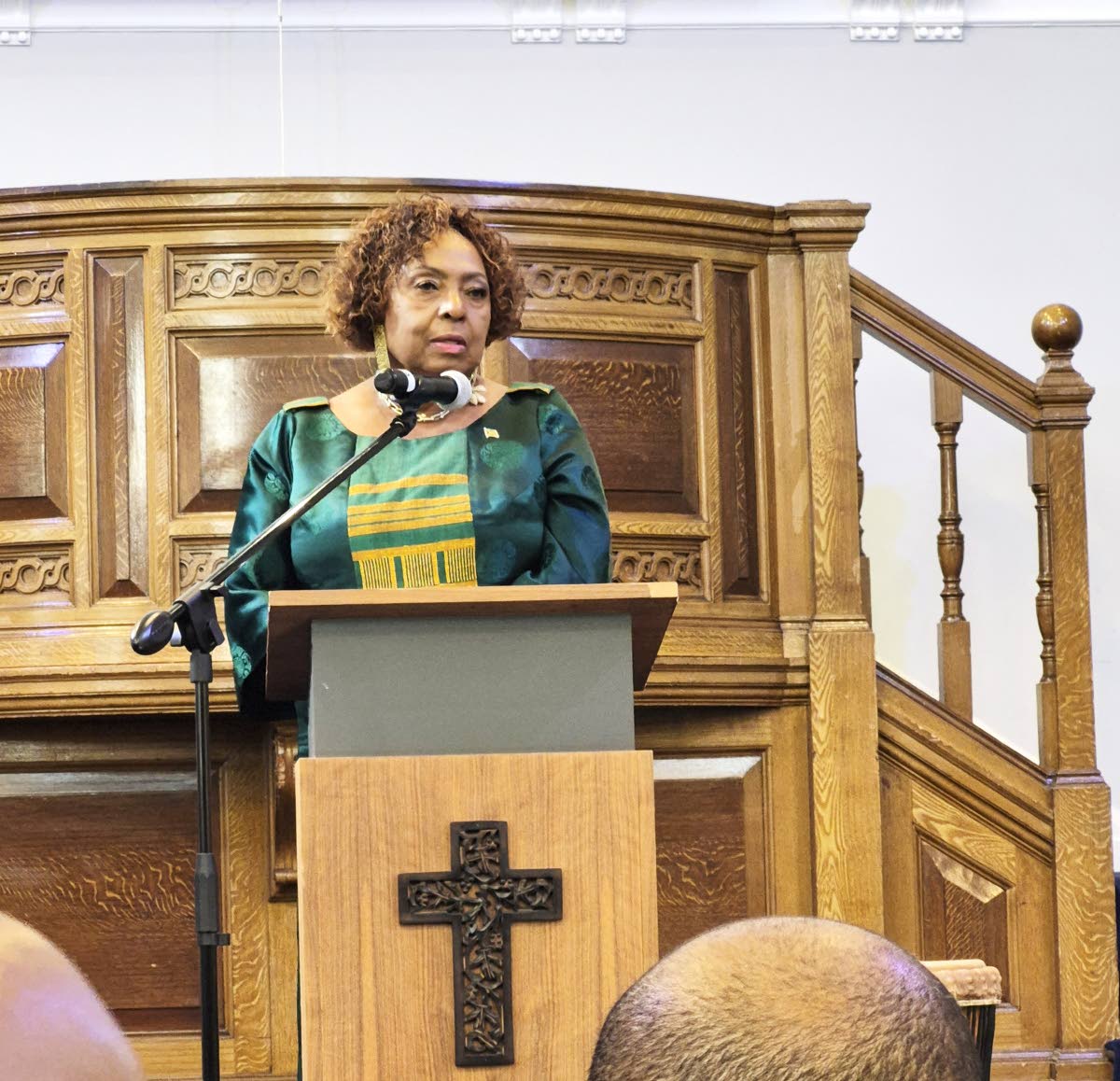 Olivia ‘Babsy’ Grange, minister of culture, gender, entertainment and sport, addresses the audience at the New Park Road Baptist Church in south London on Sunday, September 6, when she attended a service of remembrance, justice and repair.
-
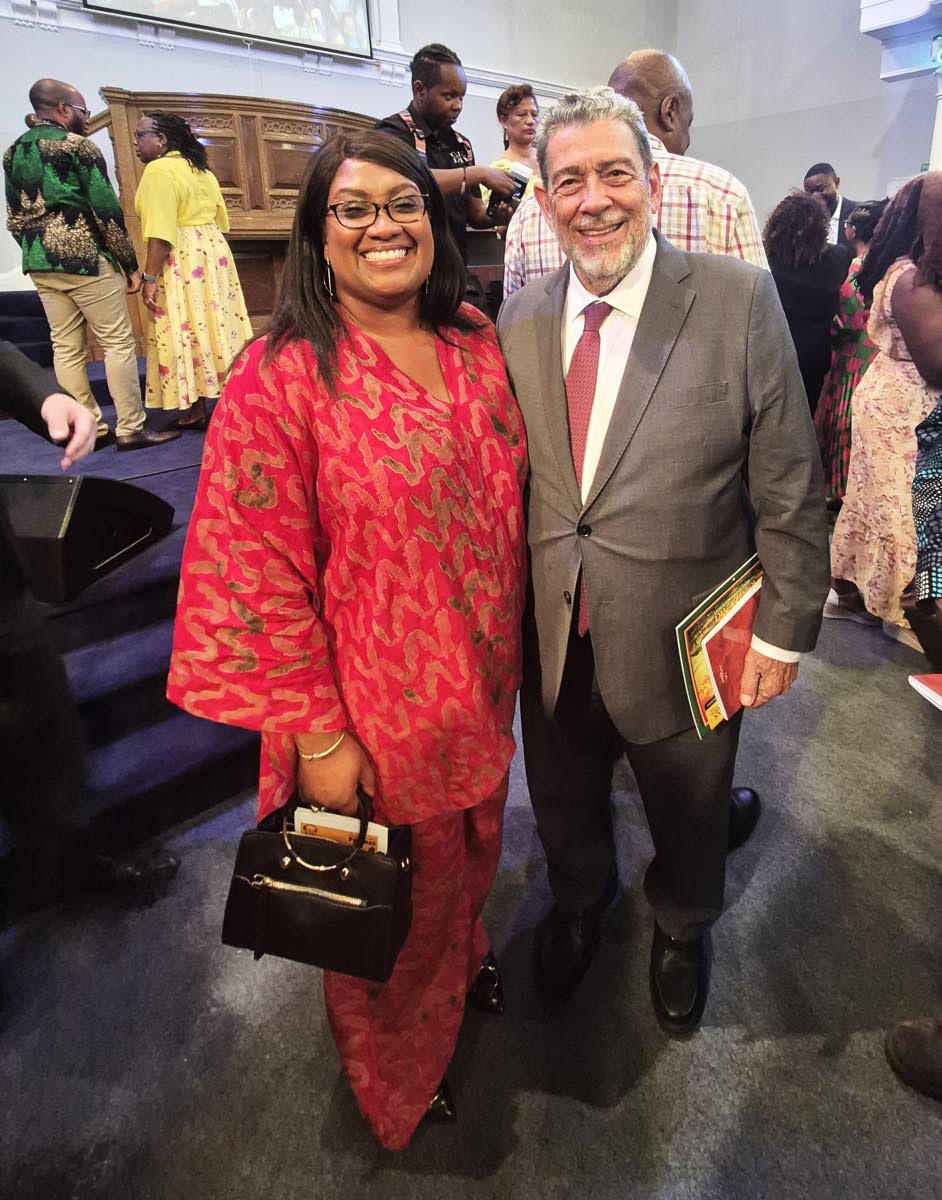 Bell Ribeiro-Addy (left) Labour MP for Lambeth and Ralph Gonsalves, former prime minister for St Vincent and the Grenadines, are pictured at the New Park Road Baptist Church where they attended the service of remembrance, justice and repair
-
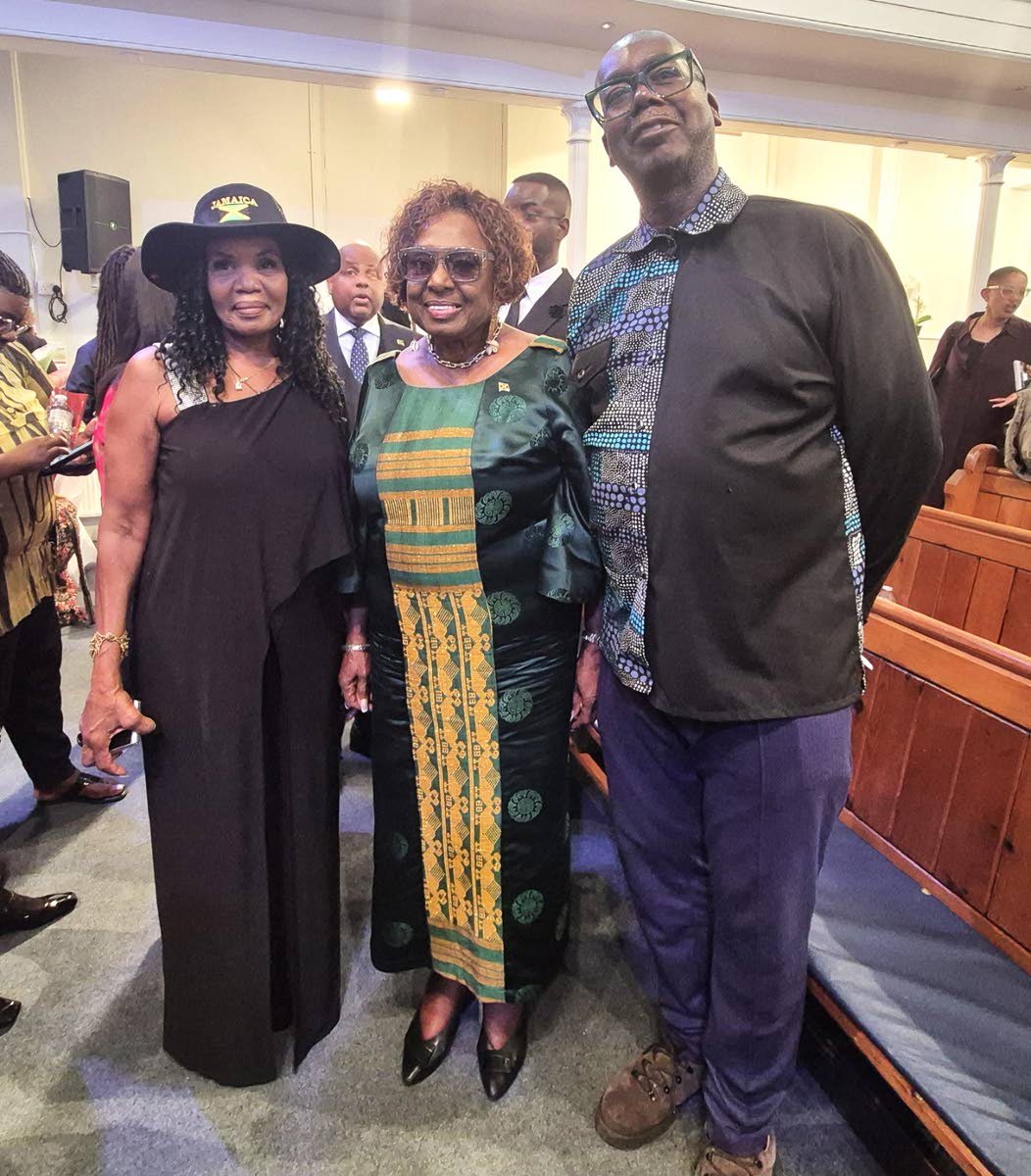 Minister of Culture, Olivia ‘Babsie’ Grange, is pictured with Angel Christian, from the Angel Foundation and Sir Patrick Vernon, the Global Jamaica Diaspora Council UK South representative at the New Park Road Baptist Church in south London.
-
On Sunday, September 6, New Park Road Baptist Church in London hosted a service titled ‘Carry Wi Story Lest We Forget’, a service of remembrance, justice and repair.
This report is based on a viewing of the church’s online broadcast of the service and information published by the organisers.
“The service brings worship, history and public reflection together around three responsibilities. Remembrance. We remember those who were enslaved, those who resisted and those who fought for freedom. We honour the people who loved, believed, created, organised, worshipped and preserved their humanity.
“Justice. We tell the history truthfully and recognise that the consequences of slavery did not simply disappear with Emancipation. Repair. We ask what responsibility and remedy require when a historic injustice is acknowledged, but its consequences continue,” the organisers said on the church’s website.
In her presentation, the moderator said: “We do this as an act of Christian worship and witness, trusting in the God who hears the cries of the oppressed and calls the church to pursue truth, justice and repair. This service is shaped by four commitments: remembrance, truth, hope and restitution. Together, they form a journey.
“New Park Road Baptist Church is deeply honoured to host this important gathering. We pray that this will be a place where grief is held, courage is honoured, faith is stirred, and our shared commitment to justice strengthened. Whatever has brought us here today, we invite you all to be fully present.”
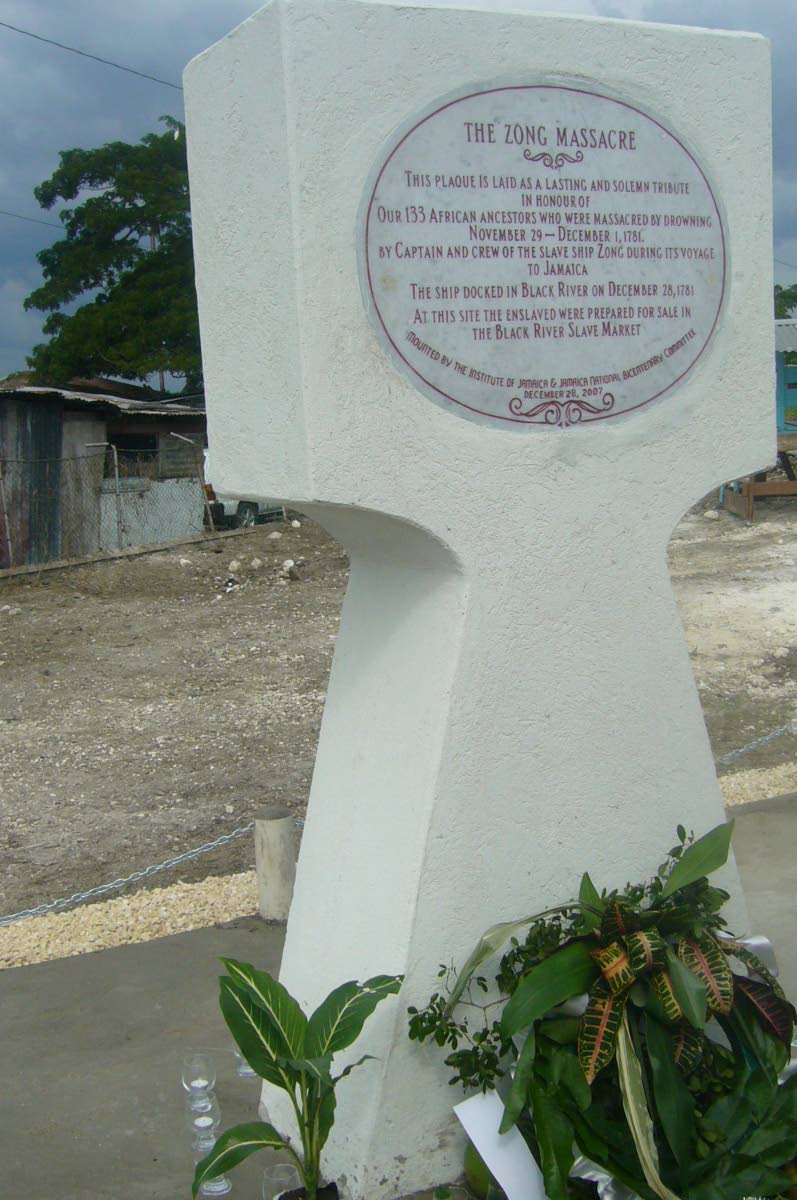
She began by recounting the story of the Zong massacre. On September 6, 1781, the Zong, carrying more than 440 captured Africans to Jamaica, was grossly overcrowded. Facing water shortages and navigation errors, the captain and crew deliberately threw between 132 and 142 men, women and children into the sea, in order to collect insurance payouts for lost “cargo”. The ship ultimately docked in Black River, St Elizabeth, with only about 208 survivors remaining.
“This event, and the legal case that followed, added significant weight to the abolitionist movement in the UK, as did uprisings in the Caribbean led by the enslaved,” Natricia Duncan, Caribbean correspondent, wrote in The Guardian. The date of the church service and the presentation of the petition to King Charles III coincided with the anniversary of the Zong’s departure for Jamaica.
Among those participating in the service were members of the Jamaican diaspora in Britain, church leaders, theologians and advocates for racial and reparatory justice, including Bell Ribeiro-Addy, member of parliament for Clapham and Brixton Hill and chair of the All-Party Parliamentary Group for Afrikan Reparations, as well as members of the Jamaican delegation that carried a formal petition for slavery reparations to King Charles III.
The delegation was led by Minister of Culture, Gender, Entertainment and Sport Olivia Grange. It included, among others, Laleta Davis Mattis, co-chair of the National Council on Reparation, who recited a poem titled ‘Colouration’, and Reverend Karl Johnson, chairman of the Baptist World Alliance, who delivered the sermon.
Grange noted that the Baptist movement played a significant role in the struggle for freedom and said there was no one more appropriate than Johnson to deliver the message.
In her presentation, she recognised several descendants of enslavers, thanking them for “standing with us”. She invited them to stand and be acknowledged.
Reflecting on the Zong tragedy and the legal proceedings that followed, Grange said: “The story of the Zong stands out for the barbarity of the crew, as well as the audacity of the owners of the ship. The story of the Zong also stands out because of the decision to deny the claim for the loss of property.”
Addressing the theme of the service, she said: “We carry the story today because we cannot allow it to be forgotten. We carry wi story knowing that it is not only our story, but the story of many people of diverse races and political perspectives, because it is not just about Africa and blackness, but because we are the country of one love.
“So, we are not here to preach racism; we are here to talk about one world of people who love each other, respect each other, and who together will fight for justice. This story did not end with Emancipation in 1834. This story continues in harms that have burdened many, particularly people of African descent. Parts of the story are not known, or have been falsely told.”
Grange also referred to the commemorative Zong Monument and Plaque unveiled on December 28, 2007 by the Institute of Jamaica and the Jamaica National Bicentenary Committee in Black River, St Elizabeth, at the historic site where enslaved people were sold. She noted that, despite damage caused by Hurricane Melissa in 2025, the monument remains standing.