Government moves to cut JUTC fuel costs with electric range extender buses
Loading article...
-
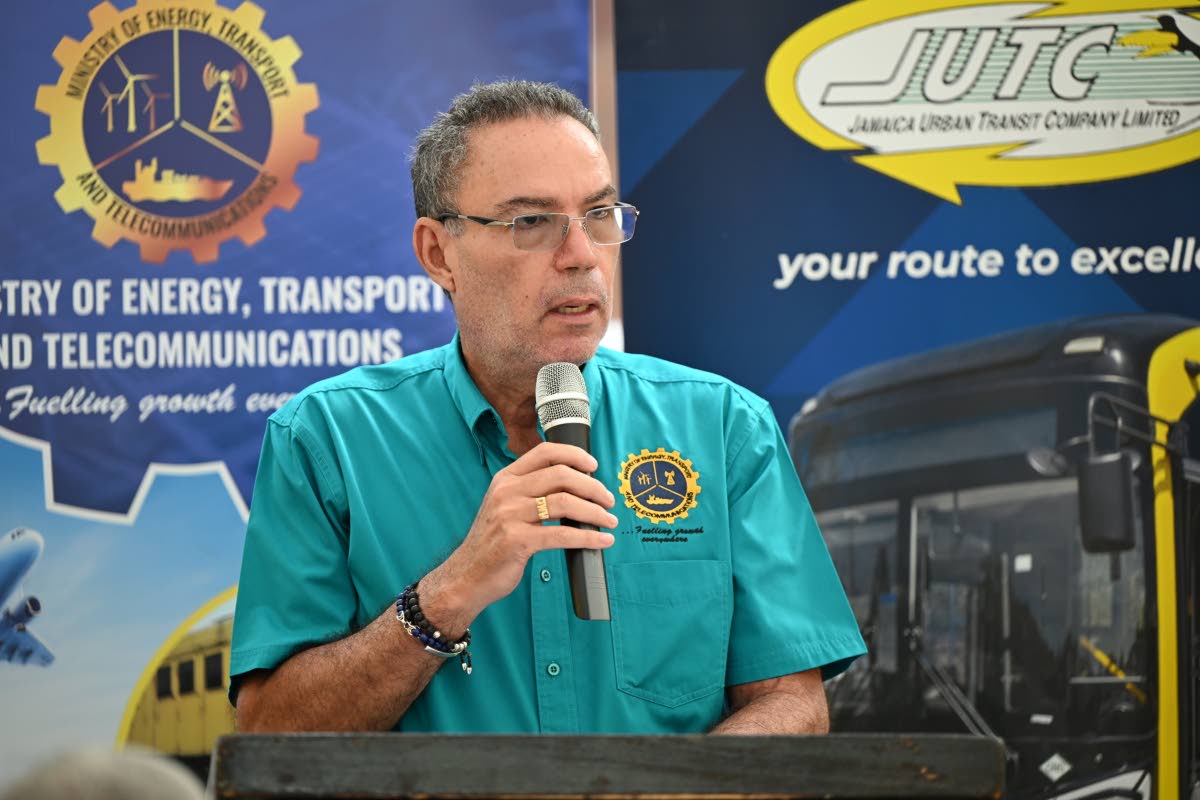 Minister of Energy, Transport and Telecommunications, Daryl Vaz, speaking at the official launch of Route 710, the newest service of the Jamaica Urban Transit Company (JUTC), in Port Antonio, Portland, on September 23. JIS
-
Minister of Energy, Transport and Telecommunications, Daryl Vaz, speaking at the official launch of Route 710, the newest service of the Jamaica Urban Transit Company (JUTC), in Port Antonio, Portland, on September 23. JIS
-
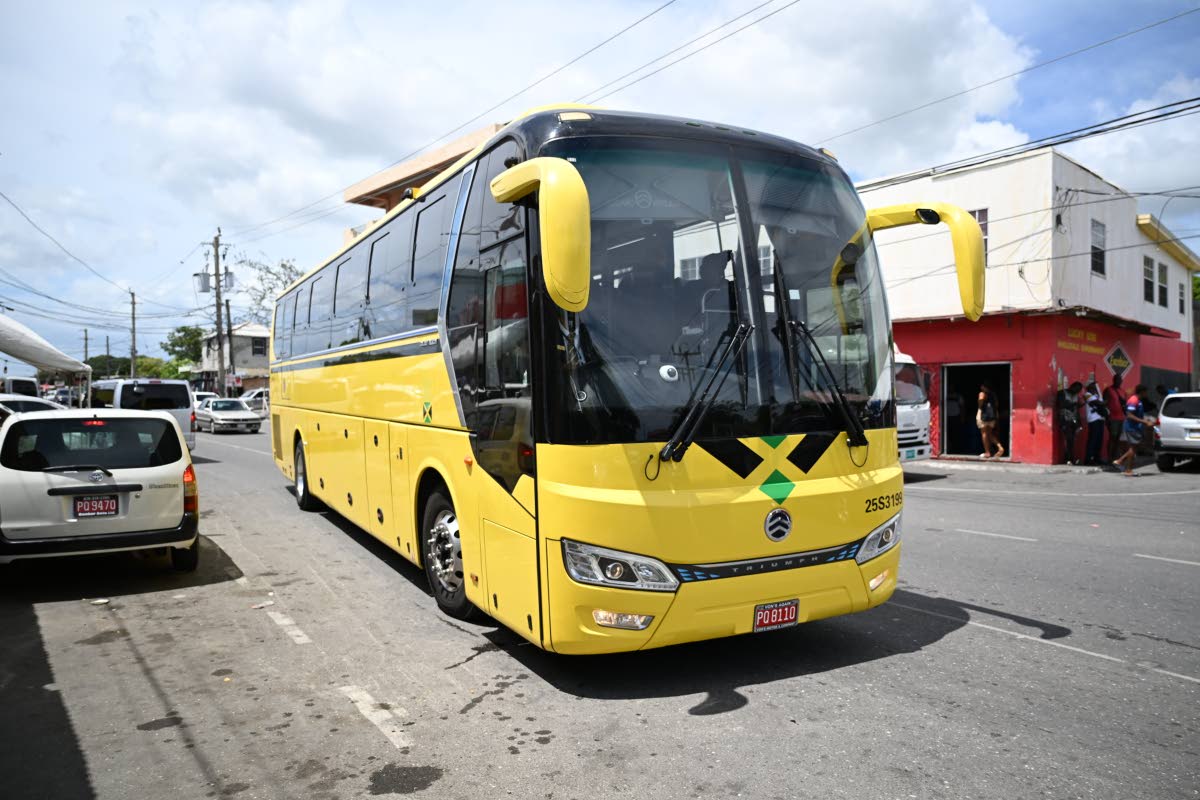 A Jamaica Urban Transit Company (JUTC) bus in Yallahs following the launch of Route 710, the company’s newest service operating between Port Antonio, Portland, and downtown Kingston, via St Thomas. JIS
The Government is moving to further modernise the Jamaica Urban Transit Company (JUTC) fleet with the introduction of buses powered by electric range extenders, a move expected to significantly reduce the company’s operational costs and the burden on taxpayers.
Minister of Energy, Transport and Telecommunications, Daryl Vaz, made the disclosure during the official launch of the JUTC’s newest service, Route 710, in Port Antonio, Portland on Wednesday.
The new route provides commuters with another public transportation option between Port Antonio and downtown Kingston, with buses travelling through St Thomas. The service is scheduled to operate Monday to Saturday.
Vaz said the Government is moving away from compressed natural gas (CNG) buses in favour of electric range extender technology, with the newest batch of 100 buses scheduled to be added to the JUTC fleet in 2027.
“I became minister in May 2023 and, so far, I've been able to change the outlook of [the] JUTC. I have brought in 275 new buses, most of them with new technology, moving away from diesel to compressed natural gas and now the last hundred JUTC buses… [will be] moving to electric range extenders, so we are going to be moving to better economy of scale,” he noted.
The Minister said the transition is expected to generate significant savings in fuel costs, particularly against the background of rising fuel prices due to external factors.
He explained that annual fuel costs for a JUTC bus have already been reduced from approximately $12 million when operating on diesel to about $7 million with CNG. With the introduction of electric range extenders, he said, the annual fuel cost could fall to between $3 million and $4 million per bus.
“When we introduced CNG two years ago, we reduced that cost to $7 million a year because it’s a different type of fuel, so that's $5 million [in savings] per bus per year. So, if you use 200, that's a billion dollars in savings that we can put towards what we are doing now,” he said.
Vaz explained that the electric range extender buses will operate on electric power while being charged during operation by a small generator, allowing them to travel longer distances without stopping for extended periods.
“It can cover the entire Jamaica without having to stop,” he disclosed.
He said the projected savings could result in the fuel cost for the newest 100 buses being reduced substantially.
“The cost for running that bus per year will go down to between $3 million and $4 million, so if you take from $12 million where we started, to $3 million, that's $9 million per bus per year just on fuel,” he said.
“If we are able to get it down to $3 million in the last hundred buses that we are importing, then that hundred buses will cost $3 million instead of $7 million or $12 million,” he added.
Vaz said the move forms part of the Government’s wider effort to modernise the JUTC and improve the efficiency of its operations.
“We are not just getting buses for buses’ sake; we are looking at new technology… [and] what needs to be done to get JUTC operational costs down so that we can take that burden off of the taxpayers of Jamaica,” he said.
He also announced plans to acquire 100 additional buses for the Rural School Bus Programme, as well as specialised buses designed to meet the demands of rural terrain and high-volume routes.
“We will bring 25 hill route buses; that is to deal with East Rural and West Rural St Andrew that requires a special type of bus to navigate the terrain and of course 10 articulated buses to be able to deal with the heavy traffic routes [such as] Portmore to Kingston [and] Kingston to Papine… that have very large volumes at peak hour,” Vaz said.
- JIS News
Follow The Gleaner on X, formerly Twitter, and Instagram @JamaicaGleaner and on Facebook @GleanerJamaica. Send us a message on WhatsApp at 1-876-499-0169 or email us at onlinefeedback@gleanerjm.com or editors@gleanerjm.com.