Rate-hike expectations climb from a fifth to a third among local business leaders
Loading article...
-
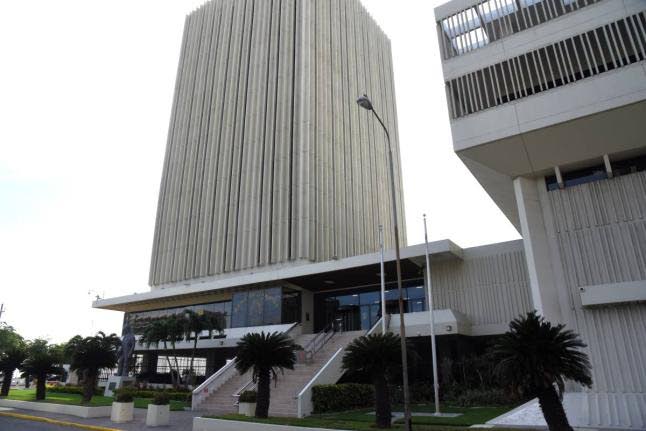 Bank of Jamaica headquarters located on Nethersole Place in downtown Kingston.
-
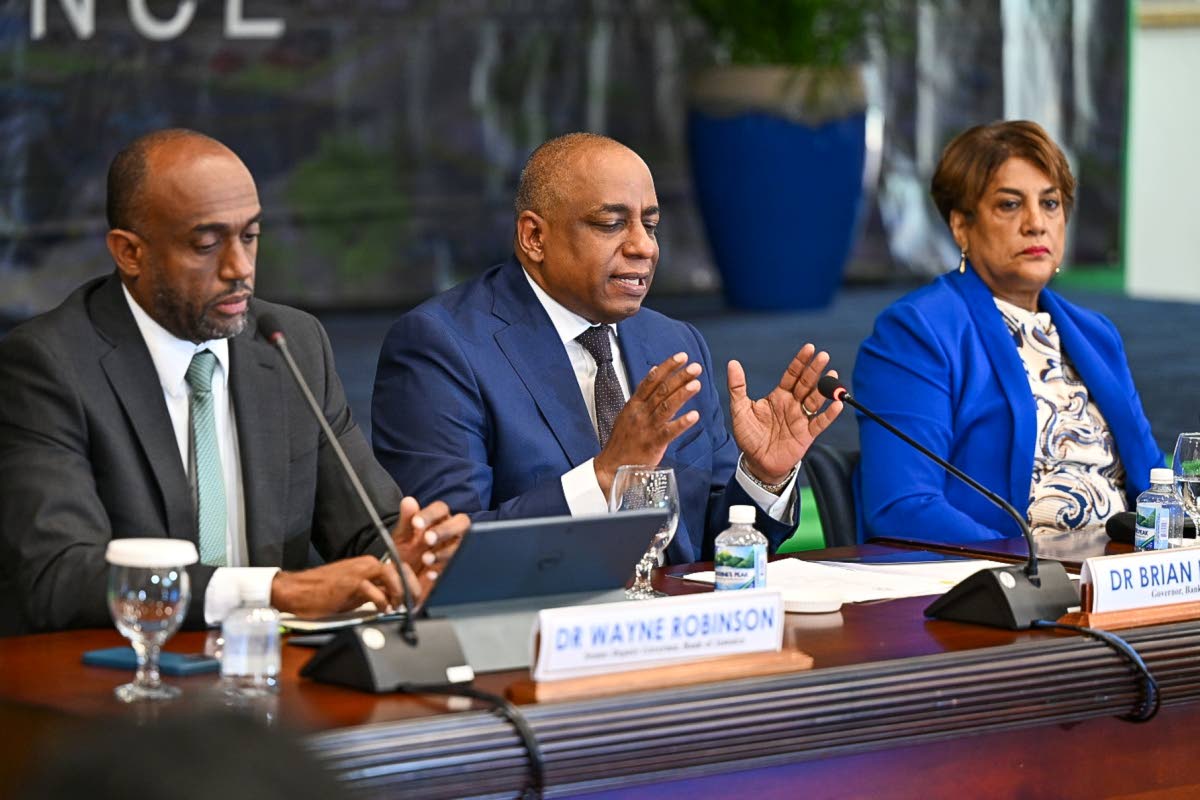 Newly appointed Bank of Jamaica (BOJ) Governor, Dr Brian Langrin (centre) responds to questions during the Quarterly Monetary Policy Press Conference held at the BOJ Auditorium in downtown Kingston on Thursday, August 20. Listening are Senior Deputy Governor, Dr. Wayne Robinson; and Deputy Governor in charge of Financial Markets and Payment Systems, Natalie Haynes.
Jamaican business leaders expect inflation to ease to 6.8 per cent by December, even as a growing share anticipate that the Bank of Jamaica (BOJ) will raise interest rates.
The central bank’s July survey of businesses’ inflation expectations, published this month, found that the share expecting a marginally higher benchmark rate jumped to 31.9 per cent from 22.5 per cent in the previous survey. Those expecting the rate to remain unchanged stood at 40.7 per cent, down from 49.1 per cent in the June round.
On September 28 the BOJ will announce whether it adjusts or maintains its benchmark rate of 5.50 per cent. That rate guides the cost of funds across the financial system and serves as the central bank’s main tool against inflation, which stood at 7.9 per cent in August.
Financial-sector respondents shifted the same way from a much higher base. Those expecting no change fell to 53.8 per cent from 70.4 per cent, while the proportion looking for a marginally higher rate climbed to 26.9 per cent from 18.5 per cent. “Respondents from the financial sector expected the rate to be marginally higher. This proportion reflected an increase compared to the previous survey,” the report said.
The Statistical Institute of Jamaica conducted the survey for the central bank between July 13 and August 14, polling 295 chief executives, managing directors and financial controllers.
The December forecast masks a deterioration further out. Respondents raised their expectation for inflation 12 months ahead to 7.3 per cent from 6.7 per cent in the previous survey, a 0.6 point move in the opposite direction to the near-term easing. Businesses see the current spike fading only partly, then reasserting itself.
Either figure puts business expectations above the central bank’s 4.0 to 6.0 per cent target range well into 2027.
The Monetary Policy Committee held the policy rate stable on August 19 for a fourth consecutive meeting, the first decision under new governor Dr Brian Langrin. The committee argued that the July spike reflected temporary external and administrative factors, chiefly the second phase of route taxi and hackney carriage fare increases and the pass-through of higher commodity prices to electricity rates.
Global conditions have since turned. The US Federal Reserve raised its target range by 0.25 percentage point on Wednesday, to 3.75 to 4.00 per cent, its first increase since 2023.
Respondents expect the 90-day Treasury bill rate to reach 6.1 per cent within three months, well above the 5.4 per cent outturn in July. The financial sector put it lower, at 5.7 per cent.
On the currency, the panel softened. Businesses expect the exchange rate to depreciate 0.8 per cent over three months, 1.0 per cent over six and 1.4 per cent over 12, each below the June survey’s 0.9, 1.3 and 1.7 per cent. The rate stood at J$158.88 to US$1 on Thursday.
The two business conditions indices moved in opposite directions. The Present Business Conditions Index improved to 82.4 from 66.5 as more respondents rated conditions better than a year ago, though a reading below 100 still means pessimists outnumber optimists. The Future Business Conditions Index slipped to 122.0 from 124.2, with more respondents expecting conditions to worsen over the coming year. Satisfaction with the government’s handling of inflation also fell, the report said.
Stock replacement remains the cost line businesses fear most, cited by 36.6 per cent as the input facing the steepest increase over the next 12 months, ahead of utilities at 22.7 per cent and fuel and transport at 19.0 per cent. Wages and salaries fell to 6.1 per cent from 7.7 per cent, among the lowest pressures firms reported.
business@gleanerjm.com