Summit snub
Loading article...
-
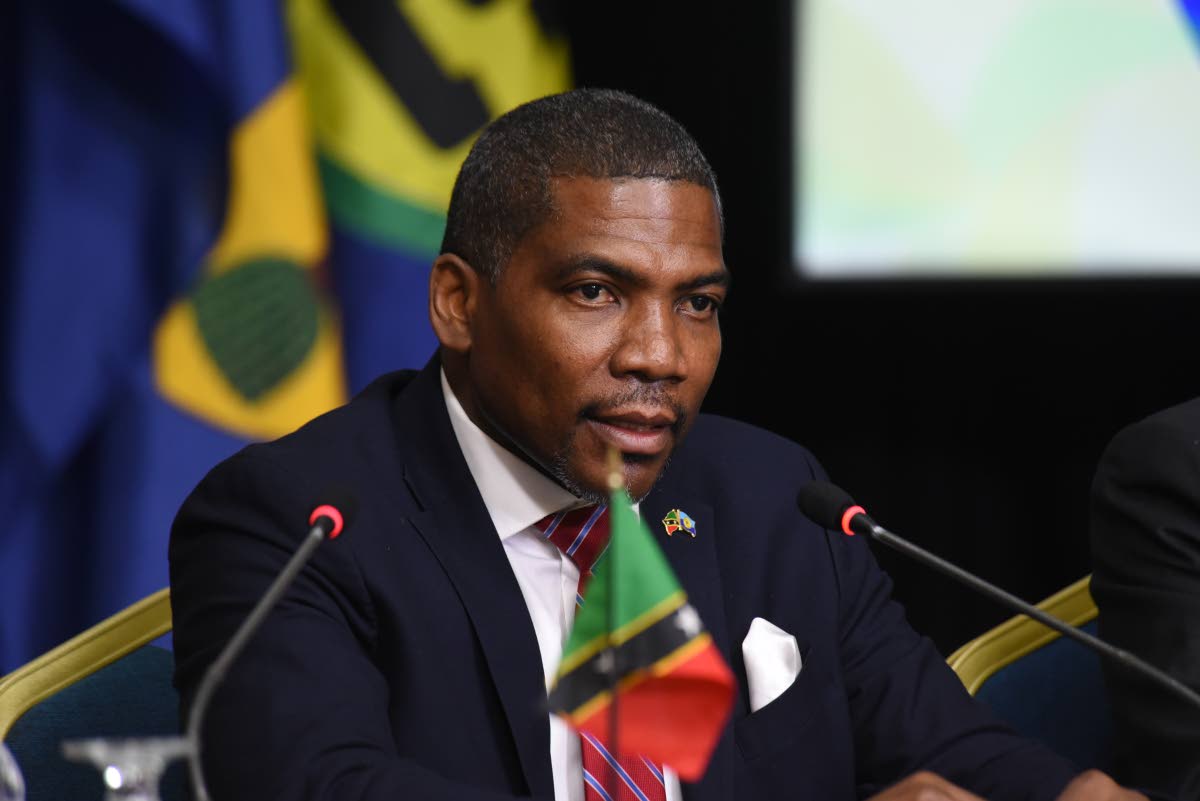 Prime Minister Dr. Terrance Drew, CARICOM chair.
-
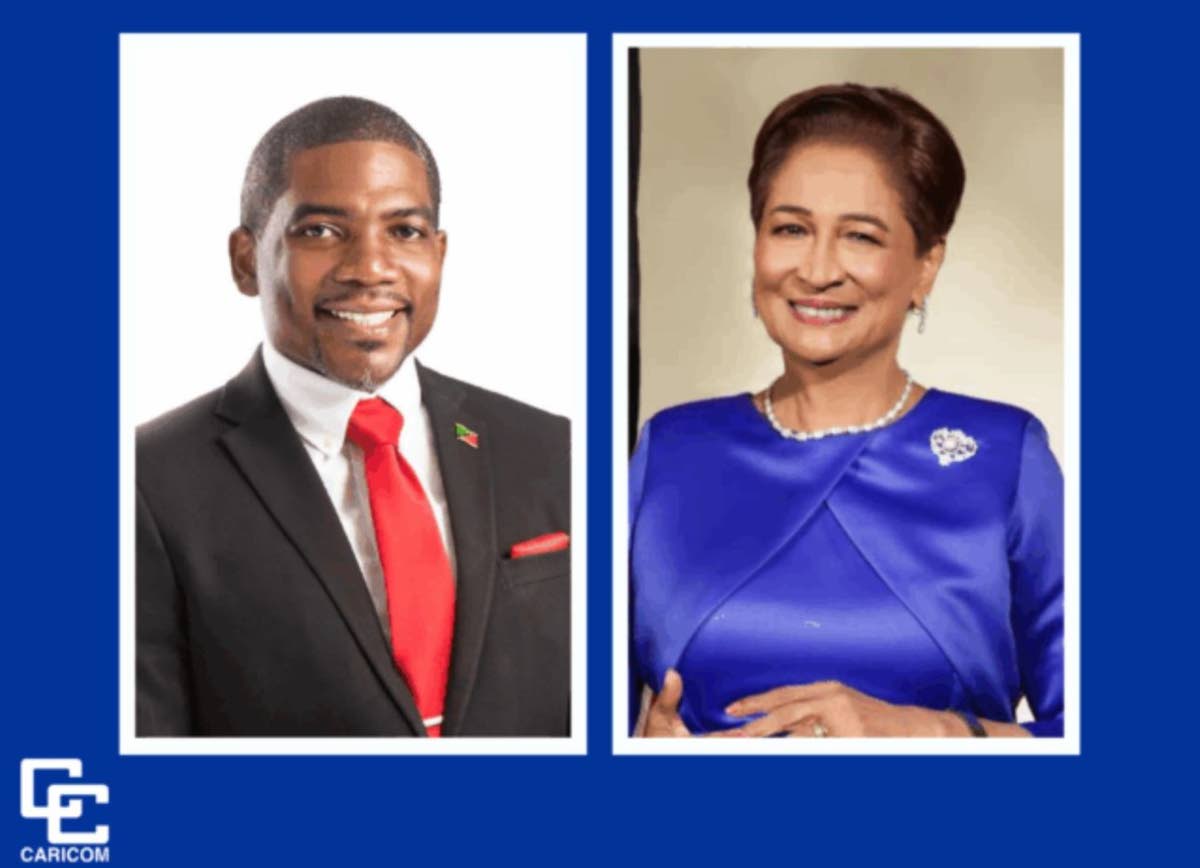 Terrance Drew, prime minister of St Kitts and Nevis and current chair of CARICOM; and Kamla Persad-Bissessar, prime minister of Trinidad and Tobago.
-
 Kamla Persad Bissessar, prime minister of Trinidad and Tobago.
WESTERN BUREAU
A diplomatic dispute within the Caribbean Community (CARICOM) has intensified after Trinidad and Tobago (T&T) stayed away from an emergency meeting convened to address concerns it raised about the reappointment of the regional bloc’s secretary general.
Dr Terrance Drew, chairman of CARICOM and prime minister of St Kitts and Nevis, confirmed that neither T&T Prime Minister Kamla Persad-Bissessar nor any representative of the twin-island republic attended the 25th Special Emergency Meeting of the Conference of Heads of Government on Saturday.
“The Heads of Government of the Caribbean Community met on April 10, 2026 to discuss the issues in relation to governance of the Community that have been raised by Trinidad and Tobago, especially including the reappointment of the secretary general of the Community,” Drew said in a statement issued after the meeting.
He added that “neither the prime minister of Trinidad and Tobago nor any representative from Trinidad and Tobago attended the meeting”.
The talks were convened following complaints from Trinidad and Tobago about the process used to extend the tenure of CARICOM Secretary General Dr Carla Barnett.
According to documents circulated with the chairman’s statement, the decision to renew Barnett’s term was taken during the retreat of heads of government at the CARICOM Summit held in St Kitts and Nevis from February 24 to 27.
The documents state that “all member states were duly informed of the official events, the draft agenda of the conference and the programme of work indicating which agenda items were to be taken in plenary sessions, in caucus and in retreat of heads only”.
CARICOM also disclosed that Persad-Bissessar departed St Kitts and Nevis on the evening of February 25, before the retreat scheduled for February 26.
The statement indicated that T&T’s Foreign Minister Sean Sobers contacted the secretary general, via WhatsApp, to ask whether he should attend the retreat in the absence of his prime minister and was advised that he could do so.
However, Sobers later indicated he might not attend because of seasickness associated with the boat trip to the retreat venue.
CARICOM said the minister did not later confirm his attendance.
“The minister did not subsequently indicate to the chairman or the secretary general that he would be willing and able to attend the retreat,” the document stated.
During the retreat, heads of government discussed financing and governance of the Community and agreed to extend Barnett’s tenure under Article 24 of the Revised Treaty of Chaguaramas.
Regional leaders also agreed to delay the public announcement of the decision so that those not present could first be informed as a matter of courtesy.
“A decision was also taken to delay the announcement so as to inform, as a matter of courtesy, the heads who were not at the retreat, before the official announcement was made,” the statement said.
However, CARICOM said attempts to reach Persad-Bissessar were unsuccessful.
“Attempts were made to reach the heads who were absent to inform of the decision, but it was not possible to make contact with the prime minister of Trinidad and Tobago by email or telephone call,” the document stated.
Article 24 of the Revised Treaty of Chaguaramas states: “This Treaty shall enter into force on the 1st August 1973; if instruments of ratification have been previously deposited in accordance with Article 23 of this treaty by the States mentioned in Article 2 paragraph l (a) (iii), (vii), (viii) and (xiii), and if not, then on such later date on which the fourth such instrument has been so deposited.”
In practical terms, Article 24 establishes the legal foundation for how and when the CARICOM treaty becomes binding on member states. It means the treaty does not operate on political agreement alone, but on formal legal ratification by member governments.
The clause also underscores a broader principle that runs through CARICOM governance: decisions and institutional arrangements derive their authority from the treaty once the required threshold of ratification is met.
In the current dispute over the reappointment of the CARICOM secretary general, the reference to Article 24 is being used by regional leaders to argue that the decision was made within the legal framework of the Treaty of Chaguaramas, and therefore carries binding authority once agreed to by heads of government acting under that framework.
Put simply, CARICOM’s position is that once the heads of government reach a decision under treaty procedures, it is legally valid within the organisation’s governance structure — even if a member state disputes the process politically afterwards.
This interpretation is central to the argument by CARICOM leadership that the reappointment process was conducted in accordance with established rules of the integration system, rather than outside of them.
Drew signalled concern that the dispute could undermine regional unity if disagreements are played out publicly.
“It is hoped that as the Community moves forward, it will be possible to revert to the use of internal mechanisms for addressing the challenges that arise from time to time,” he said.
He cautioned that “unfortunate and erroneous statements” risk diminishing progress towards deeper regional integration.
albert.ferguson@gleanerjm.com