Holness urges youth to match innovation with responsibility
Loading article...
-
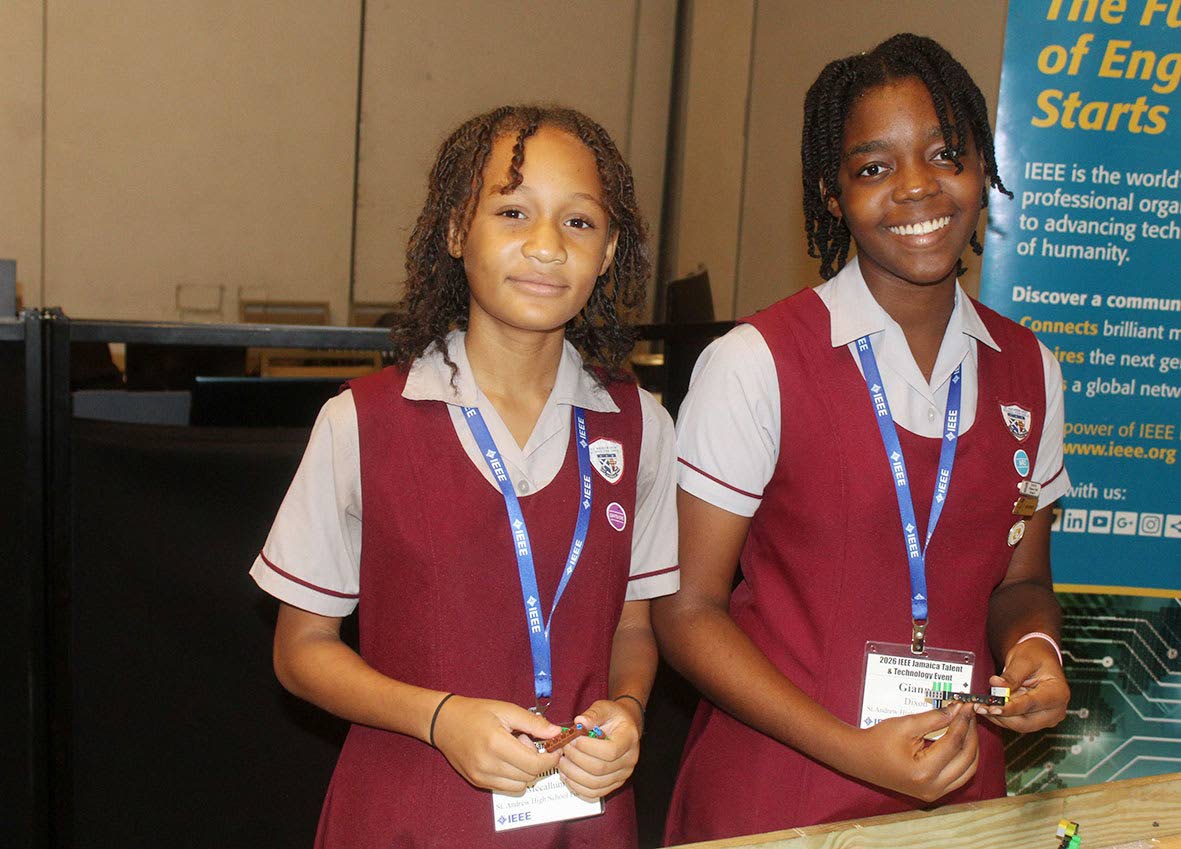 St Andrew High School for Girls students Gianna Dixon (left) and Lilith McCallum hold Lego pieces they are assembling as part of a larger project. Photo - Photos by Paul H. Williams
-
St Andrew High School for Girls students Gianna Dixon (left) and Lilith McCallum hold Lego pieces they are assembling as part of a larger project. Photo - Photos by Paul H. Williams
-
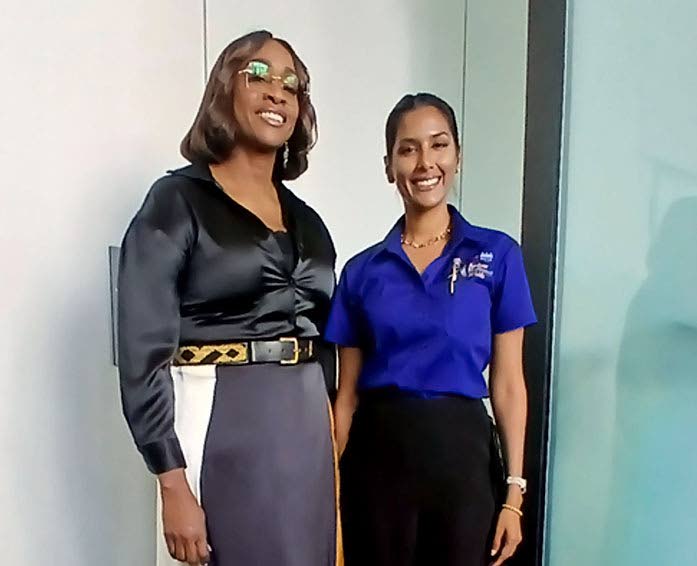 Speaker of the House of Representatives Juliet Holness (left) poses with Emma Subratie, a student at the National AI Lab at the University of Technology, Jamaica.
-
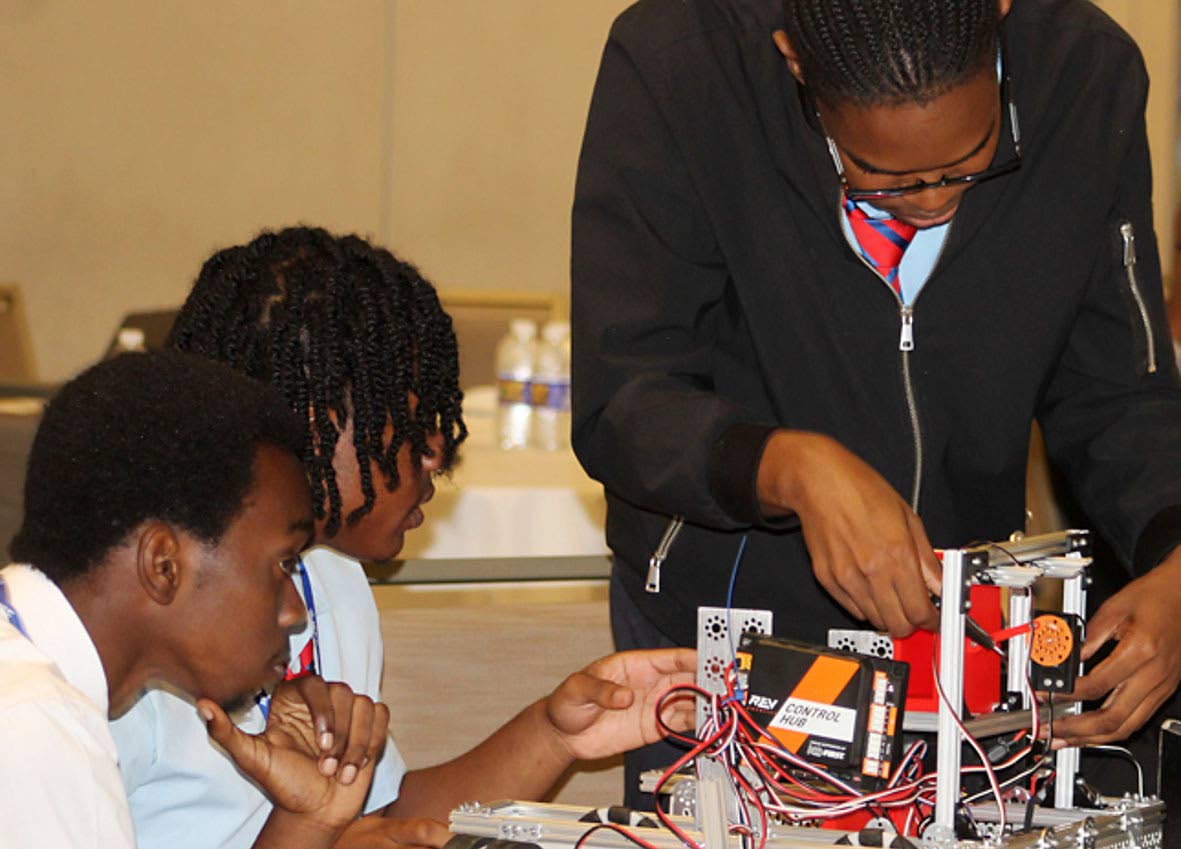 A student from Wolmer’s Boys’ School looks on as students from Knox College work on a robot.
As artificial intelligence becomes more embedded in daily life, safeguards must ensure that people remain accountable for decisions made with technology, Speaker of the House of Representatives Juliet Holness has said.
Addressing students and young professionals at the recent Institute of Electrical and Electronics Engineers (IEEE) Jamaica Talent & Technology Event at the AC Hotel Kingston, Holness argued that technological progress must be matched by responsibility, fairness and public trust.
“Before a system is used to support a decision affecting someone’s livelihood or access to a service, we should be able to ask how its performance has been assessed and who remains accountable. A person affected by a mistake should have a clear way to seek a review.
“The same care should guide the wider use of technology. A digital service must take account of people with disabilities, people with limited connectivity, and people who need help using it. Its success should be judged partly by whether those citizens can actually obtain the service they need. Public trust grows when systems works reliably, when their purpose is clear, and when someone takes responsibility for correcting problems.”
Holness, who is also member of parliament for East Rural St Andrew, was the keynote speaker on the event’s opening day. Her message to students from across Jamaica was that background should not limit ambition or achievement.
“Your starting point does not have to determine the limits of your contribution. Jamaica needs your questions, your discipline, and your imagination. It also needs us, as leaders, educators, and employers, to give a fair opportunity to develop them.”
She also used the opportunity to encourage more young women to pursue careers in engineering and technology.
“As a woman in leadership, I also want to speak directly to the young women considering engineering and technology. Your ability belongs in this field. Your question deserves to be heard. You should be able to enter a laboratory, a project team or a leadership meeting expecting to be judged fairly on the quality of your work.”
Beyond technological innovation, Holness stressed the importance of collaboration in turning ideas into practical solutions. Engineers, she said, perform work that matters even when it goes unnoticed, while partnerships can help promising innovations move beyond the demonstration stage.
For instance, universities can contribute research expertise and provide environments for testing ideas, businesses can identify operational needs and connect innovations with customers, and public institutions can explain the realities of service delivery. Experienced engineers, meanwhile, can help ensure projects meet the standards required for safe and reliable use.
“I hope our international partners will build continuing relationships with Jamaica’s institutions and young professionals. Joint projects, exchanges and mentoring can help knowledge to take root here. There is so much we can learn from across the Caribbean. We can share lessons from projects, connect researchers facing similar problems, and create opportunities for our young engineers to work together,” Holness said.
Mentorship was another recurring theme. Holness argued that young people need practical opportunities, access to equipment, meaningful placements and mentors willing to take their ideas seriously. Equally important, she said, is the freedom to make mistakes and learn from them in supportive environments.
“Institutions and leaders have a responsibility to create that environment. Recruitment should give capable applicants fair chance. Mentorship should be accessible. Workplace culture should allow people to contribute without unnecessary barriers,” said Holness.
“I ask the experienced professionals here to remember the moment when someone first trusted you with responsibility. Consider offering that moment to someone else. Useful mentorship should have a next step. Arrange a follow-up meeting. Review a student’s project. Help a young professional understand the standards expected in the workplace.”
The event was hosted by the IEEE Jamaica Section, a member of IEEE Region 3, which covers the southeastern United States and Jamaica. Organisers said the event was designed to foster innovation, inspire future engineers and strengthen Jamaica’s technology ecosystem by bringing together students, young professionals and emerging engineers.
Over two days, participants explored emerging technologies, career opportunities in engineering, and issues ranging from digital transformation and entrepreneurship to resilience, education and industry modernisation.
editorial@gleanerjm.com