AI stocks halt their brutal, worldwide sell-off as Wall Street trims its loss for the week
Loading article...
-
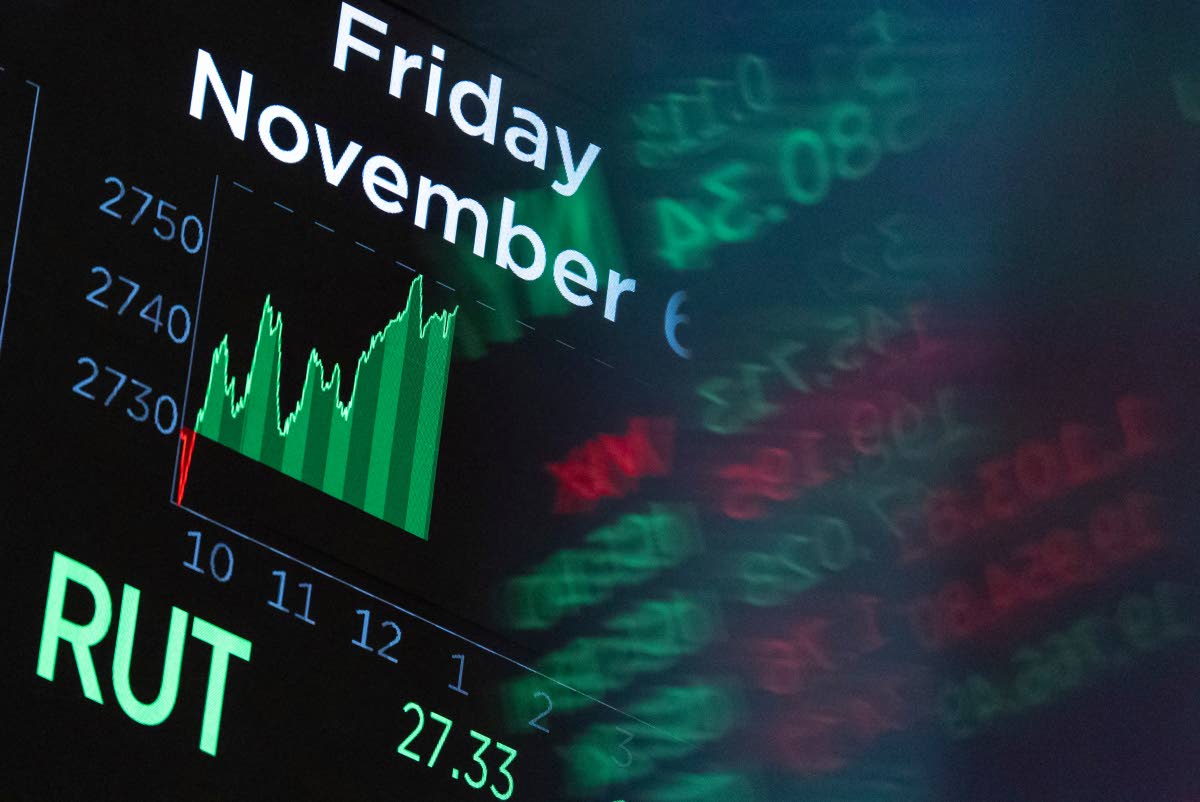 Market information is displayed on screens on the floor of the New York Stock Exchange, Friday, November 6, 2026, in New York. Photo - AP Yuki Iwamura
-
Market information is displayed on screens on the floor of the New York Stock Exchange, Friday, November 6, 2026, in New York. Photo - AP Yuki Iwamura
-
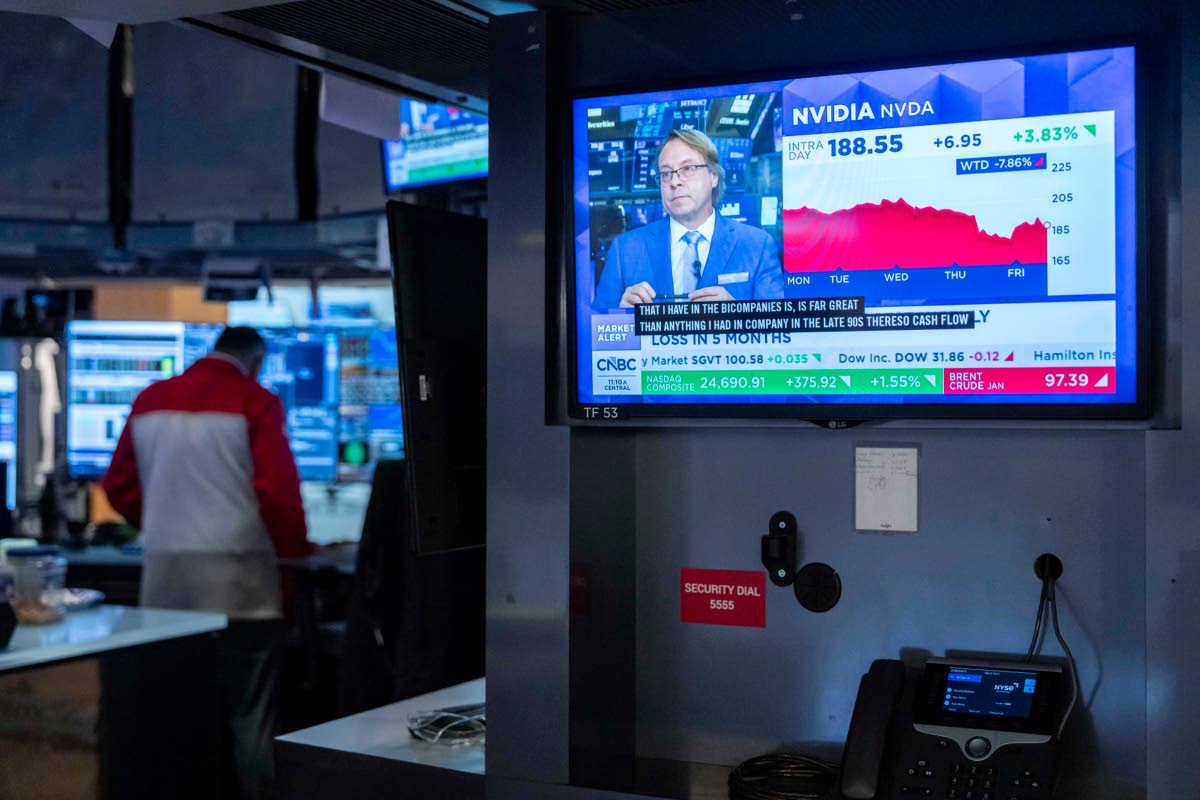 A screen on the floor of the New York Stock Exchange displays news about the Nvidia stock price, Friday, November 6, 2026, in New York. Photo - AP Yuki Iwamura
-
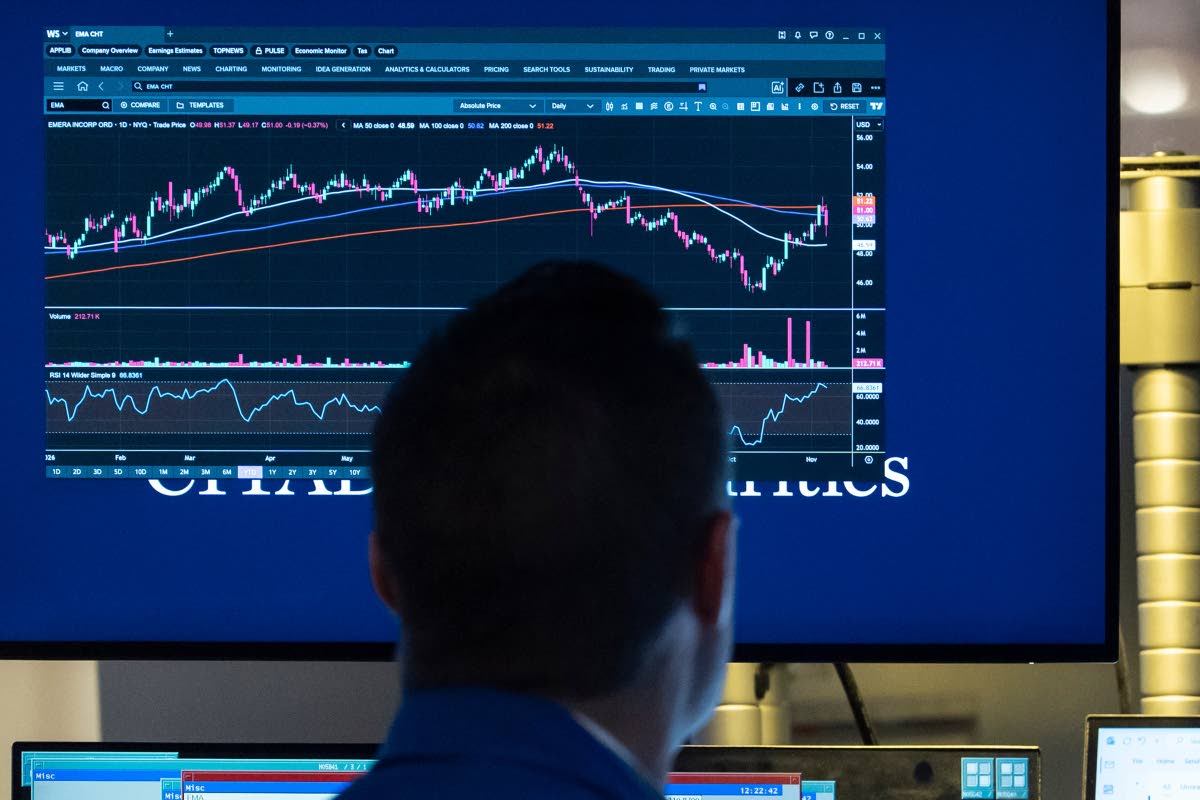 A trader works on the floor of the New York Stock Exchange, Friday, November 6, 2026, in New York. (AP Photo/Yuki Iwamura). Photo - AP Yuki Iwamura
AI stocks are bouncing back Friday and recovering some of their sell-off from the last two days. The rest of the US stock market is mixed following a whirlwind few days of Wall Street trying to sort out what this week’s sweeping victories by Democrats in the US midterm elections will mean for the economy.
The S&P 500 rose 0.7 per cent and trimmed its loss for the week to 2.3 per cent. The Dow Jones Industrial Average was down 84 points, or 0.2 per cent, with an hour remaining in trading, and the Nasdaq composite was 1.4 per cent higher.
The relative steadiness for Wall Street halted what had been a worldwide tumble for stocks. Indexes dropped 6 per cent in Tokyo and 6 per cent in Seoul following the US market’s plunge on Thursday, which was its worst since President Donald Trump shook markets in April 2025 with his ‘Liberation Day’ tariffs. European indexes have fewer stocks tied to the artificial-intelligence industry, but Germany’s DAX nevertheless lost 1.9 per cent.
Friday’s biggest lift for the S&P 500 came from Nvidia, the chip company that’s become the face of the boom and possible bust of the AI frenzy. Its stock climbed 3.6 per cent, coming off drops of 9.3 per cent and 3.2 per cent.
It and other companies tied to the build-out of AI data centres tumbled this week on worries that Democratic victories in statehouses across the country could mean a slowdown in further construction, particularly in Texas. Voters across political parties say they’re wary about AI and don’t like increases to power bills caused by data centres.
That built on top of worries already rattling the industry that further construction of AI data centres may slow because of how expensive it’s become to borrow money. Before that, even, critics were saying AI stock prices had shot too high and were in a bubble.
But political power in Washington will still be split between a Democratic Congress and a White House run by the Republican Trump, who retains the power to veto. That could limit federal efforts to rein in the AI industry.
In the meantime, companies in the industry still see strong growth.
IREN, a company that delivers data centres, compute and software for AI training, reported stronger results for the latest quarter than analysts expected. Its stock jumped 19.4 per cent, and it also announced two new contracts signed since the end of the quarter.
“We own the land, the power and the data centres under all of it, which gives us more ways to fund growth and lets us set its pace,” co-CEO Daniel Roberts said.
Lam Research, a company whose equipment and services help make semiconductors, climbed 8.5 per cent after announcing a programme to send up to US$25 billion to its investors by buying back shares of its own stock.
That helped other stocks that have benefited from the build-out of AI data centres recover some of their own sharp losses. CoreWeave, which rents out access to AI chips to customers over the cloud, rose 5.8 per cent. Micron Technology, which sells memory for computers, climbed 5.6 per cent.
Outside of AI, the US stock market was mixed, and more stocks fell within the S&P 500 than rose.
Axon Enterprise tumbled 17.1 per cent after the seller of Tasers reported weaker results for the latest quarter than analysts expected. It also announced a US$1.2 billion investment in Skydio, a drone technology company.
Charter Communications sank 5.7 per cent after the internet and video provider reported a loss for the latest quarter, when analysts were expecting a profit.
Despite all its vicious swings this week, the S&P 500 remains only 5.3 per cent below its all-time high, which was set last month.
In the bond market, Treasury yields steadied following sharp drops earlier in the week triggered by tumbling stock prices and hopes that split control of Washington could limit how much more the US government adds to its debt.
The yield on the 10-year Treasury edged up to 4.85 per cent from 4.84 per cent late Thursday. It had topped 5.30 per cent last month when worries about inflation, higher interest rates and rising government debt were spiking.
Helping to support yields was a report showing US employers hired many more workers last month than economists expected. It’s the latest signal that the US economy continues to chug along despite high inflation.
On one hand, the encouraging data could mean the US economy may be able to absorb a slowdown in construction of AI data centres. But, at the same time, the strong growth in jobs could push upward on inflation. Following the report, traders saw a greater probability of the Federal Reserve hiking its short-term interest rate at its next meeting in December, according to data from CME Group.
Rate hikes by the Fed can rein in inflation, but they do so by making borrowing money more expensive for everyone and slowing the overall economy.
A separate report, meanwhile, suggested that sentiment among US consumers unexpectedly improved. The preliminary report from the University of Michigan said sentiment rose for lower- and middle-wealth Americans but fell for those with the largest stock portfolios.
Perhaps more importantly for the bond market, the survey also suggested expectations for inflation in the coming year eased for Americans. That could prevent a vicious cycle where expectations for high inflation drive behaviour that only worsens inflation.
AP Business Writer Yuri Kageyama contributed to this report.