Commentary
May 03 2026
S. Jaishankar | The deep-rooted and ever evolving India-Jamaica partnership
Updated
May 3 2026
4
min read
Loading article...
-
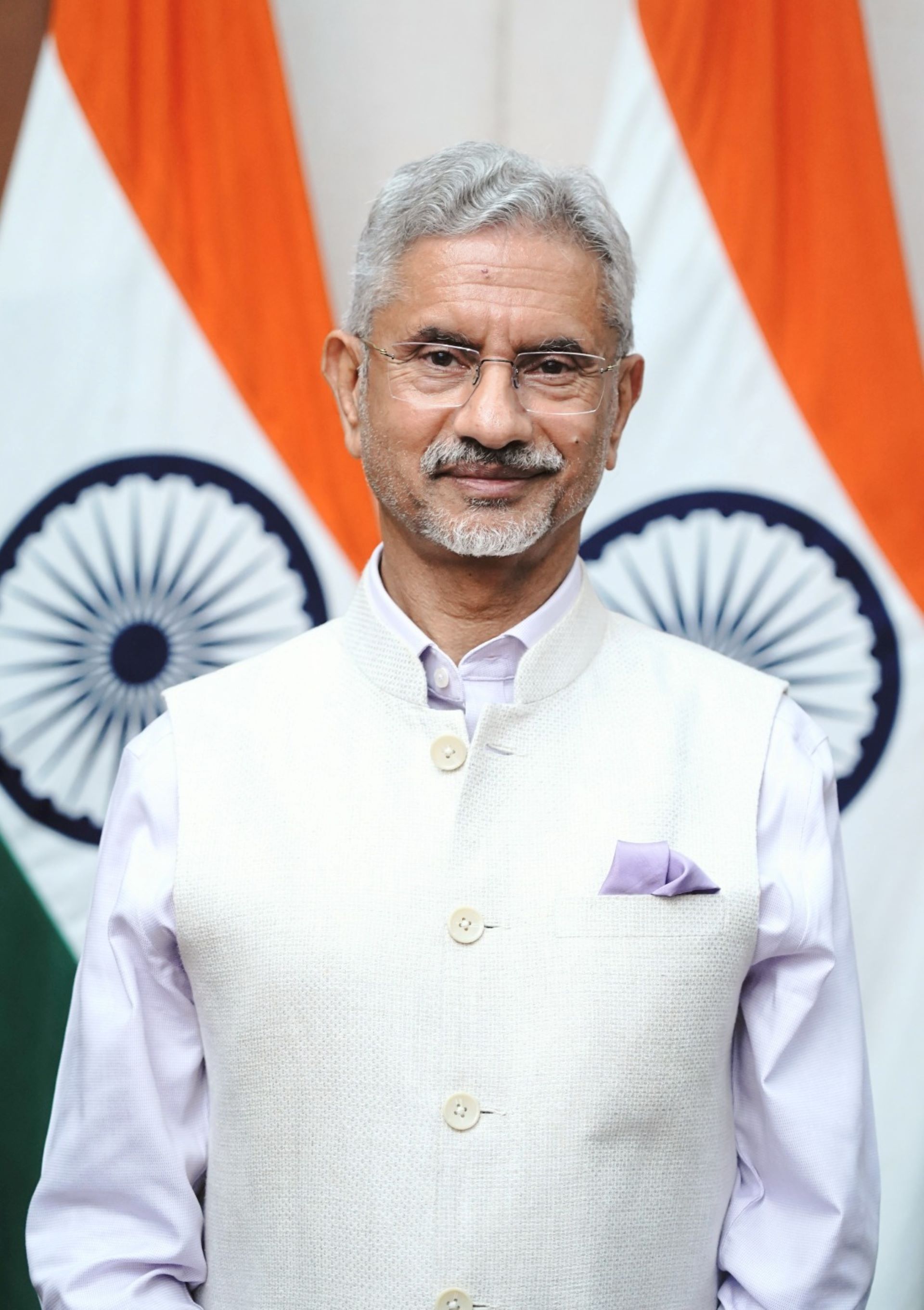
Dr. S. Jaishankar
-
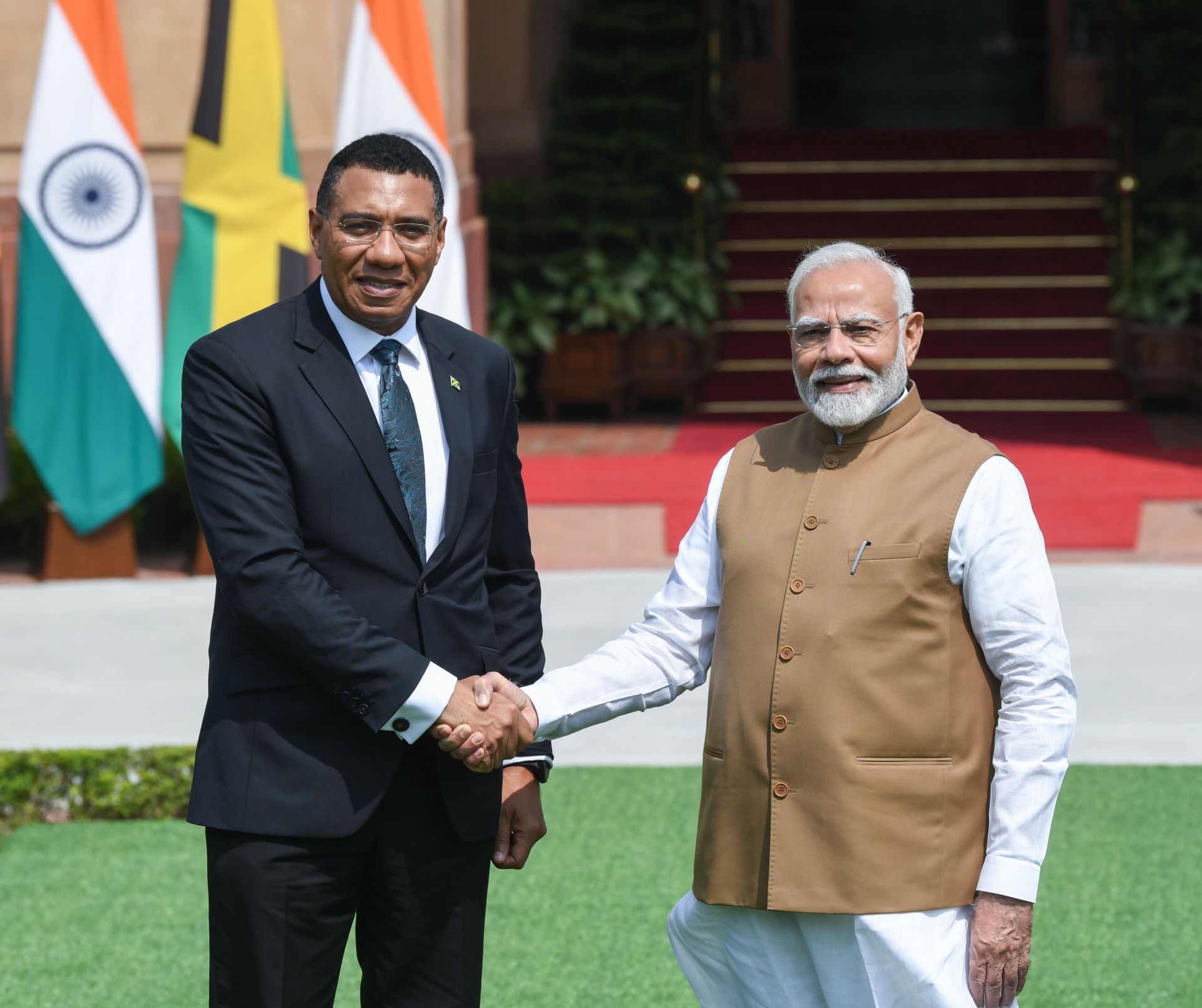
Prime Minister Narendra Modi (right) with Andrew Holness, prime minister of Jamaica, at Hyderabad House in New Delhi in October 2024. (ANI Photo)
For many Indians, the mention of Jamaica will immediately elicit thoughts of the cricket of Michael Holding and Chris Gayle, the music of Bob Marley and Jimmy Cliff, the athletics of Usain Bolt and Elaine Thompson-Herah, and the writings of cultural icon Miss Lou.
These associations, however, reflect a deeper bonding between our two nations that include membership of the Global South and the Commonwealth. India and Jamaica are both pluralistic societies, political democracies and market economies. What gives our ties a special flavour is, of course, the Indian diaspora that has been a link now for 180 years.
Let us begin by recognizing the defining convergence. In an era characterized by global uncertainty and economic turbulence, India has demonstrated that democratic governance and economic progress can truly reinforce each other. As one of the fastest-growing major economies in recent years, India continues to expand opportunities for its people while remaining anchored in pluralism and the rule of law. Jamaica, too, stands as a robust democracy in the Caribbean, marked by political and economic stability and a commitment to ‘Out of Many, One People’. The shared experiences of colonialism are also a binding factor; those who lost their freedoms safeguard it most fiercely.
The story of India’s engagement with Jamaica begins with the journey of Indian indentured workers to this land in the 19th and early 20thcenturies. The arrival of the first Indians aboard the ‘Blundell Hunter’ in 1845, landing at Old Harbour Bay, marked the beginning of a journey that would see over 36,000 Indians make Jamaica their home. These men and women crossed oceans under the most difficult circumstances, yet carried with them enduring values, traditions, and a spirit of enterprise. Today, a community of approximately 70,000 people of Indian origin stands as a living bridge between our two countries.
DYNAMIC FORCE
Far from being a rooted in history, the Indian-Jamaican community is an active and dynamic force that anchors and advances our relationship. When our countries established diplomatic relations in 1962, we formalised what our people had already created. Their contribution continues to shape Jamaica’s social and economic life, connecting our societies in a manner that diplomacy alone cannot. It is for this reason that I will make it a point to visit the Old Harbour Bay, and to engage with the members of Indian diaspora. Indian influences, too, are woven into Jamaican life, ranging from curry and roti to the celebration of festivals such as Diwali, Phagwa and Hosay. These traditions have blended seamlessly into Jamaican society, reflecting a shared celebration of diversity and co-existence.
High-level exchanges, including the recent visits of President Ram Nath Kovind to Jamaica in 2022 and Prime Minister Andrew Holness to India in 2024, have added renewed momentum to our engagement. Our development partnership reflects a shared understanding that cooperation must be practical, responsive, and rooted in mutual benefit. India has been a dependable partner, whether in supporting healthcare during the pandemic, responding to natural disasters, or contributing to the capacity building of its people. The emotional depth of this cooperation was brought home to me when Foreign Minister Kamina Johnson Smith, speaking about our Covid vaccine supply, declared during the UN General Assembly that she carried a little bit of India inside her!
INITIATIVES
Jamaica’s engagement with India-led initiatives such as the Coalition for Disaster Resilient Infrastructure and the International Solar Alliance is another important dimension of our collaboration. When Hurricane Melissa hit Jamaica last year, India immediately dispatched HADR relief materials including the BHISM compact trauma treatment cubes, hygiene kits, food items, kitchen sets, solar lamps, medicines and medical equipment, power generators and shelter support. The support for relief and recovery continues with fishing boats and haemodialysis units being procured for Jamaica. India strongly supports the concerns of Small Island Developing States for climate action and justice, working practically with them to that end.
Economic engagement also offers significant promise. Bilateral trade has crossed US$100 million in recent years. But the potential is far greater. India’s strengths in pharmaceuticals, apparel, engineering goods, automobile parts, and digital technologies complement Jamaica’s aspirations to emerge as a logistics and connectivity hub in the Caribbean. Some Indian companies have already taken initial steps in that direction, starting with pharmaceuticals. They are already contributing to Jamaica’s IT and services sector as well. On its part, Jamaica too should realise that there is a significant market for its niche products waiting in India.
As Global South partners, we are committed to sharing best practices and experiences. We have just delivered a project on improving rural livelihoods through resilient agri-food systems in Kitson Town. Another example is our gift of a digital score board for Sabina Park, encouraging me to visit a venue that I remember from the cricket commentaries of my youth.
As we look ahead, the opportunities before us are manifold. India’s massive transformation in the past decade through strong and inclusive growth has expanded the canvas of cooperation. In fact, many experiences from India’s development journey could be relevant for Jamaica too. Some such sectors could be digital public infrastructure, renewable energy, agri-tech and healthcare. There is also a strong case to deepen academic ties through student exchanges, better utilising the ITEC and ICCR scholarships offered by India, and strengthening people-to-people linkages through tourism and sports.
The India-Jamaica relationship is, ultimately, a story of continuity and change, anchored in a shared past, energised by present cooperation, and oriented towards a future of greater possibilities. India and Jamaica must continue to work together to build a deeper and more resilient partnership that works for both our people and contributes to a more just world.
Dr. S. Jaishankar, is the external affairs minister of India. Send feedback to columns@gleanerjm.com