Dennis Blake | Loose wires, unsafe roads, and growing threat to public safety
Loading article...
-

Dennis Blake
-
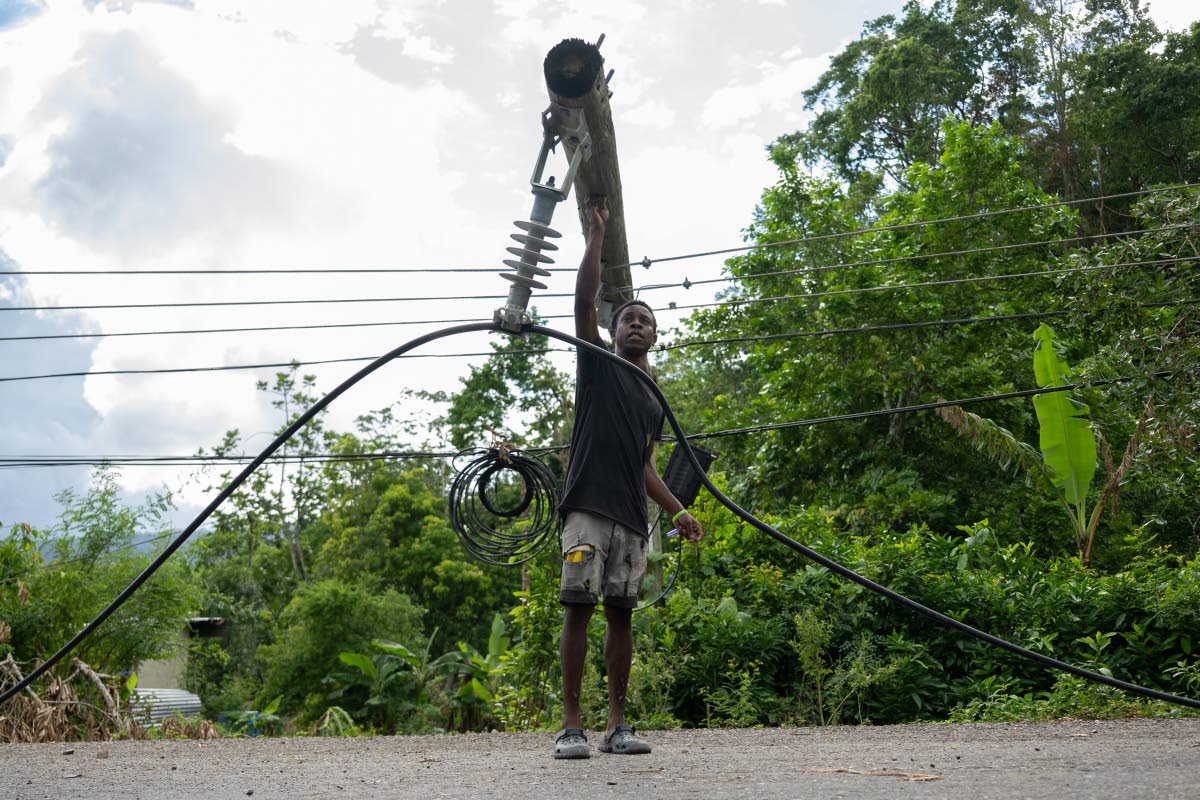
Increasingly, people face serious threats simply walking through their communities, crossing streets, or commuting to work. Loose wires hanging dangerously over roads, broken or non-existent sidewalks, reckless driving, and widespread disregard for pedestrian safety have created a growing public safety crisis that deserves urgent national attention.
People are forced to navigate unsafe public spaces every day. During storms and heavy rains, these hazards become even more dangerous, exposing citizens to risks of electrocution, fires, and serious accidents.
Yet despite years of complaints and visible dangers, the issue continues to be treated as normal.
The sight of loose wires hanging from utility poles has become so common that many people barely notice them anymore. But normalization does not reduce the danger. It only reflects how accustomed society has become to neglect.
These wires pose major risks to motorists, motorcyclists, schoolchildren, and elderly citizens. In some communities, trucks and public transportation vehicles must manoeuver carefully to avoid low-hanging cables. In other areas, pedestrians are forced to walk beneath exposed wires with no assurance of safety. One severe storm or one fallen pole could easily turn a neglected situation into a national tragedy.
At the same time, the road safety culture continues to deteriorate. Pedestrian crossings are routinely ignored by motorists. Drivers speed through communities with little regard for people attempting to cross roads, even in clearly marked areas.
The lack of patience and discipline on Jamaican roads has become alarming.
For many pedestrians, crossing the street now feels like taking a dangerous gamble.
Far too often, drivers fail to stop at crossings, aggressively overtake vehicles that slow down for pedestrians, or become distracted by mobile phones while driving.
The increasing use of phones behind the wheel is creating another layer of danger on roads already plagued by poor infrastructure and weak enforcement.
One of the most troubling sights across the island is seeing drivers texting, scrolling social media, or holding lengthy conversations while operating vehicles in busy traffic. Some drivers are so distracted that they fail to notice pedestrians until the last moment. Others continue speeding through residential communities without concern for children, elderly citizens, or persons walking along the roadside.
Unfortunately, distracted driving is not the only issue. Pedestrians themselves are increasingly distracted by headphones and mobile devices while navigating dangerous roads with limited protection. The combination of reckless driving and distracted walking creates a deadly environment where accidents become almost inevitable.
Adding to the problem is the sidewalk crisis.
Many communities across the island still lack proper sidewalks altogether. In urban centres and rural districts alike, citizens are forced to walk dangerously close to speeding vehicles because there is simply nowhere else to go. School children in uniform, mothers pushing strollers, workers commuting home, and elderly citizens carrying groceries are regularly seen walking on roadways while vehicles race past them.
In some areas, whatever sidewalks once existed are now obstructed by vendors, illegally parked vehicles, overgrown bushes, open drains, or damaged surfaces. In other communities, sidewalks were never built in the first place. This leaves pedestrians exposed and vulnerable every single day.
The reality is that the infrastructure often prioritises vehicles over people.
Public safety cannot continue to be treated as an afterthought. Roads are not only for motorists. Citizens should be able to walk safely within their communities without fear of being struck by a vehicle, tripping into a gully, or coming into contact with dangerous wires overhead.
Equally concerning is the apparent lack of accountability among the agencies and institutions responsible for maintaining public infrastructure. Citizens repeatedly report hazardous wires, damaged poles, broken sidewalks, and dangerous roads, yet responses are often slow or non-existent. Too frequently, action is only taken after injuries occur or lives are lost.
This reactive approach to public safety is unacceptable.
The country does not lack laws or responsible agencies. What Jamaica lacks is consistent enforcement, coordination, urgency, and political will. Utility companies, municipal corporations, road authorities, and law enforcement agencies must work together to address these dangers before more lives are affected.
There must also be stronger enforcement of road safety laws. Drivers who ignore pedestrian crossings, speed recklessly, or use phones while driving should face harsher penalties. Public education campaigns are also needed to promote greater road courtesy, awareness, and responsibility among both motorists and pedestrians.
Beyond enforcement, investment in infrastructure is critical. Sidewalks must be expanded and repaired. Hazardous wires must be removed immediately. Pedestrian crossings should be properly marked and illuminated. Communities should not have to wait until a tragedy occurs before action is taken.
Most importantly, Jamaica must stop normalising dangerous conditions that would never be accepted elsewhere. Loose wires hanging over public spaces should not be considered ordinary. Children walking in roadways because sidewalks do not exist should not be accepted. Elderly citizens risking their lives to cross streets should not be ignored.
A nation’s development is not measured only by tourism figures, construction projects, or economic statistics. It is also measured by how safely and respectfully ordinary citizens are able to live their daily lives.
People deserve better. They deserve roads that are safe, communities that are properly maintained, and leaders who treat public safety as a priority rather than a reaction after disaster strikes. Until then, the dangers hanging over the country — both literally and figuratively — will continue to threaten lives across the island.
Dennis Blake OLY is a leadership development coach and co-founder of The Mentoring Thru Sports Professionals Organization; a two-time Olympian, bronze medallist, Athletics Hall of Fame inductee, and author. Send feedback to columns@gleanerjm.com.