Tischina Smith | Living well together
Loading article...
-
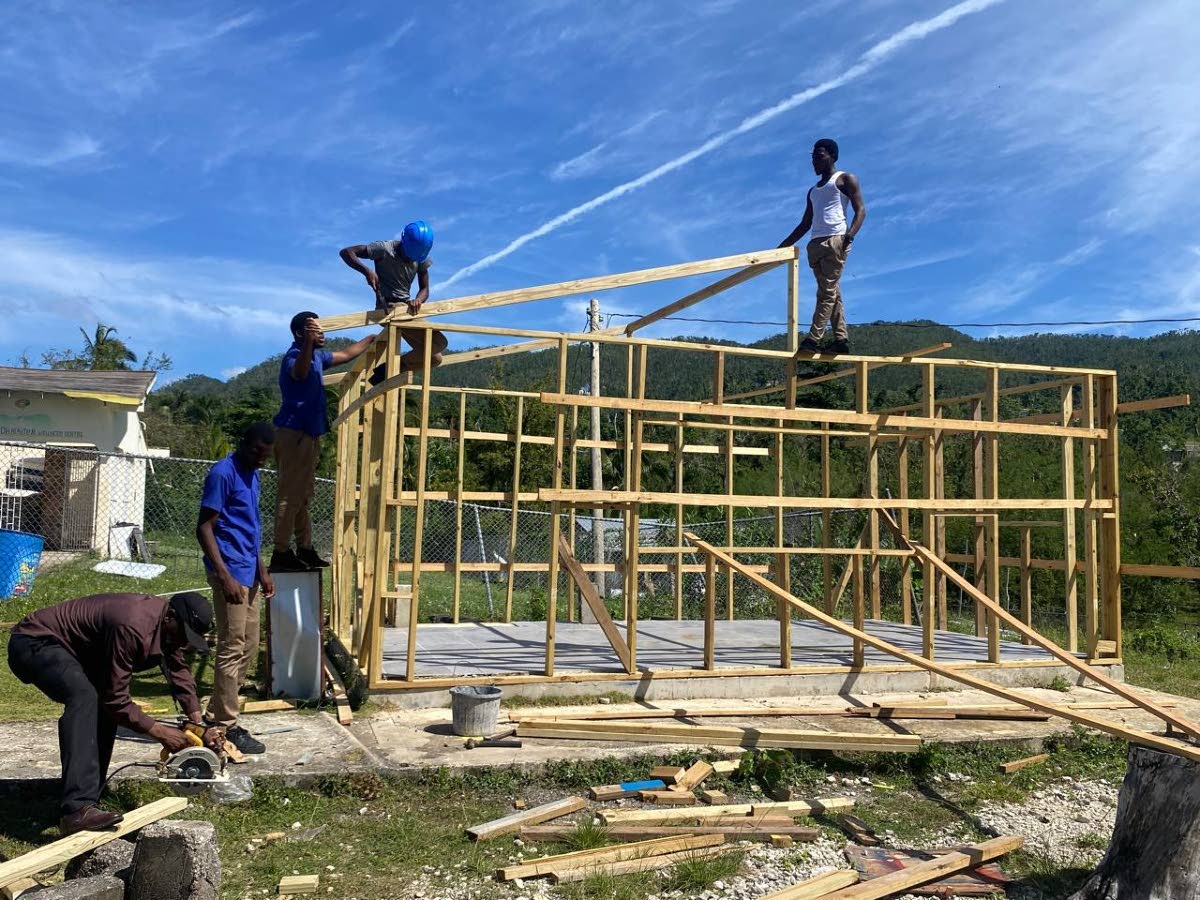 Students and staff at Aberdeen High School in Aberdeen, St Elizabeth, advance reconstruction of the institution’s tuck shop, which was decimated by Hurricane Melissa. Contributed
-
Students and staff at Aberdeen High School in Aberdeen, St Elizabeth, advance reconstruction of the institution’s tuck shop, which was decimated by Hurricane Melissa. Contributed
-
 Tischina Smith Contributed
“Living Well Together” is an apt theme chosen by the Ministry of Education for Back-to-School 2026. A school is a community of stakeholders operating in a physical environment designed to facilitate learning and security, especially for students of different ages and levels of physical development, and to encourage appropriate social interactions.
The school community includes the Ministry of Education, principals and vice-principals, administrators, teachers, parents and guardians, guidance counsellors, students, ancillary staff, members of school boards, and, in some cases, vendors. The school community also includes taxi and bus drivers, the police, and traffic wardens. The theme requires that all these stakeholders live well together.
Will the school infrastructure and socialisation allow schools to achieve this theme? More crucially, will conditions in Western Jamaica in this post-Hurricanes Beryl and Melissa era facilitate this worthy objective?
On August 31, with official Back-to-School Day set for September 7, the Parliamentary Secretary in the Ministry of Education, Senator Marlon Morgan, is reported to have said, “Only about 50 of the more than 300 schools that were severely damaged by Hurricane Melissa last October have completed repairs …”. This suggests that children in eight out of every 10 schools that were severely damaged will be returning to a school under repair. Road reconstruction is not much better. These are the infrastructural challenges as school communities in Western Jamaica prepare to welcome new or returning students for a new school year.
These are visible physical challenges. Others are less obvious but perhaps more important. Hurricane Melissa disturbed the lives and mental state of many stakeholders in the school ecosystem. Some have experienced tremendous personal loss and disruption. Some have been displaced. Some have watched homes, schools, roads, and communities suffer unimaginable damage. And some may not yet recognise how deeply the experience has affected them. For some, Melissa’s trauma added to or reinforced unhealed or untreated trauma from Hurricane Beryl and even COVID-19.
TRAUMA
Trauma may appear as anger, silence, poor concentration, aggression, crying, withdrawal, loss of interest, or unusual behaviour. A child may say, “I am fine,” while carrying fear or sadness that they cannot explain.
If the mental health of principals, teachers, parents, and students is not good, they cannot “live well together”. Return to school must include attention to emotional and mental well-being.
Many school communities face a situation like the Israelites at the Red Sea. Behind them is the devastation of Hurricane Melissa; before them, a government saying there is no money and a bureaucracy conducting surveys and assessments with no timeline.
The school communities will have to draw on faith communities and Jamaica’s deep-rooted culture of collaboration and cooperation to move forward.
Difficulties, whether emotional, educational, financial, infrastructural, or technological, do not mean they cannot be overcome.
But Back-to-School 2026 cannot mean “back to normal” in the western parishes. These schools cannot be given the same per-student resources as schools in eastern Jamaica.
Recovery must be responsive and equitable. The Ministry of Education has a major responsibility. Resources must be allocated according to need. Technical expertise, educational technology, infrastructure support, counselling, and specialised intervention must be within easy reach.
The classrooms are filled with children who are different: different personalities, abilities, family circumstances, learning styles, and experiences. After Melissa, they may also have very different levels of trauma.
CAREFUL BEFORE LABELLING
We must be careful before labelling a child as difficult, disrespectful, lazy, or attention-seeking. We should first ask: “What happened to this child?”
Sometimes behaviour is communication. Sometimes disruption is distress. Sometimes anger is fear wearing a different face. Sometimes withdrawal is a child’s way of saying, “I don’t know how to tell you that I am hurting.”
Our principals and teachers will carry a tremendous responsibility.
But they cannot be expected to carry this burden alone. Guidance counsellors must be properly supported. Principals must have access to professionals when serious concerns arise. Parents must be included, and mental-health professionals and other agencies must be involved where necessary.
Parents need to be aware that school is not the only place where healing takes place. It begins at home. They need to talk to their children. Do not only ask how they performed but how they are feeling.
Ask, “How was your day?” but also, “How are you feeling?”, “Is anything worrying you?”, “Do you feel safe?” and “Is there anything you want to talk about?”
And when they answer, listen. Often, children do not need a lecture. They need a safe place to speak.
Students should remember that their classmates may be carrying burdens they know nothing about. Some friendships may have changed. Some students may have moved. Some may be returning to a new class without the friends with whom they bonded during the difficult days after Hurricane Melissa.
You may feel lonely, angry, or anxious. That is why you must look after one another. If your friend is struggling, do not laugh at him, bully him, or tell him to “get over it”. Ask, “Are you okay?” and help him to find someone who can help.
FORGIVENESS
In Matthew 18:21-35, Peter asks Jesus, “Lord, how oft shall my brother sin against me, and I forgive him? Till seven times?”
Jesus answers, “I say not unto thee, Until seven times: but, Until seventy times seven.”
To live well together, all must learn to say, “I am sorry.” We must learn to say, “I forgive you.” We must learn to say, “Let’s talk about it” and, sometimes, “Let’s try again.”
There is a difference between living together and living well together. We can sit in the same classroom without caring about one another. We can work in the same school without respecting one another. But we are called to something greater. We are called to offer compassion, forgiveness, reconciliation, and responsibility.
We are connected. Schools in eastern Jamaica cannot be well resourced and doing well while schools in western Jamaica struggle under trees.
Tischina Smith is an early childhood teacher based in St Elizabeth. Send feedback to columns@gleanerjm.com