Jordiana Denton | ISSA has a duty to get weather safety right
Loading article...
-
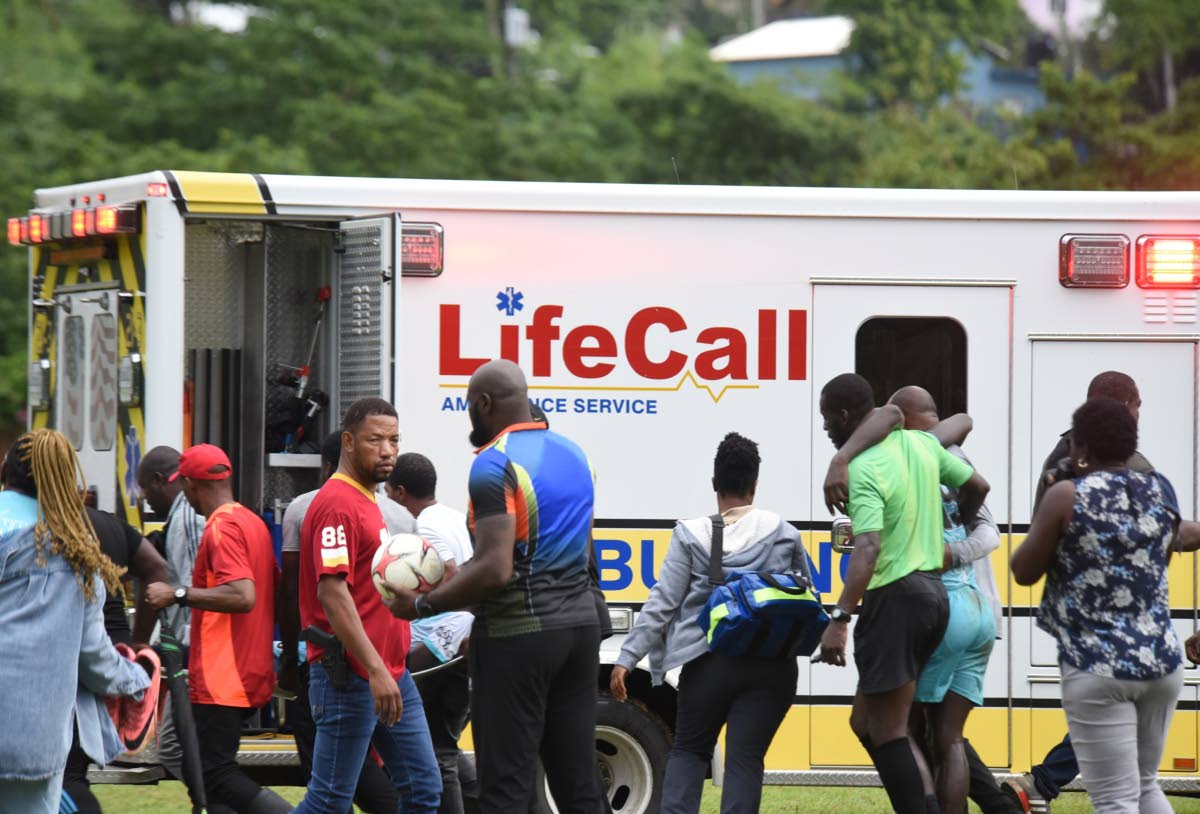 Two Denbigh High School footballers were taken to hospital by ambulance after lightning struck during Tuesday’s ISSA daCosta Cup quarter-final clash against Cornwall College at the Cornwall College playing field in Montego Bay, St James. Photo - Ashley Anguin
-
Two Denbigh High School footballers were taken to hospital by ambulance after lightning struck during Tuesday’s ISSA daCosta Cup quarter-final clash against Cornwall College at the Cornwall College playing field in Montego Bay, St James. Photo - Ashley Anguin
-
 Jordaina Denton. Photo - Contributed
Schoolboy football is a celebrated Jamaican tradition. Each year, students, parents, teachers, alumni and supporters rally behind their schools as young athletes compete in the Manning Cup and daCosta Cup. The excitement, school pride and opportunities for young people are central to Jamaica’s sporting and educational culture.
However, no competition should ever take precedence over the safety and well-being of participating children.
The recent lightning incident during the ISSA daCosta Cup quarter-final between Denbigh High School and Cornwall College, which hospitalised Denbigh footballers Omarion Wright and Lashawn Barnaby, is a sobering reminder of the dangers of outdoor sport during thunderstorms.
Although both students were reportedly discharged, the incident demands scrutiny of whether existing safeguards are robust and consistently implemented.
This incident is in no way an isolated one. In September 2023, lightning struck during an ISSA daCosta Cup match between Charlemont High School and Dinthill Technical, hospitalising several students and an assistant referee. Furthermore, in 2019, lightning also struck during a Manning Cup match between Jamaica College and Wolmer’s Boys’ School, affecting players.
These repeated incidents are deeply concerning as they seemingly signal a worrying pattern in which students’ safety is being compromised to keep sporting competitions on schedule. The safety of student-athletes is non-negotiable, particularly because they are the very lifeblood of these competitions.
ARE EXISTING PROTOCOLS ADEQUATE?
ISSA President Keith Wellington has said protocols require players and officials to leave the field when lightning is observed, with approximately 20 minutes required after a strike before play resumes, provided there are no further strikes.
While we commend these efforts, the adequacy of this waiting period warrants closer examination.
Guidance from the United States National Weather Service and the Centers for Disease Control and Prevention recommends suspending outdoor activities when thunder is heard or lightning is observed. Activities should resume only after at least 30 minutes without either; any subsequent occurrence restarts the waiting period.
It must be noted that lightning can strike miles from a storm, and the absence of rainfall does not inherently mean conditions are safe. Accordingly, waiting for a nearby strike before acting is inadequate risk management and puts our players at unnecessary risk.
Student-athletes deserve more than reactive safety measures; their safety must not be a secondary consideration. It must be paramount.
ISSA must establish and rigorously enforce safety arrangements for its competitions. Its responsibility extends to players, officials, coaches, medical personnel, staff and spectators.
A comprehensive framework should include:
Mandatory weather assessments: Weather forecasts and developing thunderstorms should be monitored before matches, with postponement considered where conditions present unacceptable risks.
Immediate suspension of activities: Matches and training must stop when lightning is observed or thunder is heard, without waiting for a direct strike.
A minimum 30-minute clearance period: Play should not resume until at least 30 minutes have passed following the last observed lightning or heard thunder. Subsequent activity must restart the waiting period.
Safe shelter arrangements: Organisers must identify substantial enclosed buildings or other appropriate shelters. Dugouts, open-sided shelters and temporary structures should not be treated as adequate for lightning protection.
Designated monitoring personnel: A trained individual should monitor weather conditions and have the authority to suspend activities, rather than leaving this responsibility solely to referees or coaches.
Emergency preparedness and accountability: Venues should have appropriate first-aid resources and emergency response arrangements. Serious weather-related incidents should trigger reviews of decision-making, evacuation procedures and the effectiveness of existing safeguards.
These measures should form a national standard, not be left to individual schools or officials.
Clear procedures are useful only when everyone at a venue understands them before an emergency arises. Therefore, schools and organisers should communicate the suspension process to teams, officials and spectators before matches begin. They should also identify who makes the decision to suspend the match, how it is announced and where each group should assemble. This reduces confusion at the moment when prompt action matters most.
The same expectations should apply to all school competitions islandwide, regardless of the venue, the teams involved or the stage of the tournament, with compliance independently reviewed each season.
REMAIN PARAMOUNT
Jamaica is party to the United Nations Convention on the Rights of the Child (UNCRC). Article 3 makes children’s best interests a primary consideration, while Article 6 recognises every child’s right to life and requires States Parties to ensure, as far as possible, their survival and development.
These principles must guide school sport. Children do not surrender their rights to safety when representing their schools.
Parents must be able to trust that reasonable precautions are in place to protect children in organised sport.
Weather changes rapidly, and no framework eliminates every risk. This unpredictability makes preparation, monitoring and decisive action critical. We encourage the Ministry of Education, Skills, Youth and Information and school administrations to work with ISSA on consistent weather-safety standards.
Schoolboy football should remain a source of pride and opportunity, never an environment where preventable risks are normalised to complete a match or preserve a schedule. The safety of our student-athletes must always come first.
Jordaina Denton is a law student and Youth Policy Committee member at the Fi We Children Foundation (FWCF). Send feedback to info@fiwechildren.org or follow them on Instagram @fiwechildrenja.