Olga Isaza | Jamaica must build climate-resilient schools
Loading article...
-
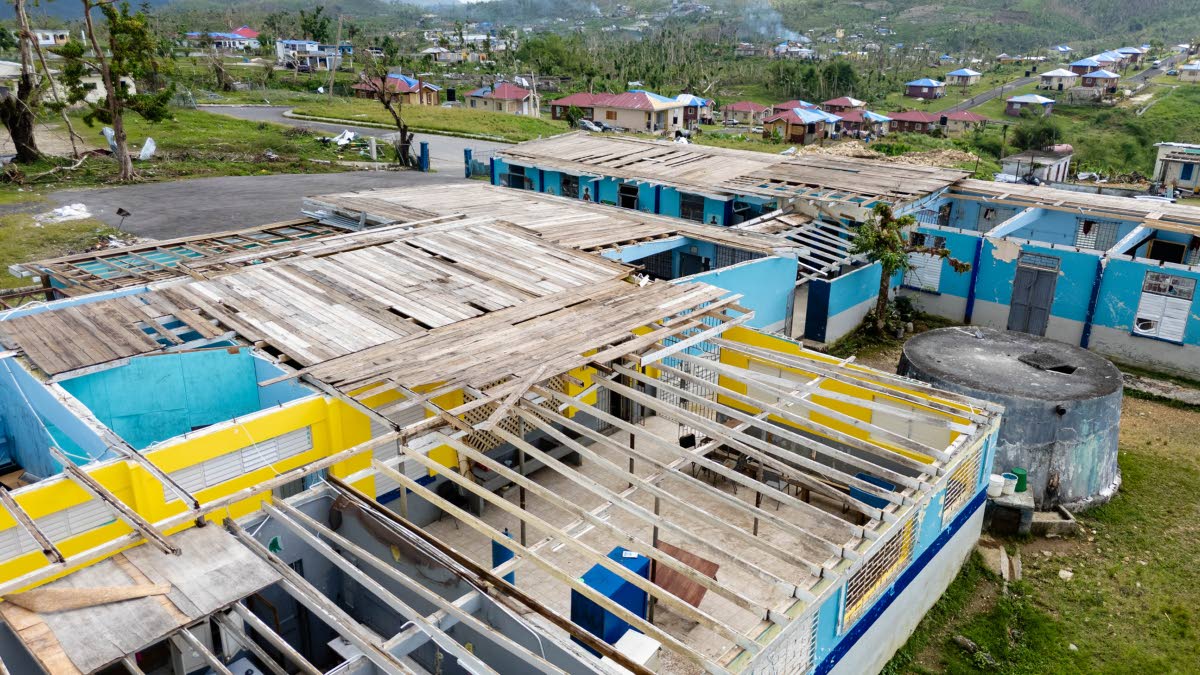 This photo shows damaged roof of Darliston Primary School destroyed by Hurricane Melissa last October.
-
 Olga Isaza
When classrooms fall silent, the loss goes far beyond damaged infrastructure It disrupts learning, stability, and opportunity for thousands of children. In an era of escalating climate shocks, these disruptions are no longer isolated emergencies but a recurring national development challenge.
As Jamaica moves forward after Hurricane Melissa, the priority is not only to reopen schools but to ensure that every child can fully return to learning and that in the medium term, they are supported by educational environments that are safer, stronger, and better prepared for the future.
Hurricane Melissa made landfall on October 28, 2025, as a Category 5 hurricane. The first of its kind to directly strike Jamaica, it exposed deep vulnerabilities in Jamaica’s education infrastructure. More than 100,000 children continue to feel the impact of the hurricane, with over 600 schools significantly damaged, ranging from leaking roofs to complete structural failure. Approximately 200 schools have been severely affected, and the children most impacted are those preparing for critical transition examinations into secondary and tertiary institutions, many of whom are now prioritised for face-to-face instruction in schools operating on rotation schedules and in UNICEF-supported classroom tents.
In some communities, schools that had barely recovered from Hurricane Beryl in 2024 were once again rendered unusable, highlighting the unsustainable cycle of continuous repair that climate shocks are imposing on the sector. Each cycle carries a cost, not only to public finances, but to learning outcomes, mental well-being and long-term human capital. These repeated shocks have exposed structural vulnerabilities, but they have also created an opportunity to rebuild an education system that is more resilient, more inclusive, and better equipped to withstand the realities of climate change.
Rebuilding schools exactly as they were leaves Jamaica trapped in a costly and disruptive cycle. The Government of Jamaica has taken important and commendable steps by advancing standardised, climate-resilient school designs, accelerating repairs, and prioritising the safe return of students. As Minister of Education, Skills, Youth and Information Dana Morris Dixon has acknowledged, the devastation caused by Hurricane Melissa is “enough to change the way we think about our infrastructure and our readiness for future storms”. She has been clear that the recovery cannot simply replace what was lost. “This approach is a shift away from merely restoring what was lost to building back better, with an emphasis on resilience and safer building standards for the future,” she told JIS News during site visits to affected schools.
SUSTAINED ACTION
The opportunity now is to translate these commitments into embedded and sustained action, guided by consistent standards, predictable resourcing that supports resilience across the system. Working alongside development partners, current efforts demonstrate strong leadership and a clear commitment to protecting children’s right to education. Sustaining and scaling these measures is essential if they are to deliver long-term impact.
Investing in resilient infrastructure – reinforced roofs, improved drainage, storm-resistant windows, and flood-resistant foundations – reduces future damage and avoids repeated disruptions to learning. At the same time, adopting modular construction approaches and using local materials and labour can help contain costs while strengthening communities and local economies.
Planning must also ensure that schools can continue to serve their role as places of learning and child-protection in times of crisis. Prior to Hurricane Melissa, more than 750 government schools were designated as hurricane shelters. Identifying and equipping alternative shelter options and carefully protecting school spaces to minimise disruption will be critical to ensuring that education resumes quickly after future shocks.
These considerations point to a broader imperative: schools must be designed from the outset with children’s needs at the centre. Children learn best in environments that are purpose-built for them. This means prioritising safe, inclusive, and flexible learning spaces at every level – from early childhood to secondary education. Climate-smart design features such as natural ventilation, shaded outdoor areas, solar energy, and rainwater harvesting are not luxuries. They are practical solutions that protect infrastructure, improve comfort, and reduce operational costs.
Inclusive design is equally critical. Ensuring accessibility for children with disabilities, appropriate lighting and acoustics, and age-appropriate furniture ensures that no child is left behind during recovery. Play-based indoor and outdoor learning areas are particularly important for younger children who have experienced prolonged stress and upheaval.
EMOTIONAL TRAUMA
Yet physical rebuilding alone will not guarantee a full return to learning. For many children, Hurricane Melissa was not only a physical disruption, but it brought emotional and psychological trauma. That trauma directly affects how children feel in learning spaces and how ready they are to re engage with education. Schools are not only centres of instruction. They are spaces of routine, safety, and protection. Integrating psychological support into the education system, with trained teachers, guidance counsellors, and community-based services is essential to helping children recover, regain confidence, and reconnect with learning.
Nutrition also remains a cornerstone of effective recovery. Strengthening school-feeding programmes, improving access to clean water and kitchen facilities, and supporting school gardens can significantly enhance attendance, concentration, and learning outcomes – particularly in communities facing economic hardship. School gardens can further enhance food security while serving as hands-on learning spaces linked to environmental education and resilience.
Jamaica has laid a strong foundation for recovery. The path ahead now requires sustained attention to key priorities: embedding climate-resilient standards in all school reconstruction, ensuring inclusive and child-centred design, expanding mental health and psychosocial support, accelerating the implementation of the national school nutrition policy, and deepening partnerships that align recovery with long-term development goals.
Rebuilding after Hurricane Melissa is about shaping a stronger, more resilient education system for the future. By strengthening schools today, making them smarter, greener, and more inclusive to children’s needs, Jamaica can turn recovery into a lasting investment in human capital. In doing so, the country ensures that children are not only protected from the next storm but empowered to thrive beyond it.
Olga Isaza is the representative of UNICEF Jamaica. Send feedback to columns@gleanerjm.com