Jalil Dabdoub | Sherene Golding-Campbell is right
Loading article...
-
 Jalil Dabdoub
-
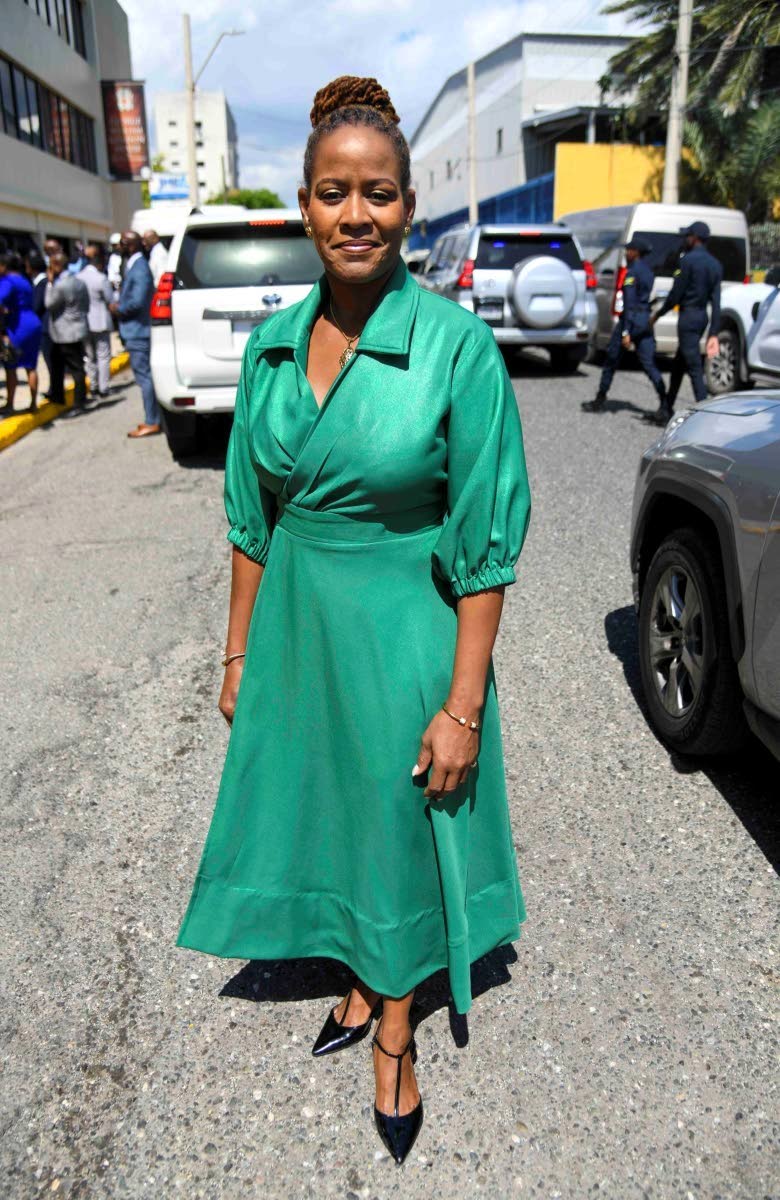 Sherene Golding-Campbell
In a recent post on X, Sherene Golding-Campbell raised a question that goes to the heart of Jamaica’s political culture: Why do so many of us analyse political commentary not on its merits but according to who said it and which political side they represent?
She wrote: “When r we going to get to a stage whr we examine the merits of a citizen’s arguments and commentary rather than automatic dismissal of them bcz we perceive them to support a side other than our own? I read @mikeyabrahams from time to time. He is critical of both gov & opp. He is called a comrade in the 1st instance and a labourite in the 2nd. @LambertBrownJa I may naively have expected you to examine his argument. Is it worthy of consideration or not? That’s the patriotic rather than partisan thing to do. And the same goes for his criticism when he has made it of the government. One love!”
Her post raises an important question, and she deserves credit for asking it publicly. In a deeply tribal political environment, it takes independence to acknowledge how distorted our discourse has become.
But the answer to Golding-Campbell’s question lies, in many respects, in the very political culture that has taught Jamaicans to think this way.
Jamaica will only stop viewing commentary through partisan lenses when our political directorate stops practising a politics that encourages us to do so.
For too long, our politics has been one of confrontation and capture, rather than consensus and continuity. Every issue becomes a battlefield. Criticism is treated as an attack, concession as weakness, achievements claimed exclusively by one side and failures attributed exclusively to the other.
In the process, we have inherited and internalised the old colonial instinct of divide and rule, once used against us but now reproduced within our own political culture.
Who benefits from division? The principal beneficiaries are those competing for political power through our votes. A divided population is easier to mobilise. Fear and resentment become political weapons. If supporters can be convinced that the other side is not merely wrong but dangerous or dishonest, political loyalty begins to count more than truth, fairness, and reason.
That is how the same statement can be considered wise when made by “our side” and outrageous when made by “theirs”.
Golding-Campbell’s post on X is important because it challenges that instinct. But citizens cannot change this culture alone. For generations, our political leaders and institutions have helped create and foster the tribalism that now strangles our political culture.
Until more people are prepared to speak as Golding-Campbell has spoken, and, more importantly, consistently practise what she advocates, meaningful change will remain elusive.
The genesis of that change must come from the top.
Holness and Golding are uniquely positioned to change Jamaica’s political culture. They can change the tone, teach their supporters that disagreement does not require demonisation, and acknowledge that a good idea does not become a bad one simply because it comes from a political opponent.
Yet neither has consistently demonstrated the willingness or capacity to take the political risks necessary to do so.
The test for both is simple: Will they challenge their own side when doing so is politically costly?
It is a shame that the Vale Royal talks have not been resumed and do not appear likely to be resumed. Those talks provided an opportunity for the country’s two principal political leaders to discuss Jamaica’s business, exchange ideas, and seek consensus on matters beyond electoral cycles.
The failure to resume them creates the unfortunate impression that relations between the two sides have become so tense, suspicious, and politically charged that they can barely sit together to discuss the nation’s business. If that impression is even partly accurate, it should concern us all. While political competition is necessary in a democracy, political hostility is not.
A PM and an opposition leader can disagree on policy while recognising that some national issues demand conversation, cooperation, and continuity. That is what mature democracies require.
Yet, if we are to judge them honestly, neither Holness nor Golding has consistently shown the requisite signs that either is prepared to take the political risks necessary to lead that transformation.
For PM Holness, his election-night speech was an opportunity, having secured victory, to rise above the contest and set a new national tone. Instead, elements of the rhetoric reinforced the adversarial culture Jamaica urgently needs to escape.
Golding faced his own test with the recent NaRRA tapes. He had an opportunity to demonstrate that conduct undermining the national interest should be confronted regardless of political affiliation. His failure to confront the issue more forcefully reinforced the impression that the same standards are not always applied within one’s own political camp.
These examples point to the same fundamental problem: the reluctance of leaders to take the political risks that genuine leadership sometimes requires. It is easier to condemn the other side, reassure one’s supporters, and avoid confronting those whose loyalty is politically valuable.
But leadership requires the courage to disappoint one’s own supporters when they are wrong, to give credit to an opponent when they are right, and to put the national interest ahead of the next political battle.
This is why Golding-Campbell’s post deserves to be taken seriously. Her question is the right one. But if Jamaica genuinely wants the answer to change, our political culture must change.
That change must begin with our political leaders. But it cannot end there. The electorate also has power. Leaders will only change when voters stop rewarding tribalism and start rewarding leadership that puts Jamaica first.
Jamaica needs more people willing to speak as Golding-Campbell did. But we also need those principles practised consistently, especially when politically inconvenient.
Above all, Jamaica needs Holness and Golding to recognise their immense responsibility to lead this country beyond the politics of confrontation and capture.
Until they are prepared to take that risk, we will continue asking why Jamaicans interpret politics through partisan eyes while ignoring the political culture that has taught them to do exactly that.
Golding-Campbell has asked the question.
The answer now lies with those who have the power to change our political culture, but do they have the courage and sense of duty to do so ?
Jalil Dabdoub is an attorney at law. Send feedback to columns@gleanerjm.com.