Anthony Hylton | Censoring the government: “The Constitution says the Cabinet answers to Parliament”
Loading article...
-
 The Jamaica Labour Party has condemned the conduct of People’s National Party members during Tuesday’s heated parliamentary sitting, calling for sanctions against Opposition MPs Mikael Phillips and Angela Brown Burke over what it described as unparliamentary behaviour. Photo - File
-
The Jamaica Labour Party has condemned the conduct of People’s National Party members during Tuesday’s heated parliamentary sitting, calling for sanctions against Opposition MPs Mikael Phillips and Angela Brown Burke over what it described as unparliamentary behaviour. Photo - File
-
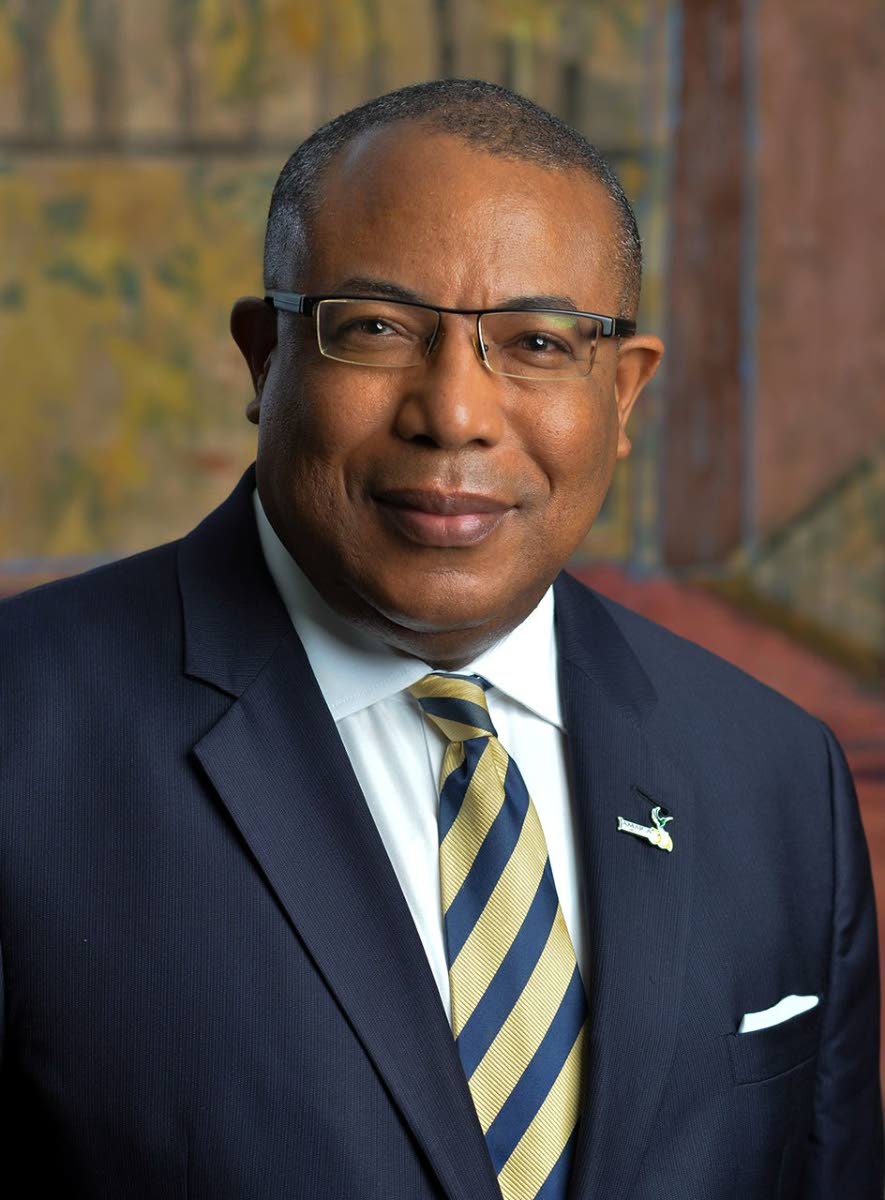 Anthony Hylton. Photo - Contributed
The Government has claimed that a motion of censure cannot be brought against the Government as a whole. The leader of government business, therefore, attempted to end debate on a censure motion brought by me on the grounds of “absurdity”.
The real absurdity is his strange attempt to avoid accountability for Jamaica’s abstention on the United Nations vote on the US embargo against Cuba.
The Government has not defended what it did. It has argued instead that Parliament has no right to say so. That argument does not survive a reading of our own Constitution.
The Government has said that censure can be directed only at an individual minister, and that any motion against the Government itself must be a motion of no confidence. That is, of course, nonsense.
I rely on three provisions of the Constitution.
ONE EXECUTIVE
Section 68(1) vests the executive authority of Jamaica in the Crown, exercised on the advice of the Government of the day. When Jamaica votes at the United Nations, that is the State acting through its Executive, not a minister acting in a personal capacity. The Government cannot act in the name of the whole and answer only through one of its parts.
COLLECTIVE RESPONSIBILITY
Section 69(2) makes the Cabinet the principal instrument of policy, charges it with the general direction and control of the Government, and makes it collectively responsible to Parliament. Those are the Constitution’s words, not mine. The foreign Minister has called the abstention a shift in policy. The leader of government business has said the matter went to Cabinet. By the Government’s own account, this was a Cabinet policy decision, and the Constitution says the Cabinet answers for it collectively to Parliament.
PORTFOLIO IS NOT A PRIVATE POWER
Section 77 provides for ministers to be assigned their portfolios. Section 77(2) makes clear that the assignment does not hand a minister powers that the Constitution places elsewhere. The direction of policy belongs to the Cabinet. Holding the foreign affairs portfolio does not move that power into one minister’s hands.
This leaves the Government with no escape. Either Cabinet decided to change Jamaica’s position, in which case the whole Government is responsible. Or a minister changed one of our longest-standing foreign policy positions on her own, which the Constitution does not permit, and a Cabinet that let it stand has made it its own. Either way, the answer is the Government.
I further reject the claim that the only proper motion is one of no confidence. A no-confidence vote is about whether a government survives. A censure is about whether Parliament disapproves of what it did. Our motion says in plain terms that it is not a motion of no confidence. To say that Parliament may either stay silent or bring down the Government is to say Parliament has no voice in-between. Nothing in our Constitution or Standing Orders says that.
There is a long history of censure motions in Westminster parliaments that disapproved of ministers and governments without seeking to remove them:
JAMAICA
Censure motions have been brought in the House against sitting ministers, including Finance Minister Dr Omar Davies in 2003 and Commerce Minister Phillip Paulwell in 2006, without either motion seeking the fall of the Government.
UNITED KINGDOM
On December 4, 2018, the House of Commons voted 311 to 293 to find “Ministers” in contempt for refusing to publish the Brexit legal advice. It named no individual minister, and Theresa May’s Government remained in office.
AUSTRALIA
The Senate, in 2013, censured the Government as a whole over its handling of the mining tax, in a motion that its own Clerk’s Office recorded was not a no-confidence motion in the traditional sense. In 2020, it censured the aged care minister in a motion that also condemned the Morrison government. The Australian parliament’s own guidance is that censure of a government or a minister carries no direct constitutional or legal consequence.
Censure is the ordinary tool by which parliaments register disapproval. It is not a vote to topple a government, and the Government knows it.
The motion follows events of October 27 and 28. On Tuesday, October 27, the House of Representatives passed, without dissent, a government resolution on the economic and humanitarian situation in Cuba. In moving it, the minister of state in the ministry of foreign affairs told the House that Jamaica could not support a unilaterally imposed blockade against Cuba. The next day, Jamaica abstained at the United Nations.
Parliament was not the only one misled. As is customary, the Government invited the ambassador of Cuba to the House on October 27 to hear Jamaica’s support for the resolution to lift the embargo. The ambassador was invited to hear Jamaica stand with Cuba and, within a day, watched Jamaica abstain. That is no way to treat a friend of more than half a century.
Parliament acted in good faith and learned of the change in policy from Jamaica’s permanent representative to the United Nations explaining the abstention. It was never shared with the House during the debate. This motion asks the Cabinet to accept the responsibility the Constitution already places on it. That is not an overreach by Parliament. It is the Constitution being honoured.
Anthony Hylton is the member of parliament for St Andrew Western and opposition spokesperson on industry, trade and global logistics. As opposition spokesman on foreign affairs and foreign trade, he moved the first House resolution supporting the UN resolution calling for an end to the US embargo on Cuba.