Michael Taylor | Before the taps run dry
Loading article...
-
-
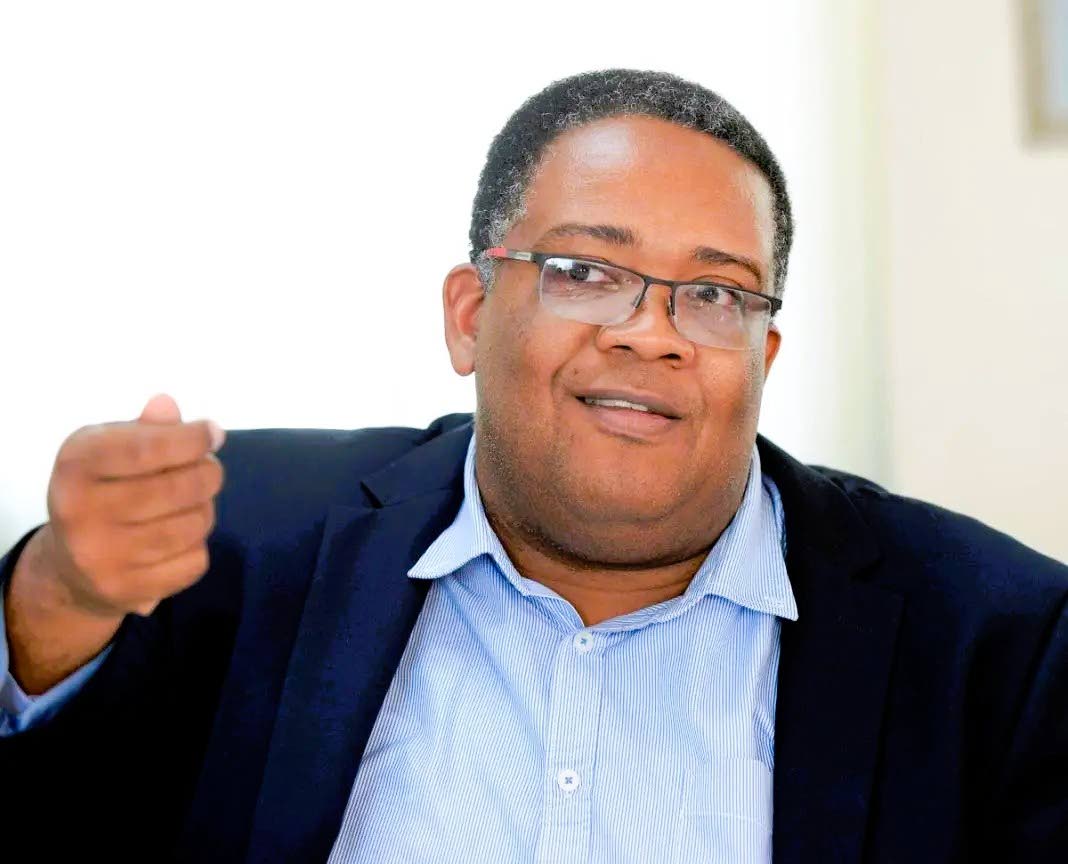 Professor Michael Taylor
On April 16, to be exact, I did something I don’t normally do. I shared a forecast, and my concerns about it, with colleagues and acquaintances in a few agencies where I had contacts. I was concerned that the three-month climate outlook for April, May, and June had just been released and it was dire! To explain. Climate science does not always speak with the certainty we would like, and so scientists are typically reticent lest we overstate what we know. But this time, the science was not hedging or saying “maybe prepare”. The signals were clear enough to make me worried and worrying enough to move me to share!
The outlook suggested that the coming three months would not only be unusually hot but also unusually dry. That combination matters. Hotter conditions increase the demand for water even as reduced rainfall diminishes the available supply. But my concern went further. May and June constitute an important part of our early rainfall season. If we do not get sufficient rain then, we enter the midsummer drought period without the usual replenishment of our water systems, and we risk beginning the late rainfall season (September to November) already carrying a serious rainfall and water deficit. In other words, what happens up to June helps determine how vulnerable we are in August and for the rest of the year.
From April, we had some foreknowledge of where we might be today.
But this is not about “I told you so”, for it is reasonable to ask what I expected sending the forecast to accomplish. Governments make difficult decisions every day and science comes with uncertainty. Resources are finite, and preparing for every possible bad outcome is not possible. But my simple hope in April was that we would err on the side of preparedness. After all, if we prepared for drought and instead got abundant rain, full dams would have been a good problem to have. As I saw it, the strength of the signal in the April forecast gave us time to do some things differently.
First, to engage the science. In this case, bring climate scientists to the table at appropriate points, thereby allowing those making decisions to interact with and interrogate the forecasts. Let the scientists explain not just what the projections say but how confident they are, where the uncertainties lie, what the plausible consequences may be, and what indicators should trigger further action. Scientists should not be making water policy, but they can bring science to bear on the policy being developed.
But second, and perhaps even more important, engage the public before we arrive at the stage of restrictions, prohibitions, and penalties. Those are all necessary now, for when water is scarce, its use has to be managed. But imagine if months ago we had begun a sustained national conversation that said: The months ahead are likely to be hotter and drier. Water may become increasingly scarce. We need your help now to stretch the little we have so everybody will have a little later.
Imagine a creative public-education campaign reaching homes, schools, churches, communities, hospitals, businesses, and government agencies. Not simply telling people what they cannot do but explaining what is coming and why capture, conservation, and preservation of every drop matter, plus the practical things they can do to achieve this. Imagine making people partners in conservation early rather than offenders to be punished later.
But maybe this suggests a larger challenge in how we think about drought. Drought, especially when accompanied by extreme heat, is a disaster, too.
Jamaica understands all too well the need to prepare for hurricanes. We track them while they are still far away, issue regular bulletins, activate ministry plans, prepare hospitals and schools and the public at large, and put emergency personnel on alert. Why not, then, the equivalent weekly drought updates, begun at the hint of a problem and gradually ramped up or down as conditions change? Why not national conservation targets? Why not an islandwide campaign saying: don’t just buy a black tank – make sure it is connected to guttering so that when rain does come, we capture it? Why is our approach to a slowly developing climate disaster fundamentally different such that we postpone action until the consequences become unavoidable? A proactive drought response cannot be left to the National Water Commission alone. As for a hurricane, drought requires a coordinated national response … as early as possible.
But having said all of that, the real point of my writing is that we have yet another warning.
We may have missed some of the opportunity the April forecast gave us. We cannot change that now. But the latest projections are out, and they are again very worrying. The projections are for continued unusually hot and dry conditions through December. This means that as we enter the late rainfall season – yes, we may get a tropical disturbance or two since drought doesn’t mean it never rains and Jamaica can still be affected by a storm or hurricane – but we should not assume that our present difficulties will simply disappear with the next shower. Nor should we reach the point of collectively praying for a hurricane to solve our drought. A few episodes of rainfall will not, overnight, erase a rainfall deficit accumulated over the last few months.
The more important point is that we have another opportunity to act on foreknowledge.
Schools reopen shortly, significantly increasing demand on the system. Have we audited water availability at schools – not just the large urban ones but the small rural basic schools as well? Have we sent in the rapid-leak-detection teams in advance? Have we worked out where additional water will come from? Have we made sure that arrangements are already in place for sanitation and the well-being of students and teachers?
Hospitals and other health facilities need similar continuity plans. Water-quality testing facilities must also be ready because as conventional supplies diminish, people will inevitably turn to alternative sources, and we must know whether those supplies are safe. Agriculture, too, requires a “hot and dry” plan: water harvesting, conservation, adjustments in farming practices, and heightened attention to bushfires. Our fire services must also be planning for the uncomfortable possibility of increased fire risk occurring at precisely the time when water is scarcest. Tourism and other large industrial users must be part of the conversation, too. Conservation cannot be something demanded only of households. The larger point is this: If we are genuinely in a water crisis, every sector – including the Government itself – should be able to say what it is doing differently to reduce demand and maintain supply.
And we cannot forget the most vulnerable among us. Who ensures that the elderlPy person living alone has water? What about communities that already have unreliable or no supply? What about the homeless? Have we begun identifying those most at risk and developing the partnerships needed to ensure that all receive this precious commodity? Are there drought grants already available and established criteria for who qualifies? There is even a mental-health dimension to prolonged water shortages. There is real stress in waking in the middle of the night because that is when water comes, finding enough water to bathe a family, keeping clothes clean, preparing children for school, finding money to purchase the bottled water they will have to carry with them, and then somehow going out to do a full day’s work. Can a country still carrying the trauma of Melissa handle, without intervention, the stress of another disaster – and one that unfolds slowly?
All this is why drought must be treated as more than an inconvenience.
So, I am putting aside my reticence to say again: Let us, at all levels, put in place proactive plans for the months ahead. Unfortunately, the worst may not yet be over. Let us treat hot drought as the disaster it is. Engage the science. Engage the public. Engage every government sector, the private sector, and civil society. Let us identify our vulnerabilities and our most vulnerable now and establish the mechanisms for tracking and attending to them. Everybody has a role to play in this.
We would never wait until hurricane-force winds begin blowing to decide we should prepare for a hurricane. Let us stop waiting until the taps run dry to prepare for drought.
Professor Michael Taylor is the dean of the Faculty of Science and Technology, University of the West Indies, Mona. Send feedback to columns@gleanerjm.com