Danielle Archer | How silence rewrites what citizens know
Loading article...
-
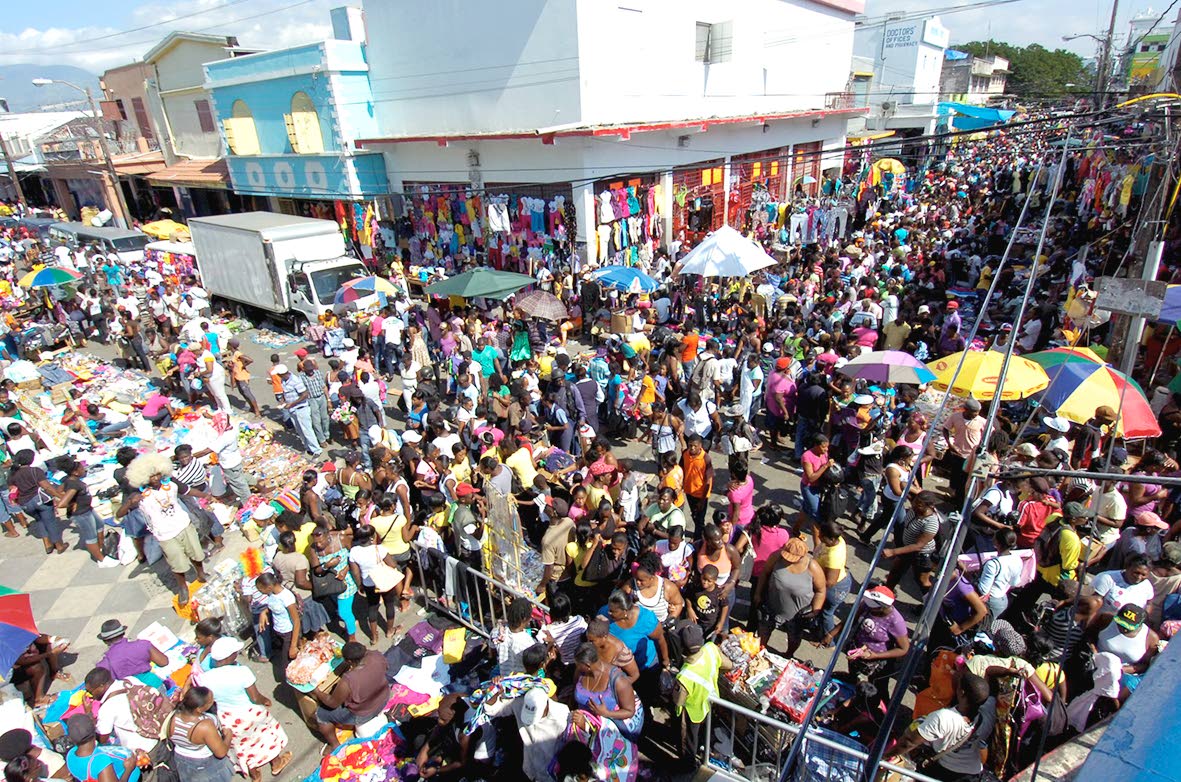 File photo shows a buzz of activity in the downtown Kingston shopping area.
-
 Danielle Archer
Jamaica is entering a moment where the most important governance question is not who holds office but how information moves. What the public thinks it knows, what it does not know, and what it was never allowed to know now sit side by side, shaping trust in institutions more than any manifesto ever could.
This is lived experience.
On the night of the last general election, as I sat in a studio as a commentator, I learned in real time that both major Internet systems had gone down across wide sections of the island. For several minutes, Jamaica was effectively offline at the exact moment when citizens were trying to follow results, verify updates, and participate in the democratic process. Yet to this day, I cannot recall hearing a formal explanation, a regulatory statement, or even an acknowledgement of what happened. The experience was real, but the archive is silent.
That silence is not isolated. Earlier this year, Jamaica experienced an islandwide blackout that produced shifting explanations and delayed details. Citizens were left piecing together fragments of information while waiting for an official report. The public record did not reflect the public experience.
Across the region, the pattern is the same. In the last five years, only one Caribbean leader’s overseas medical transfer has been publicly acknowledged, the prime minister of St Kitts and Nevis. Jamaica has issued no comparable disclosures even as the public continues to believe that political elites seek specialist care abroad. Whether the practice occurs or not, the silence itself becomes a governance signal.
Crime statistics are released but not with full monthly breakdowns. Health-system indicators exist, but the data sheets sit inside the Population Health Status Reports rather than as standalone datasets. Procurement decisions are announced without the evaluation reports that justify them. Parliamentary committee minutes rarely appear online. Older news articles disappear during website redesigns. Press releases circulate on WhatsApp but never reach official websites.
The public believes that it knows the story, but it knows only what survives the journey from institutional knowledge to public disclosure.
This is where stories become instructive.
In Animal Farm, the animals notice that the commandments painted on the barn wall are quietly changing. A word added here, a phrase removed there, until eventually, all the rules collapse into a single, convenient principle that serves those who control the paintbrush. The animals remember something different, but they cannot prove it. The record has shifted beneath them.
It reminds us that information can be reshaped without confrontation through edits, omissions, updates, and the slow erosion of what was once known. Orwell’s message is simple: when those in power control the narrative, they control reality.
Orwell’s 1984 offers another warning: “The past was erased, the erasure was forgotten, the lie became truth.” Not as a political accusation but as a metaphor for how fragile public records can be when information is not systematically preserved.
In Jamaica and across the Caribbean, information is rarely deleted. More often, it simply never forms. The public record is not a mirror of reality. It is a mirror of what institutions choose or manage to preserve. Silence becomes structural and sometimes sinister.
But structure shapes destiny.
This is the point we can no longer soften: trust has closed. Not weakened. Not wavered. Closed.
Jamaicans are no longer operating with the assumption that institutions will tell them the truth, acknowledge failures, preserve records, or treat citizens as partners in the democratic project. Trust did not collapse in a single dramatic moment. It closed through the quiet accumulation of unexplained outages, missing data, shifting narratives, and public experiences that never enter the official record.
The recent Hearts and Minds of Jamaicans survey conducted by Don Anderson’s Market Research Services does not use the word “trust”, but its findings leave no doubt that public confidence in Jamaica’s institutions has collapsed. Eighty-one per cent of Jamaicans believe the society is unequal; 30 per cent say corruption has become necessary for peace and happiness; nearly one in three consider it acceptable to break the law to get ahead; and 42 per cent would leave the country tomorrow if they could.
Anderson himself describes the national mood as a “moral grey area”. These are not abstract attitudes. They are direct indicators of a society that no longer believes its systems are fair, honest, or capable of telling the truth. In every meaningful sense, the trust architecture has already failed.
When trust closes, citizens stop looking to institutions for clarity. They look to each other. They rely on lived experience, not official statements; community memory, not government archives; citizen verification, not institutional assurance. And once that shift begins, it is extraordinarily difficult to reverse.
Government alone cannot fix this. The State has shown a persistent reluctance to modernise the Access to Information Act, strengthen disclosure rules, or build resilient archives. Beneath that reluctance sits a deeper cultural posture: a belief that politicians should not be questioned, that they need not report what they consider trivial, and that electoral victory grants them authority without any ongoing obligation to the voters.
When leaders operate inside that mindset, the public record becomes optional, and accountability becomes discretionary.
That is why citizens must hold them to the truth and why the architecture of information cannot depend on the state.
Citizens must build it themselves.
This is not a one-person project. It is a citizen project.
Jamaica’s civic technologists, archivists, journalists, engineers, and public-interest builders can create a parallel public record, one that preserves what we live, not only what institutions choose to acknowledge.
The rebuild must come from citizens because trust will not reopen on its own.
This is where Jamaica’s greatest strength lies: our citizens.
Jamaicans document, record, share, verify, and preserve. We do it instinctively. What we need now is a disciplined structure that allows citizen memory to become citizen evidence, a civic infrastructure that cannot be quietly edited, erased, or forgotten.
But here is the warning.
If trust has closed, and nothing replaces it, rumour, speculation, and corrosive doubt will fill the vacuum. Societies do not collapse because institutions fail. They collapse because citizens no longer believe that institutions can tell the truth.
Jamaica is not there, but we are closer than we think.
Unless citizens build a parallel information architecture, the gap between lived reality and the official record will widen until it becomes unbridgeable.
Jamaica does not need more noise. It needs more structure. It needs a citizen-anchored information framework that ensures that what the public remembers is not erased by what the archive forgets.
The future of governance in the Caribbean will be determined not only by policy but by the architecture of silence and whether we choose to reinforce it or finally begin to dismantle it.
Danielle S. Archer is the former principal director of National Integrity Action and host of The Ethos Dispatch podcast, which can be accessed Apple Podcasts, Spotify, Amazon, and other platforms. Send feedback to columns@gleanerjm.com