The fish cake that told a Caribbean story
Loading article...
-
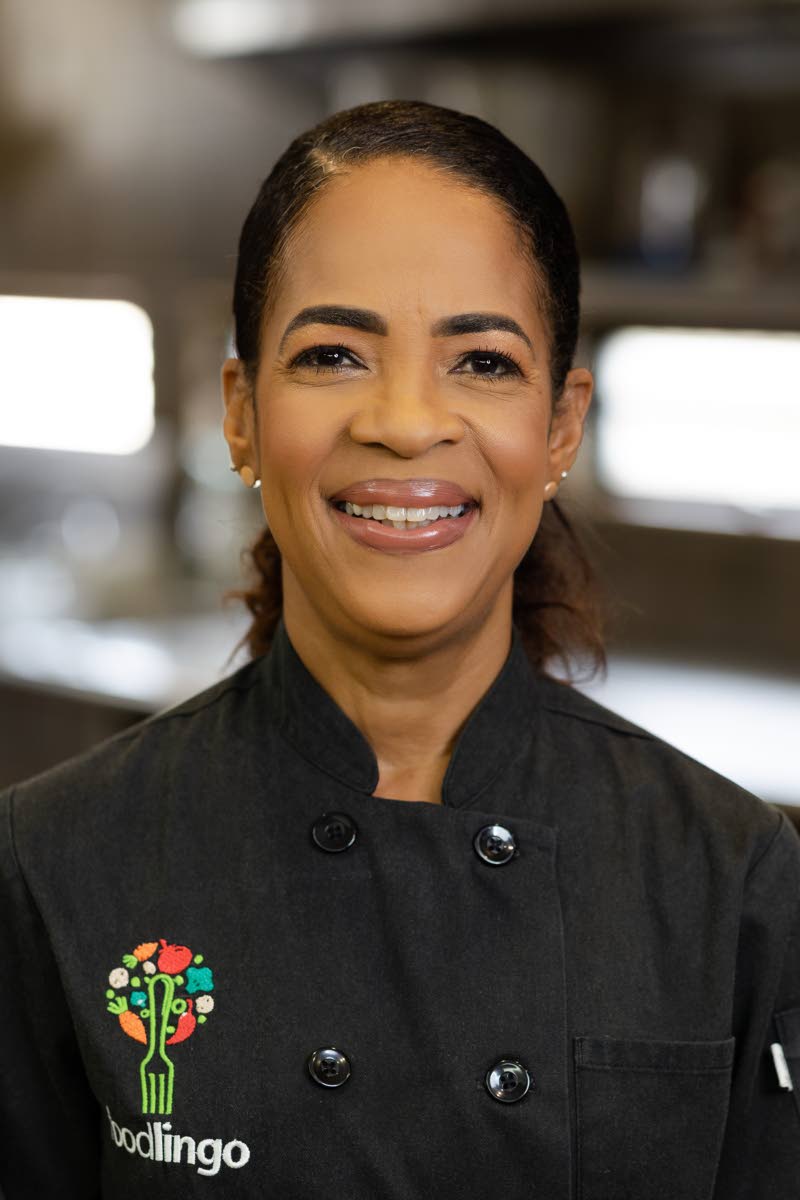 Chef Debra Sardinha. Photo - Contributed
-
Chef Debra Sardinha. Photo - Contributed
-
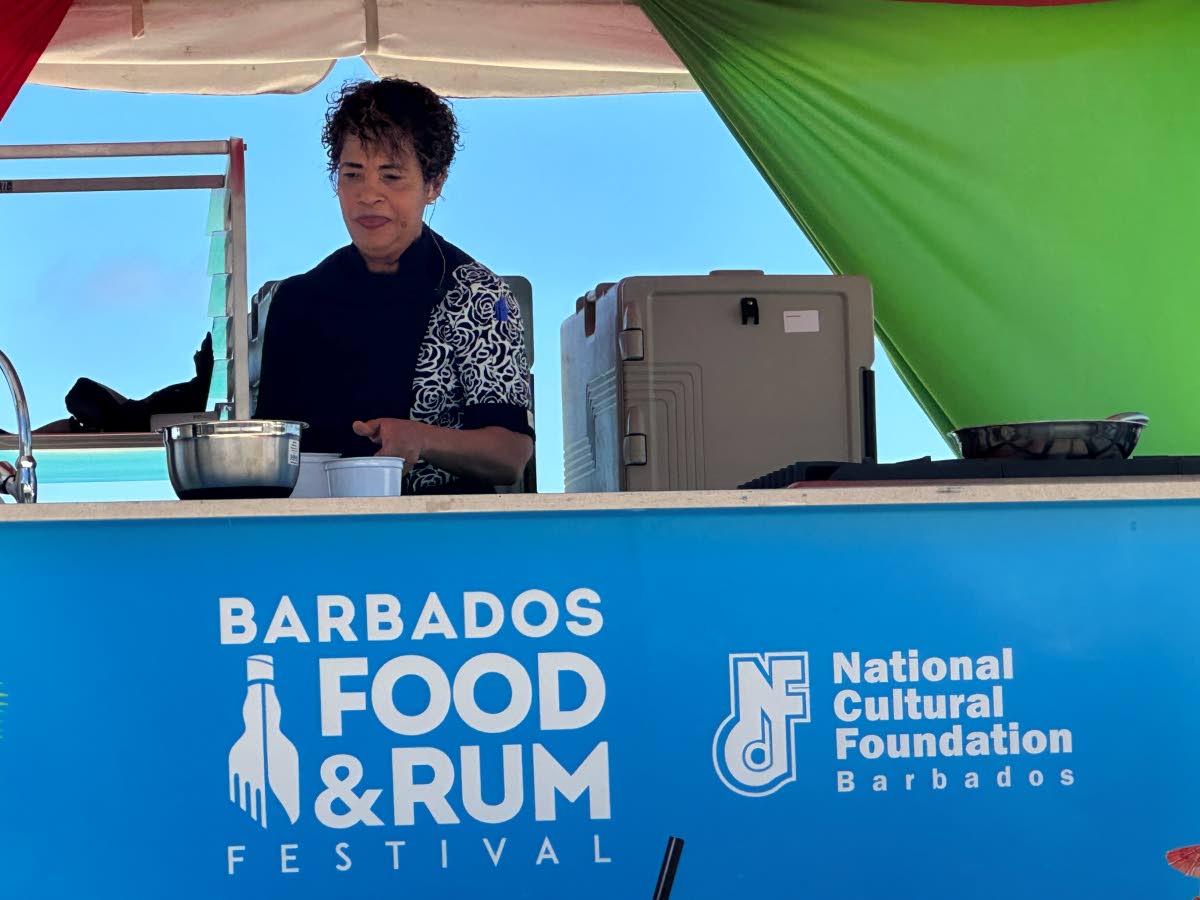 Sardinha cooks up a storm at the Barbados Food and Rum Festival. Photo - Contributed
-
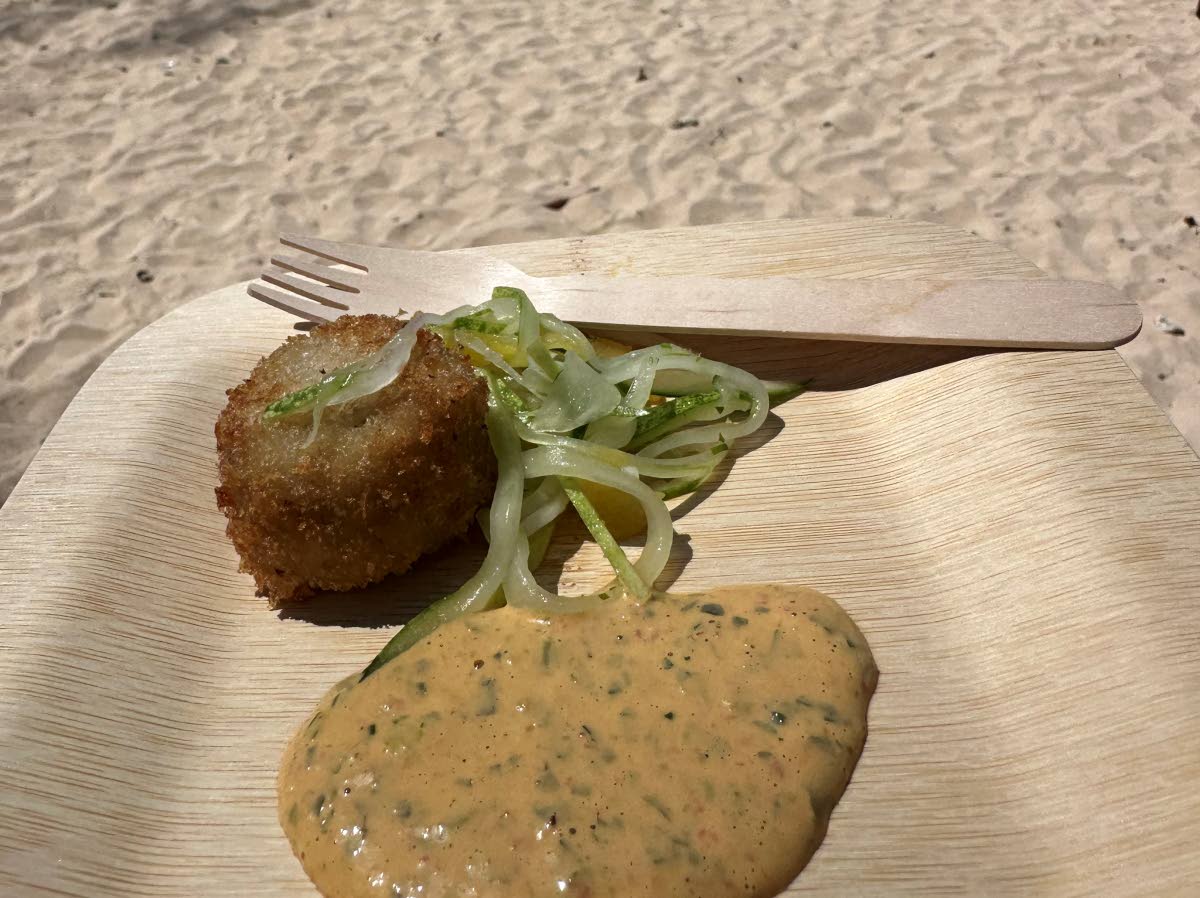 Chef Debra Sardinha's Trini-style fish cake. Photo - Contributed
A fish cake can carry quite a story. In the hands of Trinidad and Tobago’s Chef Debra Sardinha, it becomes a delicious conversation about Caribbean identity, the ingenuity of women, and the kitchen lessons that travel from one generation to the next.
At her November 6 International Chef Demonstration at Pile Bay, Barbados, during the recently concluded Barbados Food and Rum Festival, Sardinha brought a distinctly Trini accent to the familiar favourite. Freshly toasted geera and chadon beni helped tell the tale: the warm, earthy character of cumin meeting the assertive freshness of a herb that holds a cherished place in Trinidadian cooking.
There was breadfruit in the conversation, too. Cooked, cooled, and then grated, it joined flaked firm fish, salt, pepper, and the fragrant seasonings, with mayonnaise to bind the mixture. A coating of flour, egg wash, and panko breadcrumbs completed the fish cakes, giving a familiar Caribbean staple a fresh way to shine.
For Caribbean food lovers, it was an invitation to discover how a familiar idea can speak with a different island accent. The fish cake offered an accessible introduction to Sardinha’s wider philosophy: Caribbean food has its own vocabulary, and every ingredient has something to say.
Affectionately known as Chef Debbie, Sardinha has built a career that connects international kitchen experience with a deep appreciation for home. A graduate of New York City Technical College, she worked in the United Nations Executive Dining Room, with the Myriad Restaurant Group, and in the test kitchen at Ladies’ Home Journal. She went on to become the first female executive chef for Hilton in the Americas and the Caribbean.
Her culinary journey has included catering for Queen Elizabeth II at the invitation of the President’s House, television appearances on The Today Show with Al Roker and Gary Rhodes Across the Caribbean, and hosting the Caribbean cooking show Bon Manje. She has also taken the region’s flavours to international showcases, including the World Travel Market in London and ITB Berlin, and became the first female judge at Taste of the Caribbean.
Today, Food Lingo, her chef’s table and catering venture in Trinidad and Tobago, gives expression to that continuing conversation between Caribbean tradition and creative presentation.
At Pile Bay, however, her story reached beyond professional kitchens to the women whose everyday cooking has helped shape the region’s appetite. In Sardinha’s words, mothers and grandmothers are central to Caribbean culinary invention. Feeding a household calls for resourcefulness: working with what is available, finding another way when an ingredient runs short, and turning the contents of a kitchen garden or market basket into something a family will enjoy.
“Our mothers and grandmothers were creating every day, often without calling it that,” she reflected. “They knew how to make what they had stretch, how to build flavour, and how to feed a family with care. So much of our Caribbean food story begins with them,” she stated as she prepared the fish cakes for her captivated audience on the beach.
That daily ingenuity deserves recognition. Long before a dish appears on a restaurant menu, a version of its story may have unfolded in a home kitchen, guided by a woman balancing nourishment, flavour, time, and the needs of her household.
The knowledge continues through children who watch, help, taste, and eventually cook for themselves. A preference for a particular seasoning, an instinct for when a mixture needs adjusting, or a remembered method becomes part of what they carry into their own homes. Recipes survive through practice as much as through the written page.
For Sardinha, there is something to be said for the “muscle memory” that develops along the way: the familiarity that allows a cook to work with intention and trust what experience has taught the hands and palate.
“Muscle memory allows you to cook from a place of intention,” she explained. “When that meets the right ingredients, the magic begins to simmer.”
Sardinha’s perspective on being a Caribbean chef grows from that same understanding of inheritance. For her, the region’s fruits, vegetables, herbs, and spices possess distinctive flavours that deserve attention on their own terms. Caribbean ingredients offer a sense of place, giving cooks a foundation from which to explore.
She also sees the region’s culinary breadth through its complicated history. African enslavement, European colonisation, the movement of peoples, and the vegetation of individual islands have shaped the ways Caribbean people grow, season, preserve, and prepare food. Within that history, she finds a remarkable range of culinary foundations, connecting the Caribbean kitchen to the wider world.
“To be a Caribbean chef is to understand how much we already have to work with,” she said. “Our history has brought so many influences into our kitchens, but our ingredients and our experiences give the food its own identity.”
For all the creativity her work demands, her own appetite often finds comfort in simplicity. Her favourite foods change with her mood, but a breakfast of salt fish buljol, fry bake, and slices of avocado remains a particular pleasure.
“I spend so much of my time creating and experimenting that when I am choosing something for myself, I often lean towards simple dishes,” she shared. “A good salt fish buljol with fry bake and avocado is one of my favourite breakfasts.”
That affection for familiar flavours helped frame her encouragement to students at the demonstration. Favourite dishes can be explored, adjusted, and given fresh expression while remaining grounded in the lived experiences of the people preparing them. It was an invitation to experiment with a sense of belonging: to know the flavours of home well enough to take them somewhere new.
“Explore your own way of making the dishes you love,” she encouraged. “Let your ideas grow from what you have tasted, what you have learned, and the Caribbean life you know,” was her encouragement to the culinary students in the audience.
Festivals such as Barbados Food and Rum, she believes, create valuable space for that exchange, putting Caribbean talent and traditions before audiences ready to discover them.
“The importance of festivals like Barbados Food and Rum cannot be overstated. They give us a wonderful platform to showcase our Caribbean talent and traditions. There is no better time than the present to have a seat at the table — no pun intended,” she said with a smile.
And there, in a Trini-style fish cake seasoned with toasted geera and chadon beni, was a small, savoury example of how much a Caribbean cook has to bring to that table.
The Barbados Food and Rum Festival ran from November 5-8 and unfolded across five major events, following a media welcome that introduced the personalities behind the plates and glasses. And those glasses deserved every bit as much attention as the food.
The festival’s published roster featured 29 chefs, including seven international talents, and 20 mixologists, with culinary and cocktail creativity sharing the spotlight. The event line-up included a road parade, great seafood offerings, and entertainment at Oistins at the Bay, International Chefs Cooking Demos, a Rum Route Tour, Rise and Rum Breakfast Party, and Liquid Gold Feast.
lifestyle@gleanerjm.com