Barbed wire on Negril’s famed beach sparks outrage
Loading article...
-
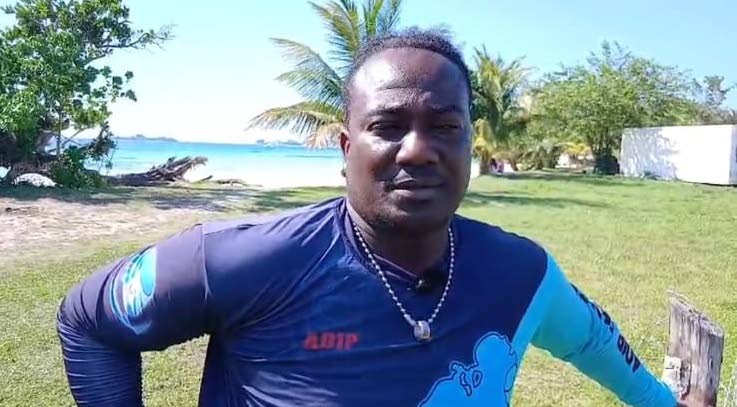 Diego Heaven, owner and instructor at Reef Explorer Diving Centre, explains that the barbed wire fence was never intended to block public access but to protect equipment from theft.
-
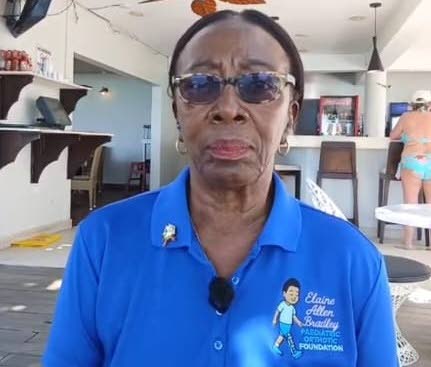 Elaine Bradley, former president of the Negril Chamber of Commerce, speaks out against the temporary fencing on Negril’s Seven Mile Beach.
-
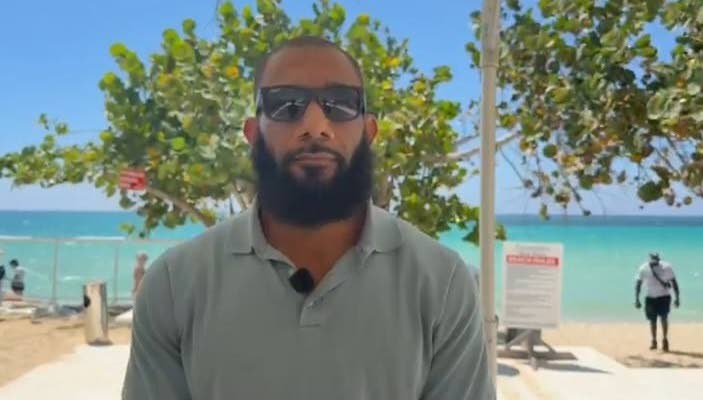 Winthrop Wellington, hotelier, speaks out about the section of barbed wire fencing he encountered during his morning run that temporarily divided Negril’s Seven Mile Beach.
-
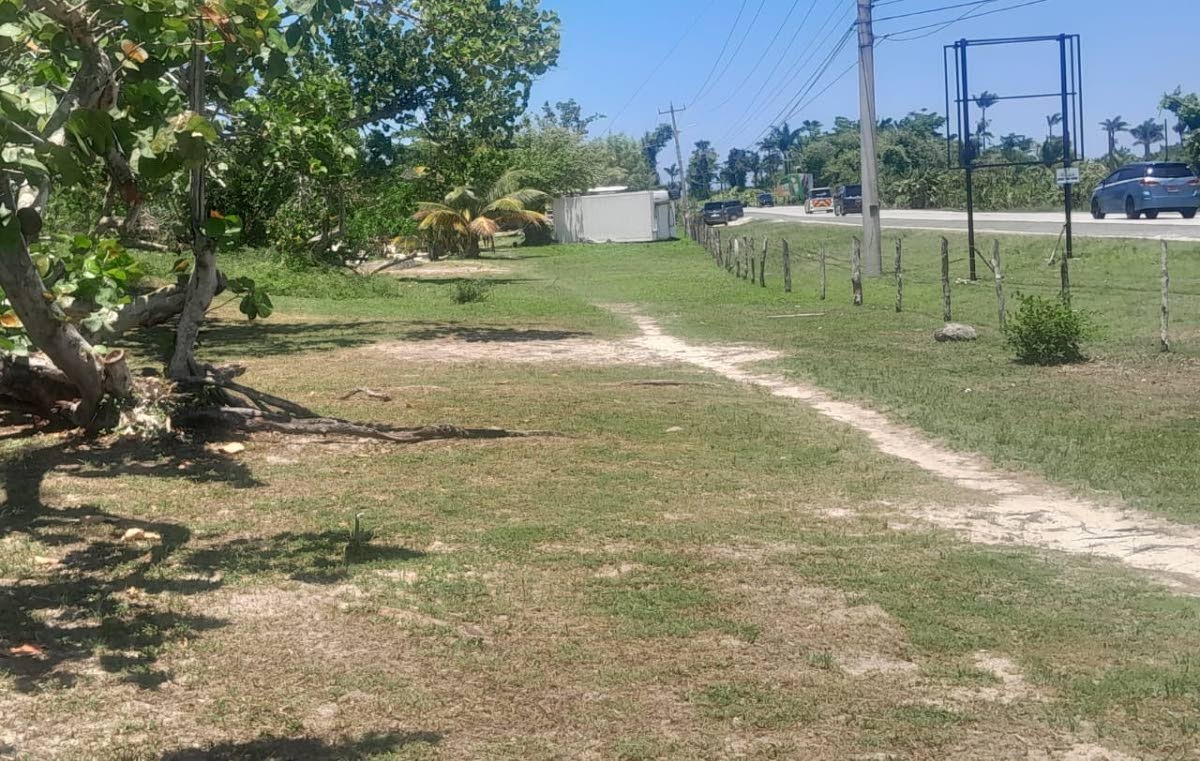 Barbed wire fencing that temporarily blocked a section of Negril’s Seven Mile Beach is seen before removal and after swift intervention which restored public access.
-
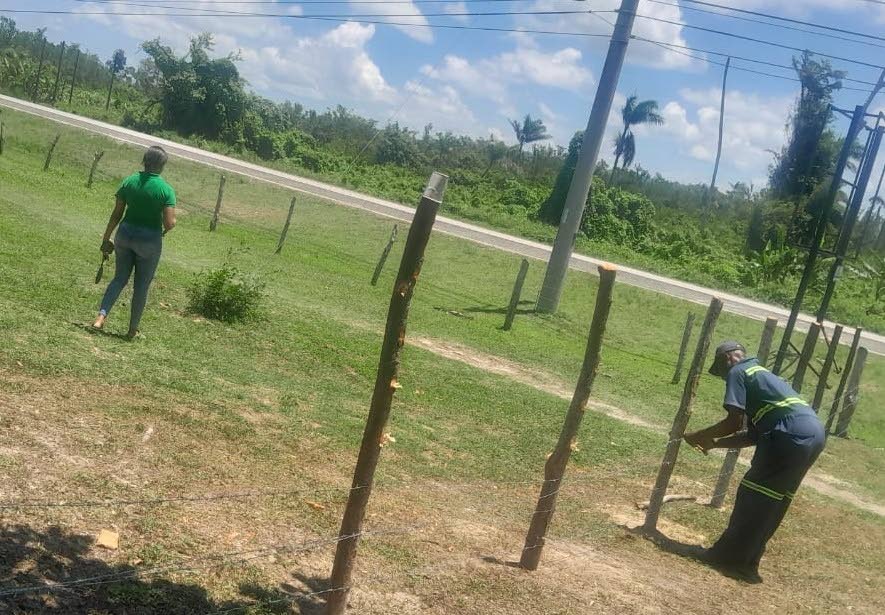 Barbed wire fencing that temporarily blocked a section of Negril’s Seven Mile Beach is seen before removal and after swift intervention which restored public access.
WESTERN BUREAU:
A viral video showing a barbed wire fence blocking a section of Negril’s famed Seven Mile Beach has sparked public outrage and swift action, but the man at the centre of the controversy insists the intention was never to deny access.
Diego Heaven, an instructor at Reef Explorer dive centre, said the fence was misunderstood.
“Our intention is never ever to lock anyone out from the beach … . All we’re trying to do is protect our property,” he explained.
The video, posted by hotelier and daily runner Winthrop Wellington, captured the moment he encountered the obstruction during his usual morning jog along Long Bay Beach.
“I was impeded and actually unable to pass a part that I’ve always passed every time I’ve ran on the beach,” Wellington said. “There was a barbed wire fence that prohibited me from going down my normal path, essentially cutting Negril Beach in two parts.”
Wellington described the situation as alarming and unacceptable.
“How could somebody have the audacity to think that they could cut Negril Beach in half?” he questioned, emphasising that the beach has always been public. “This beach does not belong to anybody.”
His concerns quickly extended beyond the immediate obstruction.
“When I see somebody put out a barbed wire fencing closing off the beach, the first thing I think is that, ‘Oh, no! This is how it starts’,” he said. “Is the next person or the next proprietor going to do the same thing? And, next thing you know, we have a private beach here in Negril.”
But according to Heaven, the situation is rooted not in exclusion, but in repeated theft and vandalism.
REASON BEHIND FENCING
“We need people at the beach … . I’m one Jamaican that will fight for local people to use the beach,” he said. “We even have free water, free changing rooms, and everything.”
He detailed a series of incidents that led to the decision to install fencing.
“Two weeks ago, they stole beach chairs and paddle boards from the property … . A few months ago, they broke [into] the building. They stole all my regulators. Over $3.7 million worth of equipment was stolen from here.”
The losses did not stop there, he said.
“Saturday night gone, they stole my paddle board again and my beach chair,” he added. “All we’re trying to do is protect our equipment from people stealing them and so forth.”
Heaven also pointed to poor lighting along sections of the beach as a contributing factor.
“Some of the street lights are not working … . The areas that are dark, that’s where they will target and that’s where we even found one of the beach chairs on Sunday morning when we came,” Heaven said. “This is why the intention is to fence but make sure people can walk, have access through. Not to block people out. We would never do that.”
Still, for long-time Negril stakeholders, the optics of the fence were deeply troubling.
Elaine Bradley, former president of the Negril Chamber of Commerce, said the incident raised serious concerns about precedent and enforcement.
“If somebody can come and just put up a barbed wire alongside a beach – a public area – then it’s opening the floodgates for anybody else to come and do it,” she warned.
Bradley credited Wellington for bringing attention to the issue.
“Thanks to Winthrop. He sent me the video. And I just got busy and spoke to the people who I have relationships with … and, right now, the wire is moved.”
She praised the swift response from authorities but stressed the need for vigilance.
“You cannot come into a community and do as you please. There are rules and regulations and we must follow those rules and regulations.”
The video reignited national conversations about beach access, as Bradley pointed to recent statements by Prime Minister Dr Andrew Holness after he announced that the Beach Access and Management Policy was tabled in Parliament, during the 2026 Budget Debate.
Holness has emphasised that Jamaicans must have access to their beaches, noting that any attempt, whether intentional or not, to restrict movement along the coastline runs counter to that national priority.
“The ocean is free to everybody. Beaches must be for the people of Jamaica,” said Bradley.
mickalia.kington@gleanerjm.com