Fuel price shocks threaten school attendance, nutrition amid transport strain
Loading article...
-
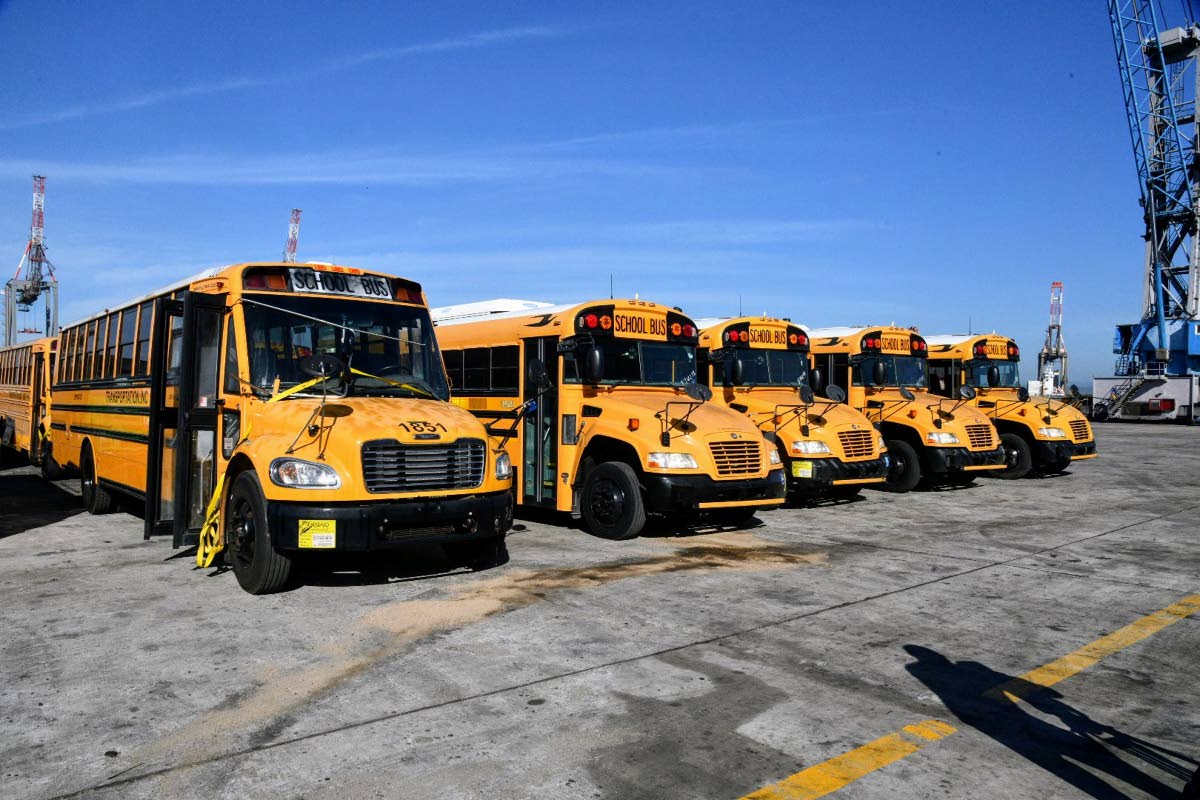 Some of the buses procured by the Government for the rural school bus system.
-
 Jacqueline Edwards, principal of Buff Bay Primary School.
-
 Lynton Weir, principal of Old Harbour High School.
-
 Dion Chance, President of the St James Taxi Association.
Rising fuel prices amid the US-Israel war against Iran are now threatening school attendance, with transportation emerging as the primary concern for administrators across the island.
Several school leaders say they are bracing for increased absenteeism, as some parents – particularly in rural communities – consider sending children to school only a few days per week instead of daily as transport costs increase.
Others warn that a return to online learning, similar to the COVID-19 pandemic, could become necessary if petrol prices continue to rise.
This is despite the Government’s rural school bus programme, which some education leaders say remains limited, particularly in reaching remote communities where buses do not operate.
“A number of students come to school via different modes of transportation, and what parents will do is juggle the days – so they might come on a Monday, then Wednesday, Friday and so on,” said Jacqueline Edwards, principal of Buff Bay Primary School in Portland.
She said staff movement will also be affected, along with the cost of goods and services, further straining families already under economic pressure. With teachers already restive over salary negotiations with the Government, rising transportation costs will deepen the burden.
“The food that we sell at the tuck shop – the juices, the patties – most of our pastry items come from Kingston. Transportation has to take them in,” she said, adding that meat for students’ lunches is sourced nearby and typically delivered free. However, she warned that “if they can’t get supplies from their sources in Kingston, then that too will be impacted”.
Lynton Weir, principal of Old Harbour High School in St Catherine, said he has received assurances from his concessionaire that prices will remain unchanged for the rest of the school year, despite rising fuel costs.
However, he said: “I also provide lunches for students on PATH, and right now I am able to serve a medium lunch. I am hoping and praying to God that whatever costs are incurred are not significant enough to force us to move from a medium to a small lunch.”
Seventy per cent of his 2,500 students are on PATH, while he provides daily lunches for at least another 50 students without support. The Government provides $250 daily per PATH student.
In recent years, several underpopulated schools in rural parishes such as Portland have been shuttered due to the remoteness of the communities they served. Many students have since been relocated to more central institutions, including Buff Bay Primary, but still rely on public transportation to connect to rural school bus routes.
While bus fares are set at $50 per trip, some parents are already paying hundreds of dollars for a single leg of their children’s journey, Edwards said.
“We have students living in the Buff Bay Valley who come to school here and they will be impacted. We have buses on the main road, but none going into the valley to take students out,” she said, noting that some operators on rugged, hilly routes are already charging adult fares.
Last Thursday, Education Minister Dr Dana Morris Dixon said the ministry is aware of the implications of rising fuel prices on the sector, stressing that “the ministry’s position is that every child must remain connected to teaching and learning”.
She said the ministry will continue to monitor schools, regional offices and other relevant agencies as the situation develops.
“It is very fortunate that the Government has already been proactive in introducing the rural school bus system for students. That intervention has been important because it directly supports access to education, particularly in communities where transportation costs can be a major barrier,” she said.
She added that subsidies on both the rural school bus system and the Jamaica Urban Transit Company (JUTC) buses help shield students and families from the full cost, noting that the programme is slated for expansion.
The JUTC also offers discounted fares for tertiary students, though not all routes are serviced, said Guild president at The University of the West Indies Mona, Roshaun Wynter.
He said additional support may be needed as fuel prices rise.
“It is already a great challenge to be funding your tertiary studies in addition to dealing with these challenges of transportation,” he said.
“We are asking commuting students to rely on the JUTC as best as possible so that the financial burden will be cushioned to some effect.”
In the meantime, taxi operators met with the Transport Authority last week, with discussions centred on the outstanding 16.5 per cent fare increase scheduled for June, following delays from April 2024. Operators were urged to hold strain until then.
“They know that things are tough and that it might get worse, and they said they are thinking about the travelling public. But the travelling public will still pay higher electricity bills and higher food prices in the supermarket that we taxi operators will also have to pay,” charged Dion Chance, president of the St James Taxi Association.
corey.robinson@gleanerjm.com